 Bestseller
Tromso
From Tromso Whale Watching Tour On Motor Catamaran
Free cancellation6 hrs
$215from $16125% off
Check availabilityBestseller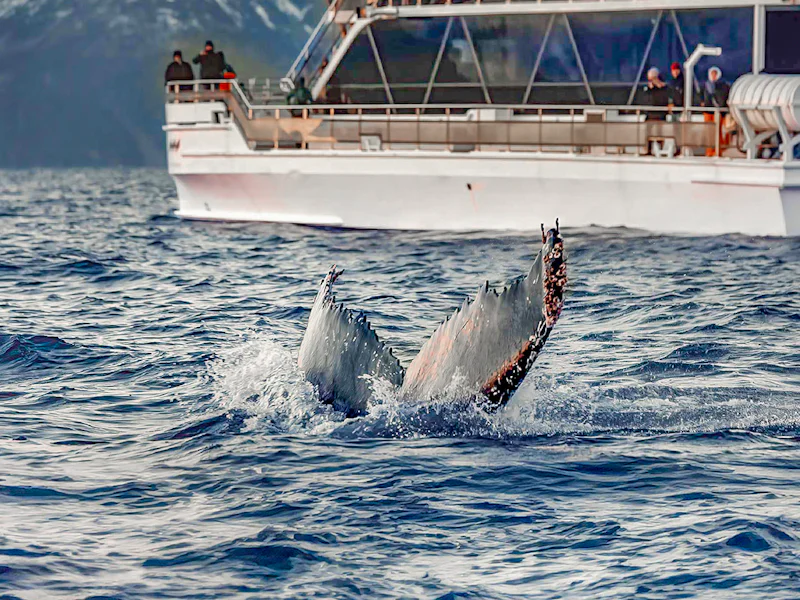
 New
New New
NewWhen whales are around, month by month.
Based on operators' peak-season sighting records.
Chance of seeing whales or dolphins in Norway in peak season
Based on 2,723 verified sightings logged in Norway: real records, not estimates.
Source: GBIF.org, which aggregates marine mammal observations from OBIS-SEAMAP, Happywhale & iNaturalist. Retrieved October 2026.
The whales and dolphins you can realistically spot here, ranked by how often they are recorded.
Norway whale watching happens in winter, not summer, and that surprises most first-time visitors. From November through January, vast shoals of herring pour into the fjords near Tromso, and orcas and humpback whales follow the fish in by the hundred, feeding through the polar night in water calm enough to reflect a boat's floodlight. Picture a pod of orcas carving through black winter water, a humpback lunging up through a ball of herring beside them, and the aurora flickering green overhead. On a good night in the fjords around Tromso or Skjervoy, that combination is what the trip is built around.
In the sections below: the month-by-month best time to go, the three headline species you are most likely to meet, the two ways people base a trip (from Tromso itself or further out toward Skjervoy), what a typical winter tour costs and includes, and how to choose the right boat. Prices change, so treat the figures here as snapshots; most tours can be booked with free cancellation, so you can lock in a peak winter date now and change your mind later at no cost. If you are still deciding where in the world to go, our list of whale watching destinations compares Norway against every other region we cover.
The short answer is November, December and January. Those three months are the peak of the Norway whale watching season, when the Norwegian spring-spawning herring stock is packed into the fjords and orcas and humpback whales are there to feed on it, day after day. Sighting rates on dedicated tours run around 90% at this time of year. If you can only travel once, this is the window to build the trip around.
February and October are solid shoulder months. The big feeding aggregations are usually thinning by February and have not yet built by October, but whales are still regularly seen and boats still run, often with smaller crowds and a little more room at the rail. If your dates are flexible, either shoulder month is a reasonable compromise between good odds and lower demand.
March through September is the off season for whale watching in this part of Norway. The herring move on to spawn, the orcas and humpbacks largely move with them, and most Tromso-area operators pause or scale back their whale tours until the fish return in the autumn. If you are trying to decide between this Arctic winter trip and a summer destination elsewhere, our best time for whale watching guide lines up the world's seasons side by side.
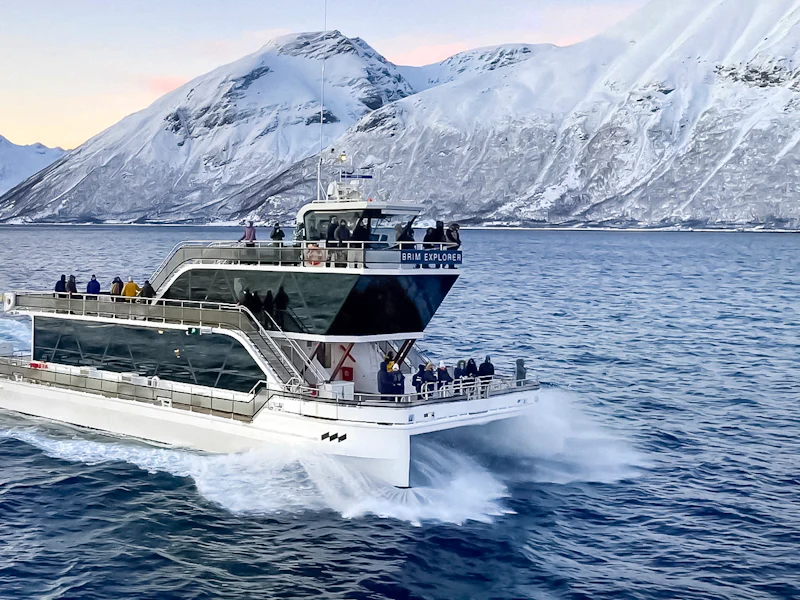
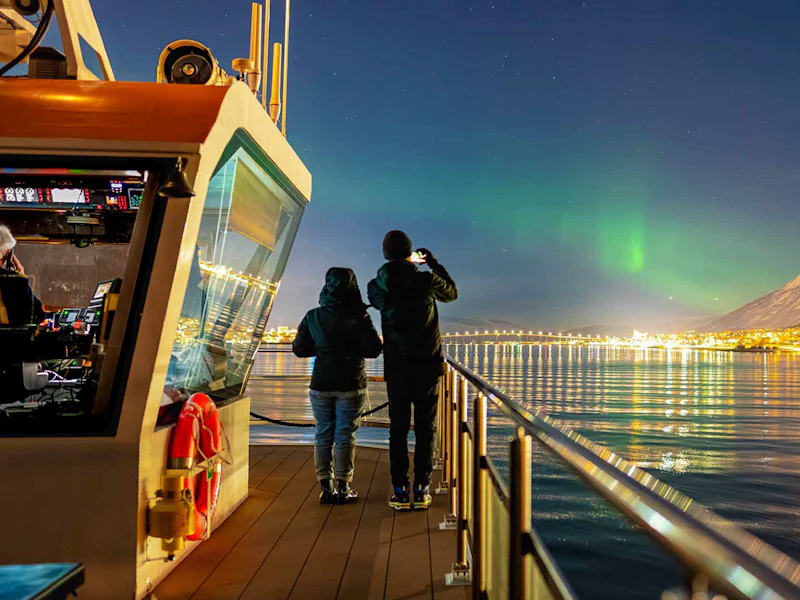
The polar-night bonus. Tromso sits north of the Arctic Circle, so through the peak whale season the sun barely clears the horizon and many days are lit by a long blue twilight rather than full daylight. That is also when the northern lights are at their best, which is why so many whale trips double as aurora cruises: you can watch orcas hunt herring by floodlight in the afternoon and the sky turn green a few hours later, sometimes on the same outing. Quiet hybrid-electric and sailing catamarans let boats sit close to a feeding group without the engine noise of a diesel hull.
Three cetaceans do almost all of the work on a winter Norway whale watching tour, all three drawn to the same herring the fjords are famous for. Variety is limited, but density is high: a single afternoon can put you among dozens of orcas and several humpbacks at once.
The signature sighting. Norwegian orcas hunt in coordinated pods, herding herring into a tight ball near the surface before slapping it with their tails to stun the fish, a technique called carousel feeding. According to Whale and Dolphin Conservation, orcas hunt in family pods led by an elder female, coordinating their raids with remarkable skill, and the population that winters off northern Norway is large and healthy rather than one of the world's endangered groups. Their black-and-white pattern is unmistakable even at a distance, and a big pod moving together is hard to forget.
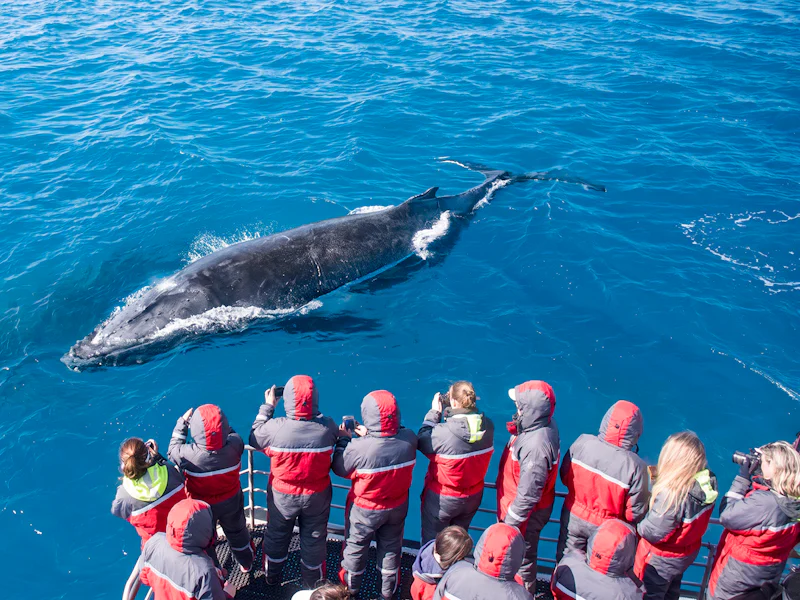
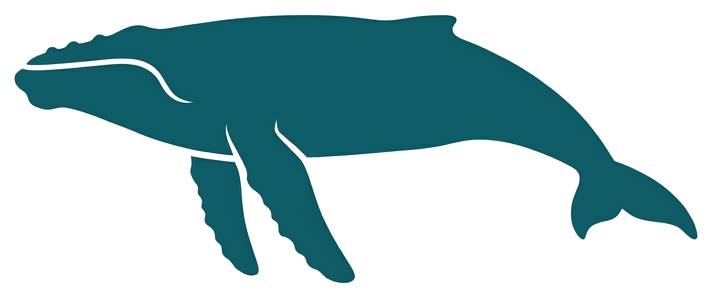
The orcas' regular dinner companion. Humpbacks arrive in the same fjords to lunge-feed on the herring the orcas have corralled, often surfacing open-mouthed right through the same ball of fish. Adults reach roughly 60 feet and 40 tons, according to NOAA Fisheries, and in Norway their winter feeding is opportunistic: they let the orcas do the herding, then muscle in for a share.
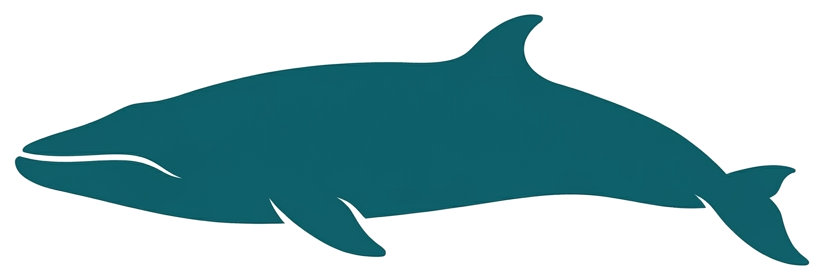
The occasional bonus. Fin whales are the second-largest whale on Earth, reaching 75 to 85 feet, and are listed as endangered across their range. They turn up less predictably than orcas and humpbacks, usually further offshore in the deeper water beyond the fjord mouths, and a sighting is a highlight, but not one to count on. Guides watch for a tall, narrow blow and a long gray back that seems to keep surfacing well after you expect it to dive.
Norway whale watching tours run from two general bases, and which one suits you depends on how much of your day you want to spend traveling to reach the whales.
Tromso itself is the easiest base: tours leave straight from the city harbor or a short bus transfer away, and in years when herring and whales are close to town this is all the travel a trip needs. It is also the only place to combine a whale outing with a dedicated northern lights cruise on the same visit, and it has the widest range of formats, from three-and-a-half-hour aurora-focused trips to full-day catamaran cruises. Because the herring's exact wintering grounds shift a little from year to year, some Tromso-based operators run the boat further out to wherever the whales currently are, so a Tromso departure does not always mean a short trip; check the stated duration before booking.
Skjervoy, three to four hours by road north-east of Tromso, and the fjords around it have been the more reliable whale ground in recent winters, along with nearby Kvaenangen. From around 2012 the Norwegian spring-spawning herring has drifted its main wintering grounds northeast from the Lofoten and Tysfjord area, where whale watching first started in the 1980s, toward Tromso and then Skjervoy, with the orcas following the fish the whole way. Trips based here are full-day affairs, usually a bus or minibus ride from Tromso followed by several hours on the water, but they put you closest to the densest concentrations of orcas and humpbacks in a typical winter.
The herring have moved north twice in living memory, and the whales have followed both times, which is why Skjervoy, not Lofoten, is where the biggest winter pods gather today.
A typical winter tour starts in the dark or near-dark, since December days this far north can have only a few hours of usable daylight. The boat heads out to wherever the herring and whales currently are, which can mean a long run out from Tromso harbor, or a long road transfer to Skjervoy and then a short hop to the pods, and the crew watches for diving birds and blows long before anything is visible from the deck. Once a pod is found, the captain holds a respectful distance and lets the group work, often for an hour or more, with hot drinks or a hot lunch served on board to make the cold bearable. Four broad boat types shape the experience more than the exact port does:
5 to 6 hours, from about $160 to $161. The standard, stable option with an enclosed cabin, large windows and an open deck for photos. Best for a first trip, families and anyone who wants shelter from the wind between sightings.
Around 9 hours, from about $214. Quieter engines let the boat sit close to a feeding pod without drowning out the sound of blows and tail slaps. A calmer, slower-paced day for anyone who wants the encounter without the diesel noise.
A full 12 hours including transfer, from about $250. Fewer passengers, a longer day, and typically the best odds of a large pod since the boat starts closer to where the whales currently are wintering.
Also a full 12 hours with transfer, from about $331. Fast, low to the water and closer to the action, wrapped in an arctic survival suit the operator provides. The most expensive and most physical way to see the whales, not for young children or anyone who runs cold easily.
As a rule of thumb, the core whale watching tours in Norway sit in a band of about $160 to $269, with the 12-hour Skjervoy small-group trip near the top of that band and the RIB above it at about $331 for a longer day on a smaller boat. If budget matters more than guaranteed whale time, the standalone Northern Lights Cruise is the cheapest way onto the water, from about $139 for three and a half hours, though it is built around the aurora rather than the whales and any sightings on it are a bonus. You can compare every current option, including duration and what is included, on the full tour list.
Every Norway whale watching tour in one comparison: price, boat, duration and free cancellation.
See the toursThe decision tree here is short: pick your base, pick your boat, and book early enough that the dark months do not sell out from under you.
Air temperatures around Tromso in December often sit well below freezing before wind chill from the boat's speed is added in. Thermal layers, a windproof and waterproof outer shell, insulated boots, a warm hat and gloves are the baseline. Many operators supply an arctic survival suit over your own clothes, but check before you book so you know what to bring underneath it.
Fjords are more sheltered than the open sea, but winter swells and short days of low light can still turn a stomach. Take a remedy before you board and keep your last meal light. If queasiness starts, head out on deck and fix your eyes on the horizon instead of sitting below in the cabin.
Much of the season runs on twilight rather than full sun, so a camera with a fast shutter and a lens that handles low light will catch far more than a phone camera will. Binoculars help you find a distant blow before the boat gets there, but watch at least part of the encounter without a screen in front of you.
Norway has no single government rulebook for whale watching, so operators follow voluntary guidelines instead, drawn up with input from local whale researchers. The Visit Tromso whale watching guidelines call for slow, steady approaches, idling engines near a pod, capping the number of boats around any one group of whales, and staying clear of the herring shoals the whales are feeding on. Choose an operator who visibly follows this kind of code and does not chase or crowd the animals.
Commercial whale watching in Norway began in the 1980s around Lofoten and Tysfjord, where the herring wintered at the time. From around 2012 the fish have shifted their wintering grounds northeast toward Tromso, and in more recent winters further again to Skjervoy, and the orcas and humpbacks have followed both times.
Come between November and January if your dates allow it, pick Tromso for convenience or Skjervoy for the odds, choose a boat that matches your budget and your tolerance for cold, and book early with free cancellation as your safety net, the same rule that applies to the best whale watching trips anywhere.
Peak season runs November to January, when herring shoals funnel into the fjords around Tromso and orcas and humpbacks follow them in, with good sightings also in February and October. Many winter trips double as northern-lights cruises. The calendar above has the detail.
Yes. The fjords north-east of Tromso are one of the most reliable places on earth to see orcas, which hunt the winter herring alongside humpback whales. Peak-season trips report a sighting about 90% of the time.
For most winter visitors, yes: you watch orcas and humpbacks feed against snow-covered fjords and, often, the aurora, with sightings near 90% in peak season. It is a winter trip, though: there is little to see in summer.
Norway trips start from about $139 per person, with most between $160 and $269. The hybrid-electric catamaran and the 12-hour Skjervoy small-group trip sit at the upper end, and the RIB speedboat is the priciest at about $331. Prices run higher than most destinations because these are longer Arctic trips.
Bookings are processed through Headout, which partners with vetted local operators in Tromso. Whale Watching is an independent affiliate site. We may earn a small commission if you book through a link here, at no extra cost to you.
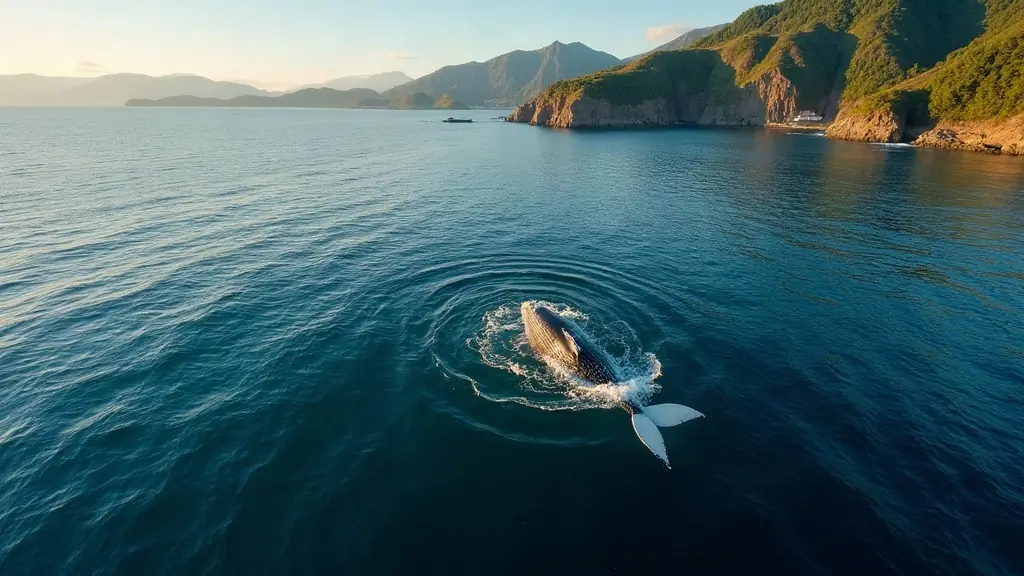
Compare tours in Norway and book in minutes. Most offer free cancellation.
See tours in Norway