 New
NewHawaii
Catamaran Whale Watch Cruise From Maalaea Harbor
Free cancellation2 hrs
from $94
Check availability New
NewHawaii
Small Group Catamaran Whale Watch Cruise From Maalaea Harbor
Free cancellation2 hrs
from $121
Check availability New
NewHawaii
Premium Catamaran Whale Watch From Kaanapali Beach With Open Bar And Snacks
Free cancellation2.5 hrs
from $103
Check availabilityPlan your trip
When to go & what you'll see in Hawaii
Best time to go
When whales are around, month by month.
J
F
M
A
M
J
J
A
S
O
N
D
Peak seasonGoodOff-season
Sighting probability
Based on operators' peak-season sighting records.
Chance of seeing whales or dolphins in Hawaii in peak season
Real sightings by month
Based on 42,091 verified sightings logged in Hawaii: real records, not estimates.
Source: GBIF.org, which aggregates marine mammal observations from OBIS-SEAMAP, Happywhale & iNaturalist. Retrieved October 2026.
What you'll see
The whales and dolphins you can realistically spot here, ranked by how often they are recorded.

Humpback whaleThousands arrive each winter to breed and calve.40,767 sightings

Spinner dolphinResident pods spin clear of the water.1,324 sightings
By location
Whale watching cities in Hawaii


Hawaii whale watching: humpback song through the hull
Hawaii whale watching means one thing above nearly everything else: humpback whales, thousands of them, arriving every winter to breed, calve and nurse in water so warm and so calm that a boat can idle within sight of a mother and her newborn calf. Picture it: the engine drops to a whisper off the Maui coast, the guide lowers a hydrophone over the side, and a male's low, rising song fills the cabin before anyone on deck has spotted a fin. In the peak of a Hawaii winter, that happens on an ordinary weekday morning.
Below you will find the month-by-month best time to go, the two headline species, the two island hubs with links to their own detailed pages, what a typical tour costs and includes, and how to choose between them. Prices are snapshots of tours we compare, most bookable through Headout with free cancellation, so you can lock in a January date now and change your mind later without losing anything.
~99%peak-season sighting rate
~50%of the North Pacific population winters here
2island departure hubs
$64+real tours compared
Best time for whale watching in Hawaii
The short answer is January, February and March. Those three months are the peak of the Hawaii whale watching season, when the largest numbers of North Pacific humpbacks are in Hawaiian waters and sighting rates on a standard tour sit at about 99%. The season switches on and off: the whales are either here in force or gone, and the peak is when the breeding and calving grounds are at their fullest.
December and April are the shoulder months. In December the first arrivals are already showing up and numbers build through the month, though you will see fewer animals per trip than in the true peak. April is the mirror image: still good, but the whales are thinning out as they start the long swim back toward Alaska. Outside of December through April, the humpbacks have left Hawaiian waters entirely for their North Pacific feeding grounds, and a Hawaii whale watching trip in July or August will not find them, whatever a boat's schedule might imply. If your travel dates fall in the off months, our guide to the best time for whale watching lines up seasons across every destination we cover, so you can find a coast that is in peak while Hawaii is quiet.
Half an ocean's whales, one small archipelago. According to the Hawaiian Islands Humpback Whale National Marine Sanctuary, roughly half of the entire North Pacific humpback population seasonally uses the waters around the Hawaiian Islands as its principal breeding, calving and nursing ground. The sheltered Auau Channel between Maui, Lanai and Molokai is the center of that nursery, so even a two-hour cruise here has a high chance of a sighting.
What whales you'll see in Hawaii
A Hawaii whale watching trip is built around two very different animals: a winter visitor everyone comes for, and a year-round resident that steals scenes of its own. Between them they cover most of what a guide will point out on a typical crossing.
Humpback whale
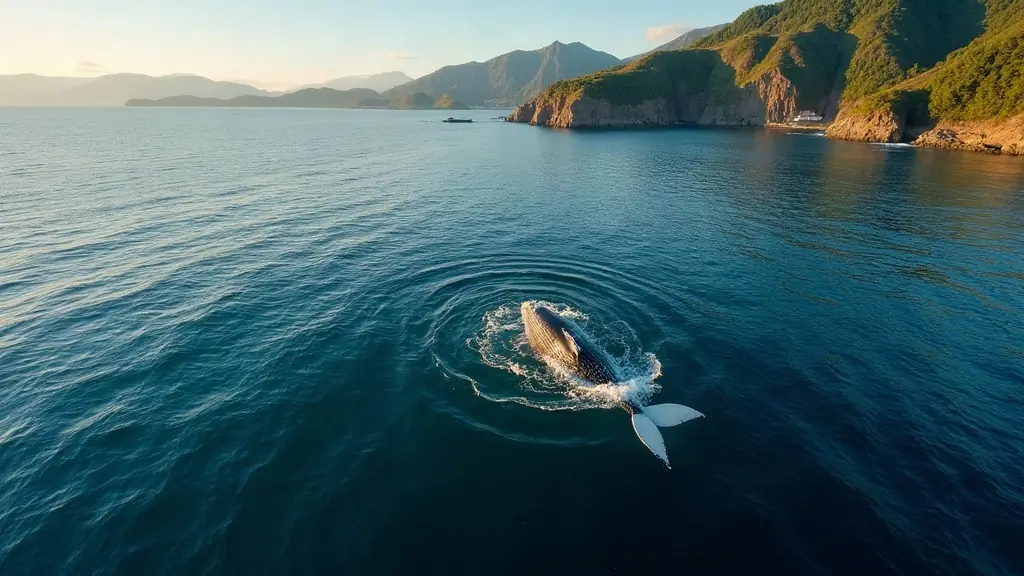
The reason the whole industry exists. Thousands of North Pacific humpbacks arrive each winter to breed and calve in Hawaiian waters, and according to NOAA Fisheries, some individuals complete the roughly 3,000-mile migration from Alaska in as few as 28 days. Adults typically measure 45 to 50 feet, with NOAA Fisheries putting the largest at about 60, and the ones you see off Maui and Oahu are typically resting, socializing, or nursing a calf. They do not feed here, so expect long, slow surface intervals instead of the frantic lunge-feeding you would see in Alaska. The species is listed as Least Concern by the IUCN Red List, with a global population estimated at 84,000 mature individuals and an increasing trend, a recovery that followed the 1985 international whaling moratorium.
Spinner dolphin
Hawaii's other headline marine wildlife, and a resident rather than a migrant. Spinner dolphins live in the islands year-round, and the name describes what they do: a pod will leap clear of the water and spin several times on its own body axis before splashing back down, a behavior no other cetacean here performs so reliably. They rest by day in calm, shallow nearshore bays after a night spent feeding offshore, so a boat that finds a resting pod is asked to keep its distance and let the dolphins set the pace.
Where to go: Hawaii's whale watching departure islands
Two islands account for almost every Hawaii whale watching tour, and the choice between them mostly comes down to where you are already staying. Each has its own page with the local tours, prices and departure points broken down in full.
Maui
- Best for: Whale density
- From $82
- Auau Channel nursery
Maui is where most Hawaii whale watching happens. The sheltered Auau Channel between Maui, Lanai and Molokai is the most important humpback nursery in the North Pacific, which makes the west side of the island the most productive stretch of water in the state for a winter cruise. Catamarans leave from Kaanapali Beach and Maalaea Harbor, from about $82 for a standard two-hour trip up to $121 for a small-group cruise, and many operators drop a hydrophone over the side so you can listen to a male's song rise up through the hull. If seeing whales is the entire point of your trip, this is the island to build it around. See our full page on whale watching in Maui for the complete tour lineup.
Oahu
- Best for: Waikiki convenience
- From $64
- Honolulu departures
Oahu runs on the same winter season as Maui, and cruises leaving Waikiki and Honolulu reach the same North Pacific humpbacks in warm, calm water, just at a lower whale density than the Auau Channel. That trade-off suits a lot of trips: if you are staying in Waikiki for the beaches, nightlife and easy flights, you can skip the inter-island flight and still have a good Hawaii whale watching experience. A 1.5-hour Waikiki sunset cruise starts from about $64, the most affordable tour on this page and rated 4.4 from well over a hundred reviews at the time of writing. Read our page on whale watching in Oahu for the full details.
Maui has the whales in numbers; Oahu has them within walking distance of your Waikiki hotel, on the same winter calendar.
What a Hawaii whale watching tour is like
Every tour on this page runs on a catamaran or a similar stable multi-hull boat, which keeps things comfortable even for guests who have never been on the water before. The rhythm is simple: a short safety briefing at the dock, a cruise out toward the channel or the coastal waters where whales have been active, then an hour or more of searching and watching while the crew narrates what is surfacing and why. Trips run from 1.5 to 2.5 hours, long enough to reach the whales and stay with them a while without turning into an endurance test. Four tour formats cover almost everything on offer:
Standard catamaran cruise
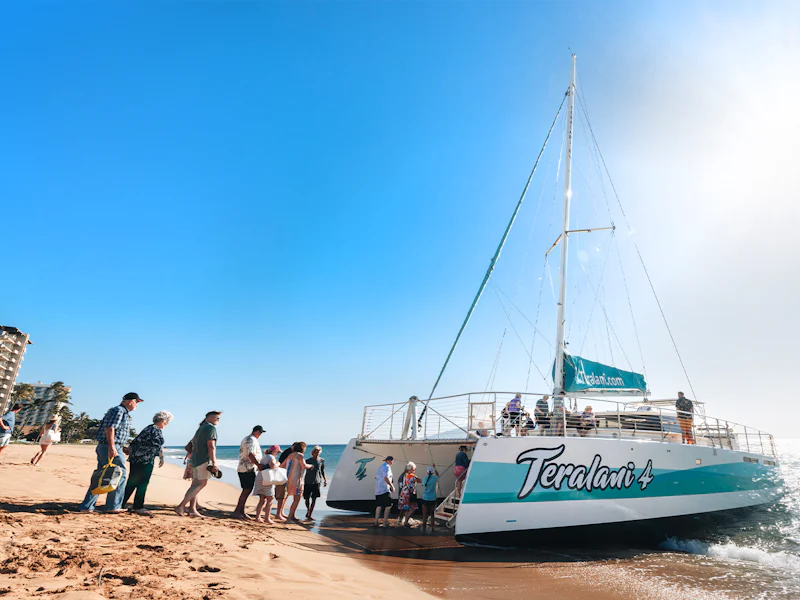
2 hours, from about $82, departing Kaanapali Beach on Maui. The entry point for Hawaii whale watching and the best value for a first trip: stable, roomy, and close to the Auau Channel almost immediately after leaving the beach.
Premium catamaran with open bar
2.5 hours, from about $103, also from Kaanapali Beach. An extra half hour on the water plus drinks and snacks included, a comfortable upgrade for a couple or a special occasion.
Small-group catamaran
2 hours, from about $121, departing Maalaea Harbor on Maui's south side. Fewer guests per rail means more room to move, which makes it the pick for photographers who want an unobstructed shot when a whale surfaces.
Sunset cruise
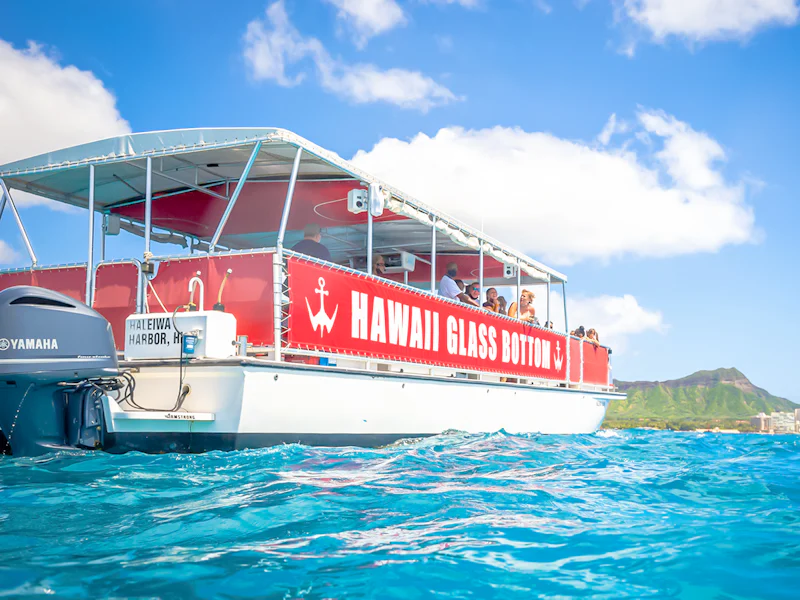
1.5 hours, from about $64, departing Waikiki on Oahu. The shortest and most affordable format on the page, timed for golden-hour light over Honolulu and Diamond Head as much as for the whales themselves.
Across both islands, the Hawaii whale watching tours we compare sit in a band of about $82 to $103, with the Waikiki sunset cruise as the budget entry point at $64 and the small-group Maalaea catamaran as the top-end option at $121. Whatever the boat, the state's whale watching rules shape every trip in the same way: throughout Hawaiian waters, year-round, no vessel, paddleboard, kayak or drone may approach a humpback whale within 100 yards. The captain positions the boat near active whales, idles the engine and waits for them to decide what happens next. That is why the encounters feel unhurried.
Compare every Hawaii tour side by side by island, price, boat and free cancellation.
See the toursHow to choose the right Hawaii whale watching tour
You already know what you are after: a calm morning on the water with a humpback surfacing close enough to hear it breathe, and maybe a calf rolling up beside her. What is left to decide is the island, the boat and how early you book.
- Pick the island that fits the rest of your trip.Staying on Maui or want the highest whale density in the state? Book a Kaanapali or Maalaea catamaran. Based in Waikiki and happy with slightly fewer whales for a lot more convenience? Oahu is the easy call.
- Book January to March dates early.The peak is only three months long, and the best morning slots on the smaller boats fill up first. Most tours we list allow free cancellation, so booking now costs nothing if your plans shift.
- Standard boat or small group?A larger catamaran is cheaper and just as stable. A small-group cruise costs more but gives photographers and anyone who dislikes crowds noticeably more room at the rail.
- Morning or sunset?Morning departures on Maui tend to mean calmer water and a fresher crowd of active whales. Oahu's sunset cruise trades some of that for golden light over Honolulu, a fair swap if the schedule suits you better.
- Check ratings as well as price.The Waikiki sunset cruise carries a 4.4 rating across well over a hundred reviews, a solid track record worth weighing against a few dollars saved elsewhere. Booking through Headout lets you compare formats and hold a date with free cancellation on most listings.
Tips for whale watching in Hawaii
Sun protection over everything
You will be on open tropical water for one to two and a half hours with little shade, so sunscreen, a hat that will not blow off and sunglasses matter more here than on almost any other whale watching trip. Reapply reef-safe sunscreen if you plan to get in the water afterward, and bring a light layer too; the wind picks up once the boat is moving even on a warm day.
Plan for seasickness early
Hawaiian channel water is generally calmer than open ocean, but a two-hour cruise still moves. If you are prone to motion sickness, take a remedy before boarding rather than after, eat a light meal beforehand, and keep your eyes on the horizon rather than a phone screen. Morning departures tend to mean calmer seas than afternoon ones.
Bring binoculars and a fast lens
The first sign of a whale is usually a distant blow, and binoculars turn that puff of spray into a clear view of what is happening. For photos, a fast shutter speed and a wrist strap beat a tripod on a moving deck. Put the camera down for a few sightings too; the moments people remember best are the ones they watched with their own eyes.
Watch responsibly
Hawaii's whale watching rules are strict and apply statewide, year-round: no vessel, swimmer, paddleboard, kayak or drone may approach a humpback whale within 100 yards. Whale and Dolphin Conservation notes that despite the species' broad global recovery, some regional populations still carry conservation concern, and the approach limits are there to protect them. Choose operators who keep their distance without being asked and let the whales close the gap on their own terms.
A name for the whale you call kohola
Hawaiians have long called the humpback kohola, and the animal's return each winter is woven into island tradition as well as science. The Hawaiian Islands Humpback Whale National Marine Sanctuary runs research transects in the Auau Channel to track mother-calf pairs, so the whale you watch surface off Maui may already be part of a decades-long photo-identification record.
The simple recipe
Come between January and March if you can, pick Maui for the highest whale density or Oahu for convenience, choose a boat that matches your budget and your stomach, and book early with free cancellation as your safety net, a habit worth keeping for every other whale watching trip you plan.
Good to know
Hawaii whale watching FAQ
January, February and March are the best months, the peak of the Hawaii season, when the most North Pacific humpbacks are in the islands and sighting rates run about 99%. December and April are good shoulder months. Outside December to April the humpbacks have left for Alaska, so a summer trip will not find them.
Maui is the best island for whale watching. The sheltered Auau Channel between Maui, Lanai and Molokai is the most important humpback nursery in the North Pacific, giving Maui the highest whale density in the state. Oahu runs on the same winter season and suits a Waikiki-based trip, just at a lower whale density.
Maui offers the highest whale density and the strongest sighting odds, thanks to the Auau Channel nursery, so choose it if seeing whales is the whole point of your trip. Oahu reaches the same humpbacks on the same winter season in warm, calm water, and suits you better if you are staying in Waikiki for the beaches and convenience.
Hawaii tours start from about $64 per person for a 1.5-hour Waikiki sunset cruise on Oahu. Dedicated Maui catamaran trips run from about $82 up to about $121 for a small-group cruise, with many boats dropping a hydrophone so you can hear the humpback song. Maui costs a little more but delivers the highest whale density.
Bookings are processed through Headout, which partners with vetted local operators. Whale Watching is an independent affiliate site. We may earn a small commission if you book through a link here, at no extra cost to you.
Ready to find your whale in Hawaii?
Compare tours in Hawaii and book in minutes. Most offer free cancellation.
See tours in Hawaii