Whale watching tours in Maui
 New
NewHawaii
Catamaran Whale Watch Cruise From Maalaea Harbor
Free cancellation2 hrs
from $94
Check availability New
NewHawaii
Small Group Catamaran Whale Watch Cruise From Maalaea Harbor
Free cancellation2 hrs
from $121
Check availability New
NewHawaii
Premium Catamaran Whale Watch From Kaanapali Beach With Open Bar And Snacks
Free cancellation2.5 hrs
from $103
Check availabilityMore in Hawaii: Oahu All of Hawaii
Plan your trip
When to go & what you'll see in Maui
Best time to go
When whales are around, month by month.
J
F
M
A
M
J
J
A
S
O
N
D
Peak seasonGoodOff-season
Sighting probability
Based on operators' peak-season sighting records.
Chance of seeing whales or dolphins in Maui in peak season
Real sightings by month
Based on 33,484 verified sightings logged in Maui: real records, not estimates.
Source: GBIF.org, which aggregates marine mammal observations from OBIS-SEAMAP, Happywhale & iNaturalist. Retrieved October 2026.
What you'll see
The whales and dolphins you can realistically spot here, ranked by how often they are recorded.

Humpback whaleThousands arrive each winter to breed and calve.33,326 sightings

Spinner dolphinResident pods spin clear of the water.158 sightings
Maui whale watching: thousands of humpbacks, one short window
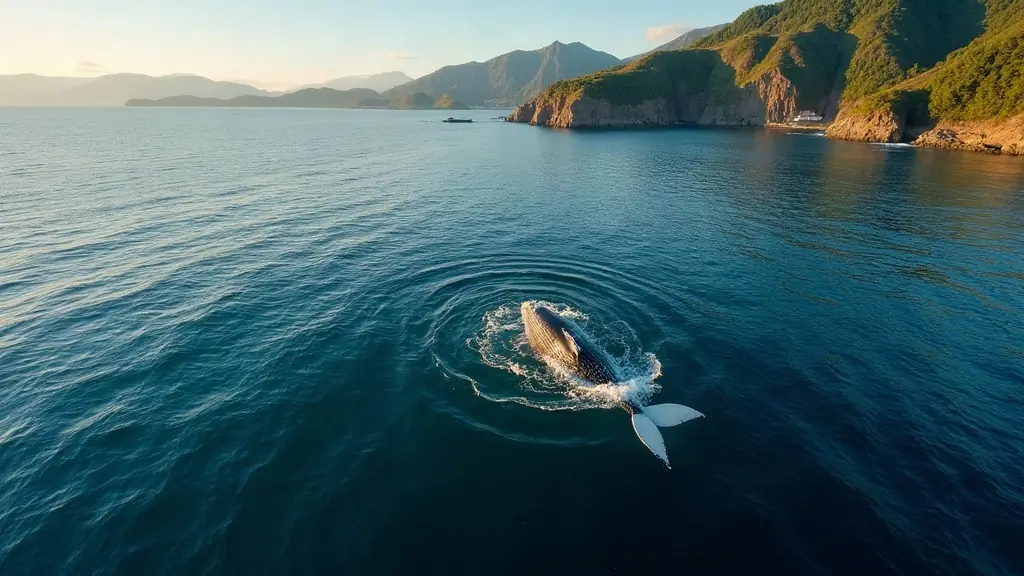
Maui whale watching is the rare wildlife trip where the odds are firmly on your side. Every winter, thousands of humpback whales arrive in the warm, sheltered water off Maui to breed and calve, and in the January to March peak roughly 99% of tours come back having seen them. Picture it: the catamaran slows, the engine drops to idle, and a humpback surfaces close enough that you hear the blow before you see the dark back roll through the swell. A moment later a calf pops up beside her, and in the Auau Channel in February nearly every boat gets a morning like that.
The catch is timing. The whales are here for a few months and gone for the rest of the year, and the best dates on the best boats fill up early. Below: when to go, what you will see, where the boats leave from, and how to choose between the four Maui whale watching tours we compare, from about $82 per person, bookable through our partner Headout with free cancellation, so you can lock in a peak-season date now and adjust later if your plans move.
~99%peak-season sighting rate
1000shumpbacks in the Auau Channel
2departure points
$82+real tours compared
Best time for Maui whale watching
The short answer: January, February, and March. Those three months are the peak of the Maui whale watching season, when the number of humpbacks in the channel between Maui and Lanai is at its highest and the sighting probability on a standard two-hour cruise sits at about 99%. Peak season is January to March, with good sightings also in the shoulder months of December and April. Outside that window the humpbacks are largely absent, so if seeing whales is the point of your trip, build your dates around them.
The Maui whale watching calendar plays out like this, month by month:
- December (shoulder): the first arrivals are already in Hawaiian waters and numbers build through the month. Sightings are good, but you will see fewer animals per trip than in the peak, and boats can be busy over the holidays.
- January to March (peak): the breeding and calving grounds are full, mothers with calves are a regular sight, and about 99% of trips see whales. If you can only pick one window for Maui whale watching, this is it.
- April (shoulder): still good, but thinning. The whales begin heading back north, and sightings drop off as the month goes on. Early April is a sensible Maui whale watching choice if the peak months do not fit your trip.
- May to November (off-season): the humpbacks have left for their feeding grounds. Maui's resident spinner dolphins are still around, but a Maui whale watching cruise booked in these months will not give you the peak-season humpback experience.
Why the winter? Hawaii is the principal winter breeding ground for the North Pacific humpback population, and humpback whales migrate here from Alaska, a trip of roughly 3,000 miles that some individuals complete in as few as 28 days. They come to breed, calve, and nurse in warm, calm water, then return north to feed. NOAA describes the Hawaiian season as winter and spring, which matches the December to April Maui whale watching window above. If Maui's dates do not work for you, our guide to the best time to go whale watching compares seasons across the destinations we cover, so you can find a coast that is in peak while you are traveling.
A short window, and a busy one. The peak is just three months long, January through March, and it is also when roughly half the entire North Pacific humpback population crowds into the Auau Channel between Maui and Lanai to breed, calve, and nurse. The dense nursery explains the high sighting rates on Maui, and the short season explains why the good boats book out early.
What whales you'll see in Maui
Maui whale watching is mostly a humpback show with a dolphin supporting act. Both species are worth reading up on before you board, since knowing what the animals are doing makes each surfacing more interesting.
Humpback whale
Thousands of humpbacks arrive each winter to breed and calve. According to the Hawaiian Islands Humpback Whale National Marine Sanctuary, roughly half of the entire North Pacific population, which NOAA phrases as "thousands of animals," travels to Hawaiian waters every winter and spring. The sanctuary exists to safeguard the breeding, calving, and nursing grounds of the whale Hawaiians call kohola, and it runs dedicated research transects in the Auau Channel between Maui and Lanai to monitor mother-calf pairs. That channel is the most important humpback nursery in the North Pacific, which is why Maui whale watching off the west coast is so productive from December to April. On a Maui whale watching tour in peak season you can expect to see multiple animals, often in small groups, with mothers and calves among the most common sightings. A female produces a single calf every two to three years, so each calf you see represents a big investment for her. Humpbacks are also famously active at the surface, and breaches, tail slaps, and pectoral fin slaps are the moments most people come for, though no boat can promise them on any given trip. Humpback whales are listed as Least Concern by the IUCN (last assessed in 2018, with an increasing global trend and an estimated 84,000 mature individuals worldwide), a recovery following the 1985 international whaling moratorium. That said, Whale and Dolphin Conservation notes that some regional populations still carry conservation concern despite the overall rebound, and describes the humpback's journey between polar feeding grounds and tropical breeding waters as one of the ocean's longest migrations.
Spinner dolphin
Maui's second headline species is the spinner dolphin, and the name is literal: resident pods spin clear of the water, twisting several times in the air before they splash back down. Hawaiian spinner dolphins are a resident, island-associated population, so unlike the humpbacks they are here year-round. Their daily rhythm is the reverse of ours. By day they move into calm, clear, shallow nearshore bays to rest, socialize, and care for their young; at night they head offshore to feed on fish, shrimp, and squid found roughly 650 to 1,000 feet down. Because daytime is their rest period, Hawaii protects them closely: it is illegal to swim with, approach, or remain within 50 yards of a Hawaiian spinner dolphin within two nautical miles of the main islands' shore. A good Maui whale watching cruise gives them space and lets the pod come to the bow on its own terms. Beyond the two headline cetaceans, keep your eyes open for other marine wildlife on the crossing. The channels off Maui are productive water, and the same calm, clear conditions that attract the whales make them easy to scan.
Where to go: Maui whale watching departure points
Maui whale watching is concentrated on the west and south-facing coasts, which open directly onto the sheltered channel where the humpbacks gather. The four tours we compare leave from two departure points, and choosing between them is mostly a question of where you are staying.
Kaanapali Beach (West Maui)
- Best for: West Maui, Lahaina
- From $82
- On the Auau Channel
Two of the four tours depart from Kaanapali Beach itself, right in the West Maui resort strip. If your hotel is in Kaanapali or around Lahaina, this is the closest and most convenient option, and you are on the water beside the Auau Channel almost immediately. The two-hour catamaran here is the cheapest tour on the page at about $82, and the 2.5-hour premium version with open bar and snacks is about $103. Lahaina sits on the same West Maui coast as Kaanapali, just up the strip, so if that is where you are staying, these Kaanapali Beach departures serve you just as well.
Maalaea Harbor (South and Central Maui)
- Best for: South and Central Maui
- From $94
- Near the airport
The other two tours leave from Maalaea Harbor, which is the natural pick if you are staying on the south side of the island or in the central area near the airport. The standard two-hour catamaran cruise is about $94, and the small-group version of the same trip is about $121.
In the Auau Channel, in February, a humpback surfacing close enough to hear the blow before the calf pops up beside her is an ordinary morning.
Maui gets most of the attention for whale watching in Hawaii, but the same North Pacific humpbacks spread across the whole archipelago each winter, and whale watching in Oahu runs on the same season if your trip is based there instead. If you have the choice, though, Maui whale watching has the highest whale density and the strongest sighting odds in the islands.
What a Maui whale watching tour is like
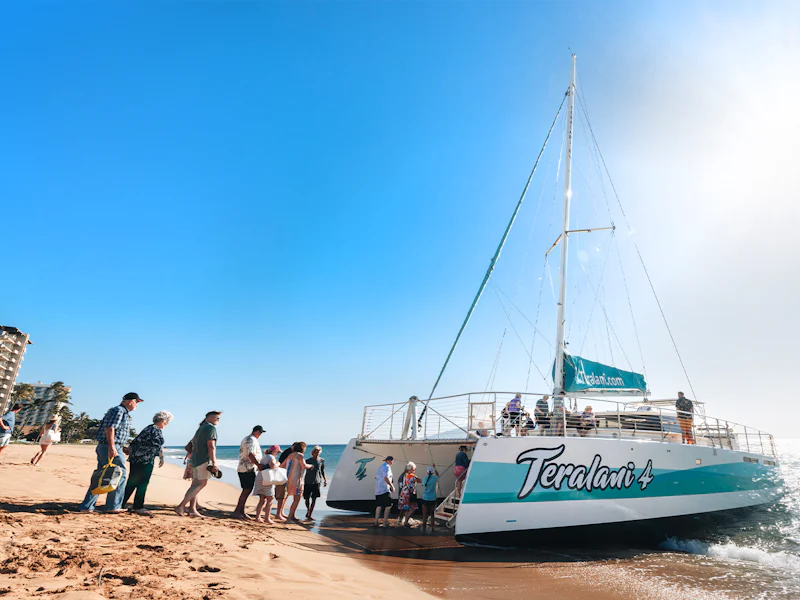
Every Maui whale watching tour we list runs on a catamaran, which is good news for anyone nervous about small boats. Catamarans are stable, roomy, and give you two hulls' worth of railing to spread along when a whale surfaces on one side. Trips run about two hours, or 2.5 hours for the premium cruise, which is long enough to reach the whales, spend proper time with several groups, and still have most of the day left. Here is what the four Maui whale watching tours look like side by side. Prices are a snapshot in USD and can change, so treat them as "from about" figures:
Catamaran Whale Watch from Kaanapali Beach
2 hours, from about $82. The entry point for Maui whale watching and the best value on the page. Its early reviews sit at five stars, though there are only a handful so far.
Catamaran Whale Watch Cruise from Maalaea Harbor
2 hours, from about $94. The standard south-side option, with the same catamaran format from a proper harbor departure.
Premium Catamaran Whale Watch from Kaanapali Beach with Open Bar and Snacks
2.5 hours, from about $103. An extra half hour on the water plus drinks and snacks included, for around $20 more than the basic Kaanapali cruise.
Small Group Catamaran Whale Watch Cruise from Maalaea Harbor
2 hours, from about $121. The most expensive of the four, and the one to pick if you want fewer people at the rail and more room to move around and photograph.
What happens on board is shaped by the law as much as by the whales. Throughout Hawaiian waters, year-round, vessels may not approach a humpback within 100 yards (about 90 meters). In practice the captain positions the boat near active whales, cuts the engine to idle, and waits. Humpbacks are curious and unhurried, and the 100-yard rule governs what the boat does, not what the whale does. Between sightings the crew will point out what the animals are doing and why, and on the shorter two-hour Maui whale watching trips the pace is brisk: you are usually watching whales within a short run of leaving the beach or harbor.
Compare every Maui tour side by side: price, boat, duration and free cancellation.
See the toursHow to choose the right Maui whale watching tour
The Maui whale watching window is short, the peak is three months long, and the boats that leave from the convenient beach and harbor spots are the ones everyone else on the island is also trying to book. If you already know your travel dates fall in January, February, or March, the best thing you can do is pick a boat and book it now. Every listed tour comes with free cancellation, so a change of plans costs you nothing. A few decisions will narrow it down fast:
- Morning or afternoon?Book the morning. Operators on Maui consistently describe morning departures as having calmer seas and better viewing conditions than afternoon ones. That is travel wisdom rather than a scientific finding, but it is consistent across the island, and calmer water also means an easier trip for anyone prone to seasickness.
- Small group or standard catamaran?The small-group Maalaea cruise costs about $27 more than the standard one. If photography matters to you, or you want elbow room when everyone rushes to one rail, it is worth it. If you are traveling with kids who will not care about the crowd, the standard boat is fine.
- Basic or premium?The premium Kaanapali cruise adds half an hour, an open bar, and snacks for about $20 more than the basic trip from the same beach. For a couple on a special trip, that is an easy upgrade. For a family watching the budget, the basic two-hour catamaran delivers the same whales.
- West side or south side?Stay where you are. Both Kaanapali and Maalaea put you on the same sheltered water; the difference is drive time. Do not cross the island for a departure point when there is a good boat on your doorstep.
Whichever Maui whale watching tour you pick, compare the options on this page, check the departure times, and book the peak-season date while it is still open.
Tips for whale watching in Maui
A little preparation makes a Maui whale watching trip more comfortable and more rewarding. These are the things regulars wish they had known the first time.
Beat the seasickness
Catamarans are steady, and the channel is sheltered, but a two-hour cruise still moves. If you know you are prone to motion sickness, choose a morning departure for the calmer water, eat a light breakfast rather than skipping it, sit toward the middle of the boat, and look at the horizon or the whales instead of your phone. Talk to your doctor or pharmacist about remedies if you have suffered badly in the past.
What to bring
Sun protection is the big one on any Maui whale watching cruise. You will be on open water in the tropics for two hours with little shade, so bring sunscreen, a hat that stays put in the wind, and sunglasses. Polarized lenses are worth it, because they cut the glare and let you see the whales below the surface as they rise. Bring a light layer for the wind on the way out, a camera or phone with the lens already clean, and a bottle of water.
Watch responsibly
Maui's whales are protected by clear, specific viewing rules. The sanctuary's regulations set the 100-yard legal approach distance for any vessel, person, paddleboard, kayak, or drone on or in the water, and 1,000 feet (300 meters) for aircraft, in effect year-round across all Hawaiian waters. Spinner dolphins get their own 50-yard rule within two nautical miles of shore. Choose operators that keep to these distances without being asked, never pressure a captain to get closer, and leave the drone at home. The best Maui whale watching encounters happen when the boat sits quietly and the animals decide to come and have a look themselves.
Bring binoculars
A humpback's blow is often the first sign you get, a puff of white against the blue before the back rolls into view. Binoculars bring that distant puff close enough to read and help you follow a pod of spinner dolphins arcing along the surface further out. When a whale finally surfaces close to the boat you will not need them, but for everything else on the crossing you will be glad you packed them.
The sanctuary behind the scenes
Humpback whales sing long, layered songs that carry for miles through the water, which is part of why researchers keep such a close eye on this channel. The Hawaiian Islands Humpback Whale National Marine Sanctuary exists to protect this breeding and calving ground, and it runs dedicated survey transects in the Auau Channel every winter to track mother-calf pairs. A Maui whale watching trip is, in a small way, a sail through an active research site.
The simple recipe
January to March gives you the best odds. Leave from whichever departure is closer, Kaanapali for West Maui or Maalaea for the south or central coast. Pick a boat by budget and by how well you handle a bit of swell, then book with free cancellation as a backup.
Booking through this page supports the site at no extra cost to you, and every tour listed can be cancelled free if your plans change (Headout is our partner, and we may earn a commission on bookings). Pick your dates, pick your boat, and go see the whales while they are here, one stop among many if you are comparing whale watching worldwide.
Good to know
Maui whale watching FAQ
January, February and March are the best months in Maui, when the humpback numbers in the Auau Channel peak and sighting rates on a standard two-hour cruise sit at about 99%. December and April are good shoulder months. Outside that window the humpbacks are largely absent, so build your dates around them.
The sheltered Auau Channel off West Maui is the best place, the most important humpback nursery in the North Pacific. Catamarans leave from Kaanapali Beach on the west side and Maalaea Harbor on the south and central coast, both putting you beside the channel within minutes. Choose the departure nearest where you are staying.
For a winter visitor, yes. In the January to March peak, roughly 99% of Maui tours come back having seen humpbacks, often mothers and calves close to the boat, and many operators drop a hydrophone so you can hear the males singing. Outside December to April the whales are gone, so timing is what matters most.
Maui tours start from about $82 per person for a two-hour catamaran from Kaanapali Beach, the best value on the island. A premium cruise with open bar and snacks runs about $103, and a small-group trip from Maalaea Harbor about $121. All run on stable catamarans, so pick on departure point, group size and budget.
Bookings are processed through Headout, which partners with vetted local operators. Whale Watching is an independent affiliate site. We may earn a small commission if you book through a link here, at no extra cost to you.
Ready to find your whale in Maui?
Compare tours in Maui and book in minutes. Most offer free cancellation.
See tours in Maui