 Bestseller
Sydney
Sydney Whale Watching Cruise With Marine Biologist Commentary
2.8 hrs
from $49
Check availabilityBestseller Bestseller
 Bestseller
 Bestseller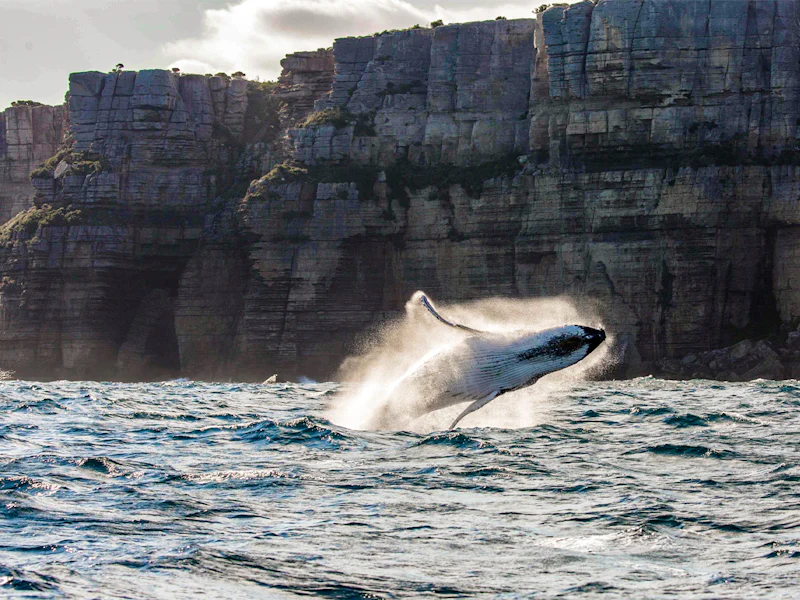
 New
New New
New New
NewWhen whales are around, month by month.
Based on operators' peak-season sighting records.
Chance of seeing whales or dolphins in Australia in peak season
Based on 51,495 verified sightings logged in Australia: real records, not estimates.
Source: GBIF.org, which aggregates marine mammal observations from OBIS-SEAMAP, Happywhale & iNaturalist. Retrieved October 2026.
The whales and dolphins you can realistically spot here, ranked by how often they are recorded.
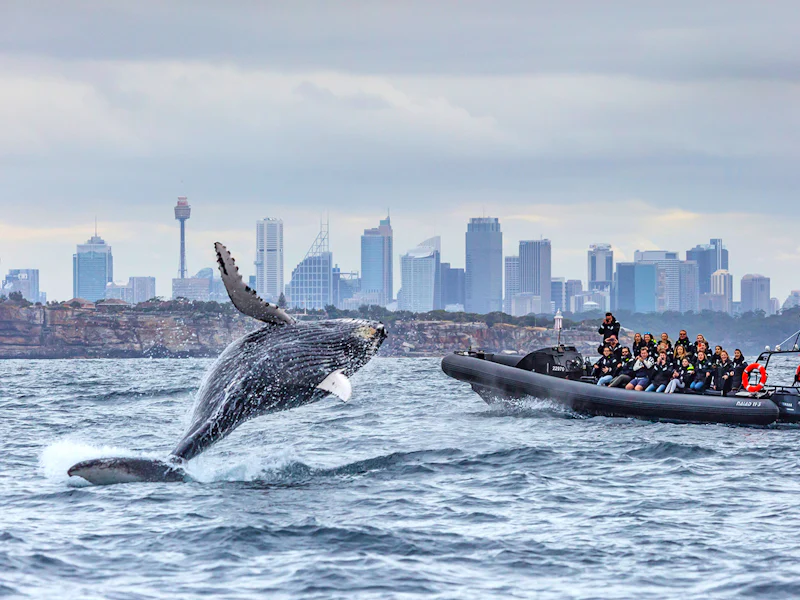
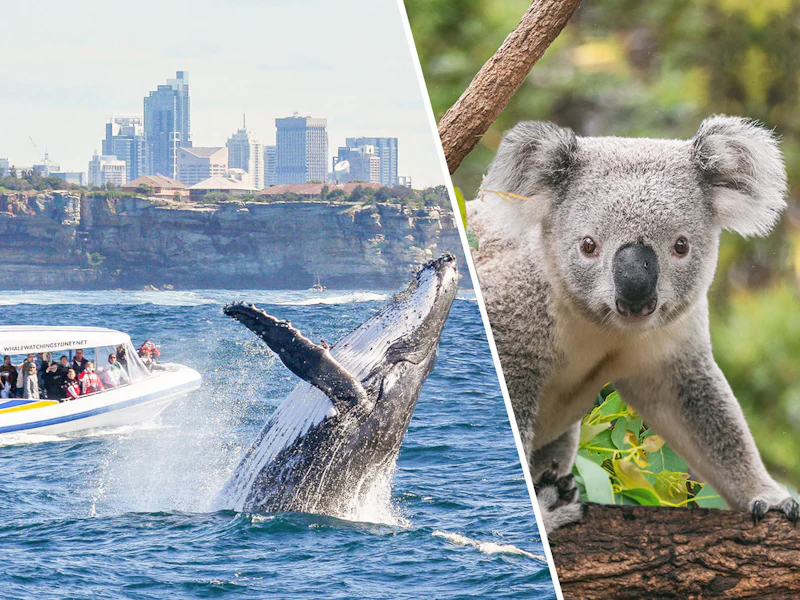
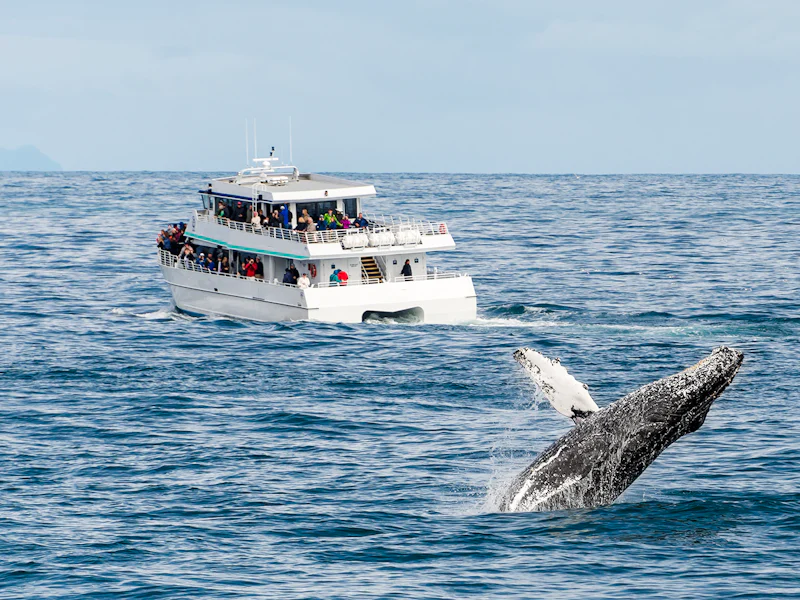
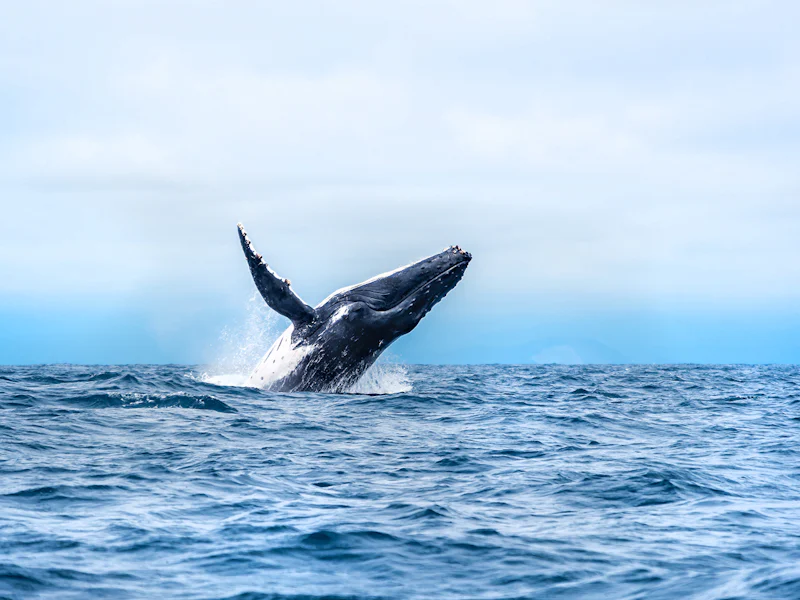
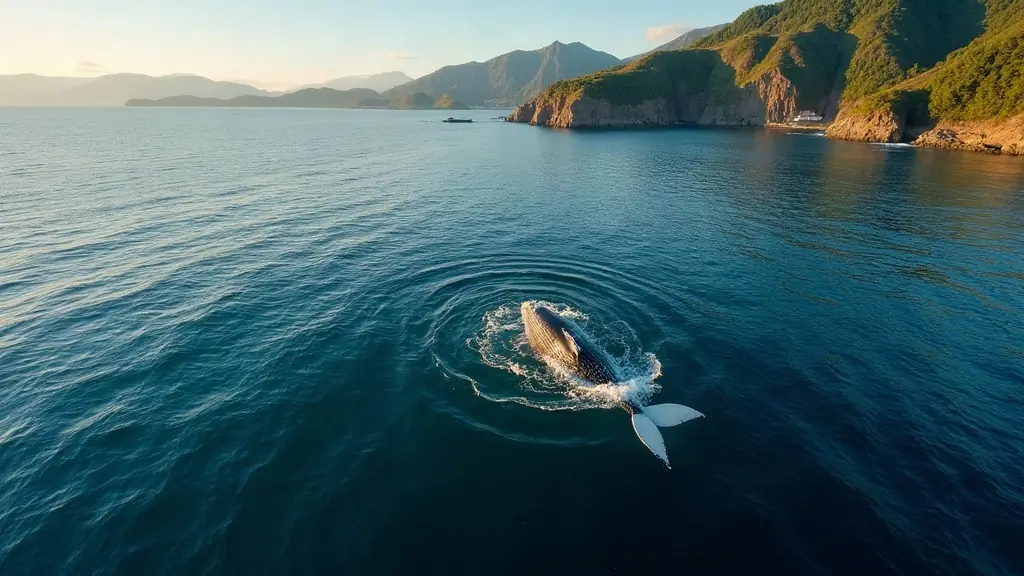
Australia whale watching puts you on the migration route of one of the largest whale populations on Earth: an estimated 40,000 humpback whales travel the east coast every year, some passing close enough to city beaches that you can watch a calf practice breaching beside its mother. Picture a 40-ton humpback rolling onto its side off Sydney Heads in July, one long white pectoral fin raised like a sail, while the Manly ferry keeps to its regular run in the background, as it does on most winter days along the humpback highway.
Below you will find the month-by-month best time to go, on both the east coast and in Western Australia, the three species you are most likely to meet, the seven departure cities with links to their local guides, what a typical tour costs and includes, and how to pick a boat. Prices are snapshots of the tours we compare, and most are bookable through Headout with free cancellation, so you can hold a peak-season date now and change your mind later at no cost.
June, July and October are the months to aim for. They are the peak of the Australia whale watching season, with sighting rates around 96 percent along the humpback highway. June and July catch the front of the northbound migration, when tens of thousands of humpback whales leave their Antarctic feeding grounds and head for warmer breeding waters off the Great Barrier Reef and the Whitsundays. October is the second peak, further into the southbound leg, when mothers travel more slowly with new calves and linger in sheltered bays such as Hervey Bay before continuing south.
May, August, September and November are solid shoulder months. May is the leading edge of the northbound migration, when the first humpbacks reach the New South Wales coast. August is the changeover between the two directions, with both late northbound whales and the earliest southbound ones in the water at once. September and November sit firmly in the southbound season, quieter than October but still reliable, and thinner crowds can make an easier trip to book. December through April is the off season on the east coast, since most whales are back in Antarctic waters feeding.
Western Australia runs on its own calendar. Perth and Fremantle sit on a different coast entirely, and the whale watching season off Perth runs later, from around September to November, when humpbacks pass close inshore on their southbound leg, with southern right whales and, in some years, blue whales also possible in these southern waters. If you are planning around Perth, work out its timing on its own instead of reading it off the Sydney-to-Cairns season.
For a month-by-month comparison against other destinations, see our guide to the best time for whale watching.
Three cetaceans account for almost everything you will see on an Australia whale watching trip, and each behaves differently enough that a good guide can usually tell you which one is coming before it fully surfaces.
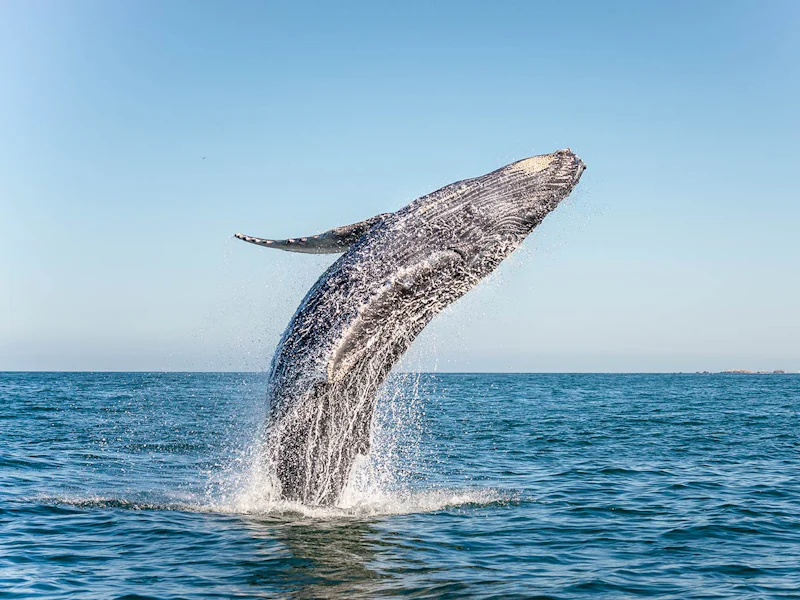
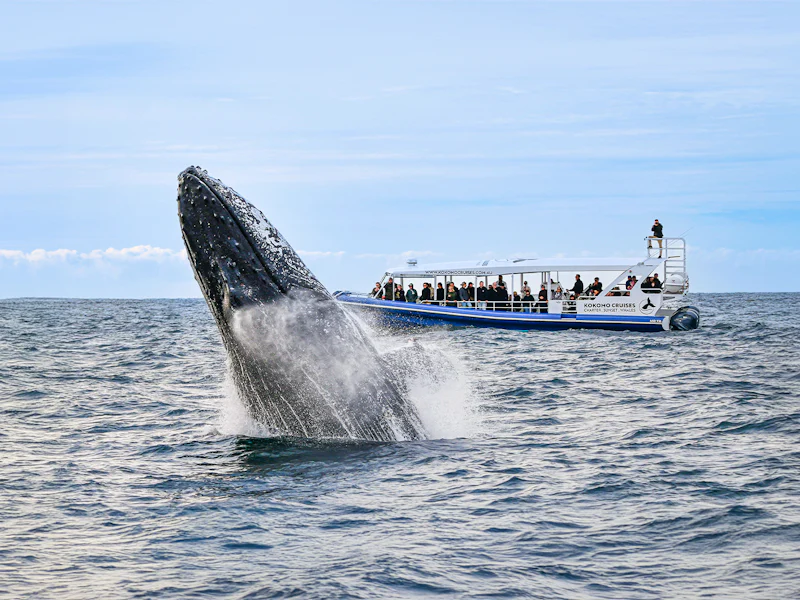
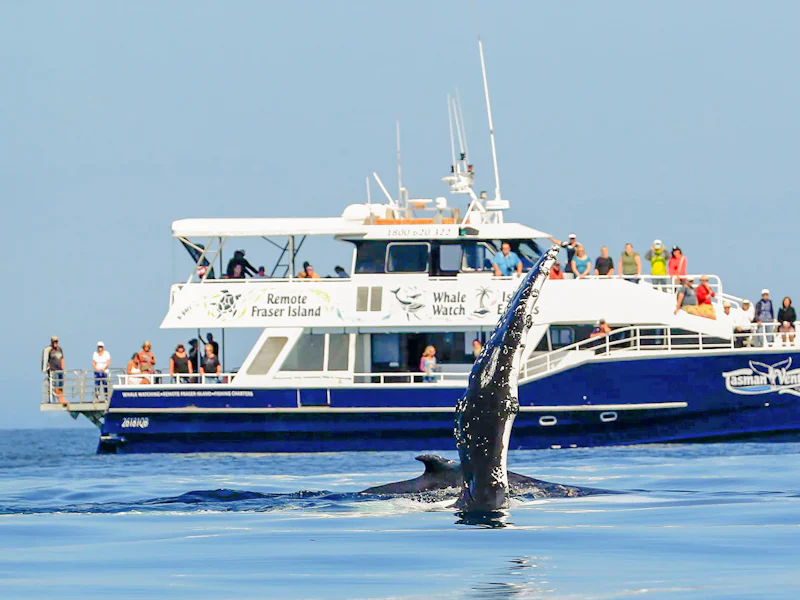
The whale the whole migration is named for. Close to 40,000 humpback whales travel the east coast route each year, one of the largest whale migrations left on the planet, and they are also the most acrobatic whale in Australian waters: full breaches, tail slaps and long white pectoral-fin waves are a normal part of a winter tour. NOAA Fisheries tracks this species recovering strongly across its range since commercial whaling ended. Calves stay close to their mothers for about a year, which is why the slower, southbound leg through spring is when a resting mother-and-calf pair is most likely to show up near the boat.
Named for being the "right" whale to hunt, since it swam slowly, floated when killed and yielded plenty of oil and baleen, a history that reduced the species to a few hundred animals worldwide by the early 1900s. Southern right whales have no dorsal fin and carry rough patches of pale skin called callosities on their heads, a pattern unique to each individual. Whale and Dolphin Conservation notes that the global population is now recovering, though more slowly in some regions than others. They favor calmer, more southern coastlines in winter, coming close to shore off South Australia, Victoria and southern Western Australia to calve, and turn up less often further north.
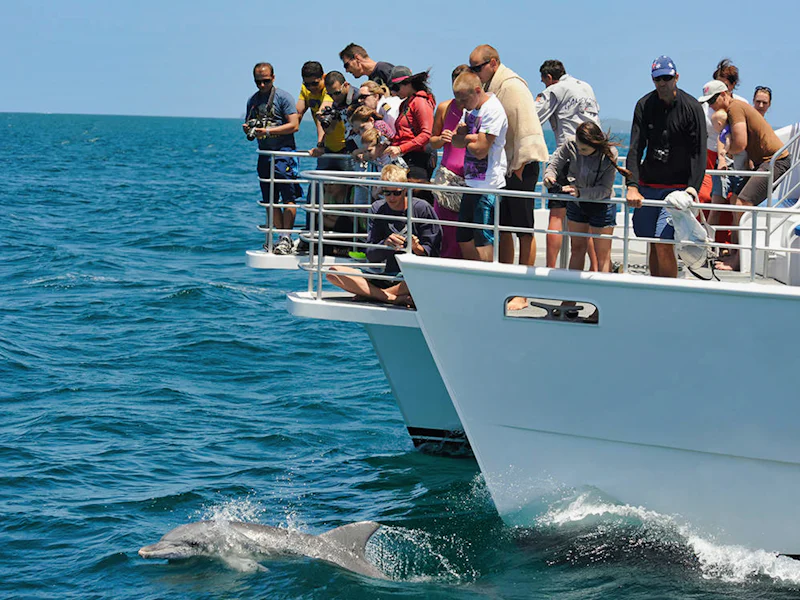
Regular company on almost every whale watching cruise along the coast, and often the most reliably entertaining part of the trip. Common dolphins travel in pods that can run from a handful of animals to several hundred, and they readily ride a boat's bow wave, leaping and crossing the wake while the crew keeps watch for whales further out. They are present year-round, so even an off-season trip outside the humpback migration usually turns up dolphins.
Seven cities and towns account for most of the country's whale watching tours, spread across two coasts and two different seasons. Each has its own detailed guide with local tours, prices and timing.
Sydney sits right on the humpback highway, and boats leave Circular Quay and Darling Harbour for open water off the Heads in under an hour. Tours here run from about $49 for a standard cruise with marine-biologist commentary up to around $107 for inflatable and ocean-experience boats, and the season runs the full length of the east coast migration, May through November, with June, July and October the strongest windows. Jervis Bay, about three hours south by road, adds dolphin-watch trips from about $42, a cheaper option on a week when whales are not cooperating. Read the full guide to whale watching in Sydney for the complete tour lineup.
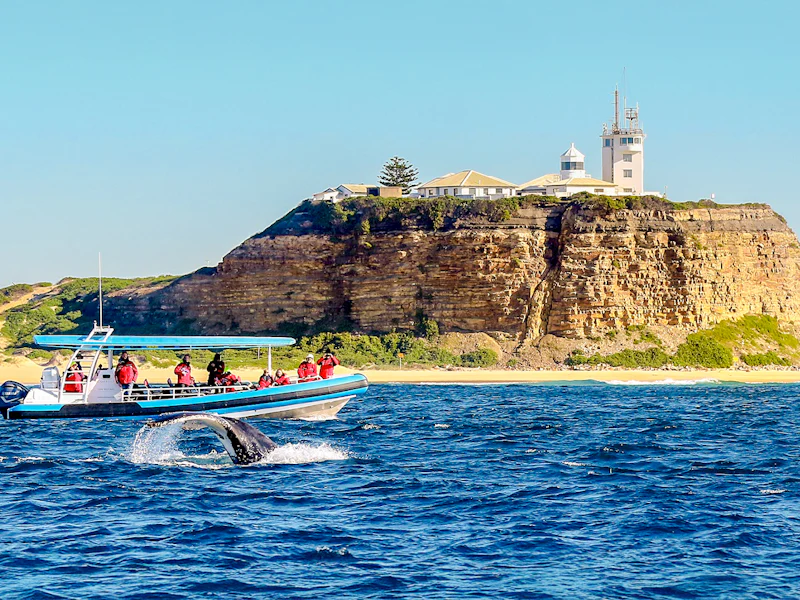
Newcastle and nearby Port Stephens sit further up the New South Wales coast and catch the same migration as Sydney, often with smaller crowds. Eco-certified cruises from Newcastle and neighboring Lake Macquarie run from about $97 for a 2-hour trip, timed around the winter northbound push and the spring return south.
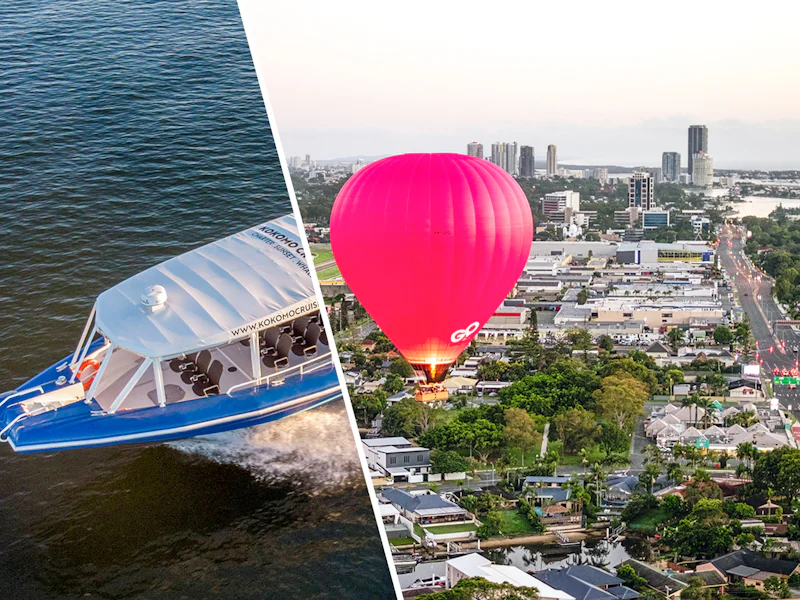
The Gold Coast's water is calmer and more sheltered than the open coast further south, which makes it a comfortable choice for families and for anyone nervous about seasickness. Standard 2.5-hour cruises start from about $53, a premium trip that pairs a 55-minute jetboat ride with a whale cruise runs from about $112, and dinner-cruise and hot-air-balloon combinations sit at the top of the price range for a longer day out. Winter and spring are the season here, tracking the same humpback migration as the rest of the east coast. See the guide to whale watching in Gold Coast for the full lineup.
Moreton Bay and the humpback route off south-east Queensland sit on Brisbane's doorstep, though the bookable trips we track on the Brisbane page depart from Hervey Bay, a drive of about four hours north. The season here mirrors the Gold Coast just to the south.
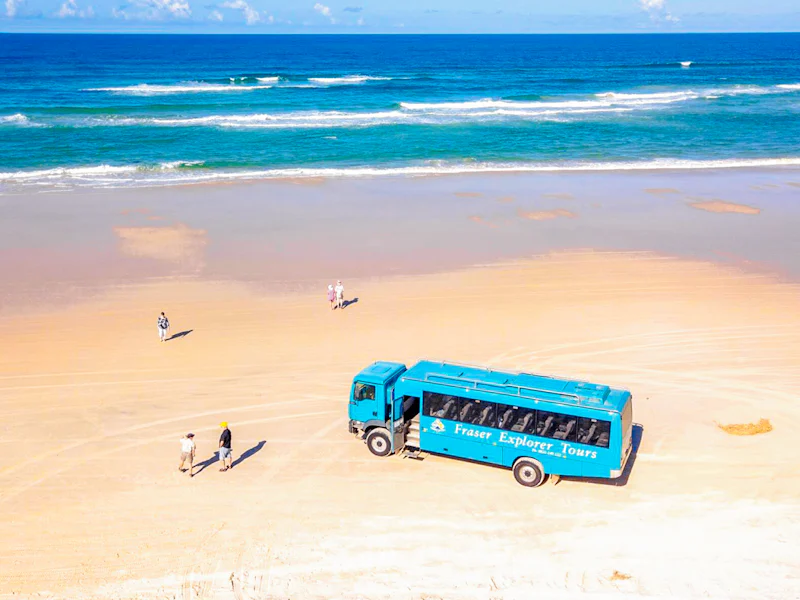
Sheltered Hervey Bay, between the mainland and K'gari (Fraser Island), is the country's best-known humpback nursery and one of the world's first designated Whale Heritage Sites. Southbound mothers and calves rest here for several days before the final leg back to Antarctica, which is a large part of why October, the humpback highway's second peak, is prime time in this bay. Half-day cruises from the Urangan harbor run about $86 to $111, and the longer Hervey Bay departures listed on our Brisbane page, a full-day whale cruise with lunch and a K'gari coach tour, cost $193 to $201.
Cairns is a different kind of Australia whale watching trip. Alongside the same humpback migration, the Great Barrier Reef here is one of the only places on Earth where dwarf minke whales reliably turn up, in a short window each June and July, often on trips that pair whale watching with reef time on Fitzroy Island from about $114.
Perth and Fremantle launch trips for humpbacks, southern right whales and, occasionally, blue whales, but on Western Australia's own calendar, from around September to November rather than the east coast's winter and spring. The one cruise we track for this coast is a 2.5-hour trip from about $76 out of Augusta, roughly 320 km south of Perth, where whales pass earlier, from late May to August. See the guide to whale watching in Perth for the details.
Australia whale watching runs on two coasts and two calendars: the east coast's humpback highway peaks in June, July and October, while Western Australia's own season peaks later, from September to November.
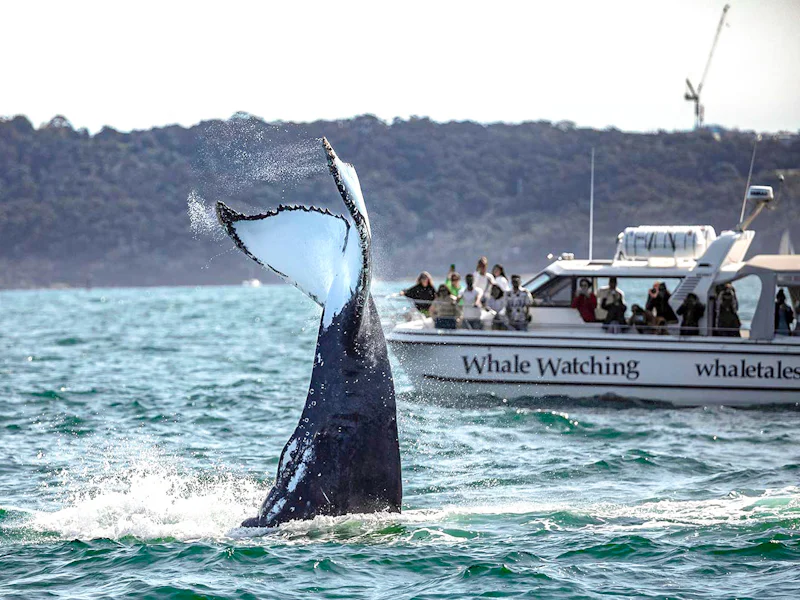
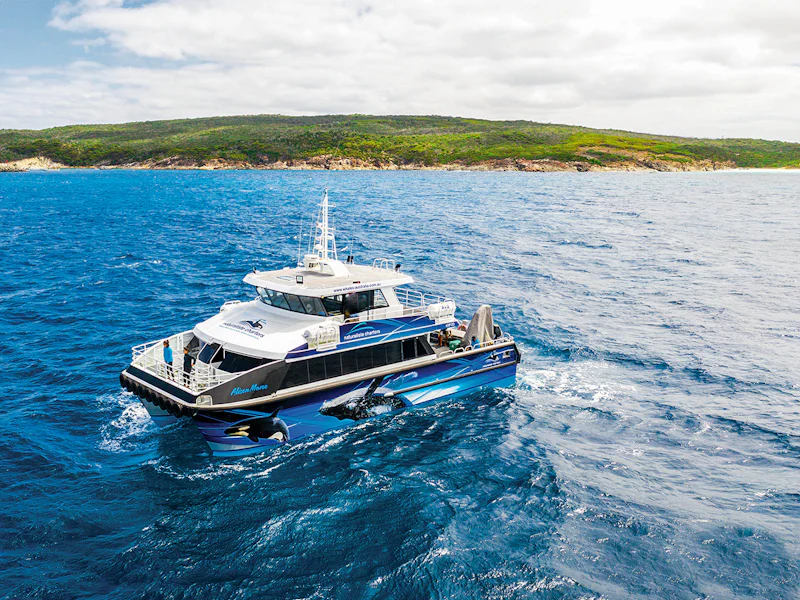
Most tours run 2 to 2.5 hours, though half-day and full-day options exist in several cities. The pattern is consistent: a briefing at the dock, a run out to open water or a known feeding or resting area, then a stretch of searching and watching while the crew narrates what is surfacing where, before heading back to port. Guides know the migration route well enough to read a distant blow or a raised fluke long before most passengers spot it, and on the calmer inshore water off places like the Gold Coast and Hervey Bay, seasickness is rarely the problem it can be further offshore. Four broad boat types shape the experience more than the port does.
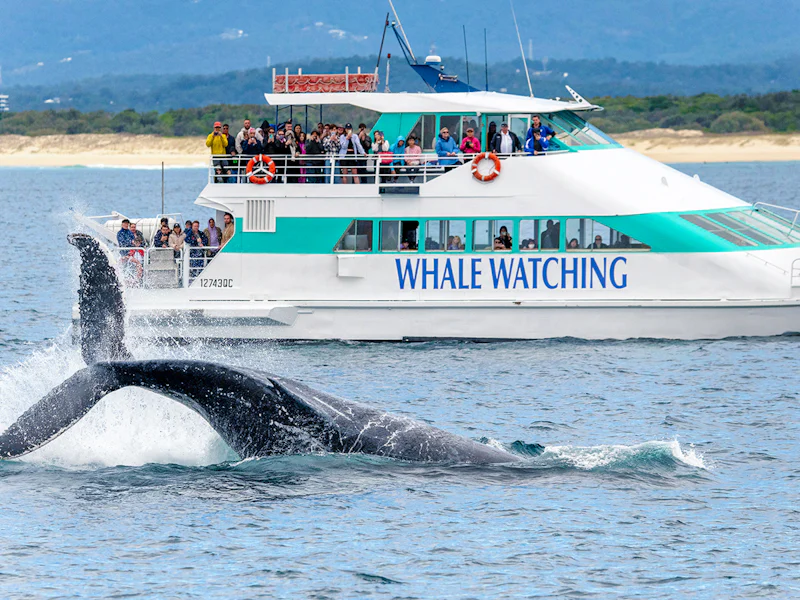
2 to 2.5 hours, from about $49 in Sydney and $97 in Newcastle. The default option, with an indoor cabin and open deck, room to move around, and usually a marine-biologist or naturalist guide narrating.
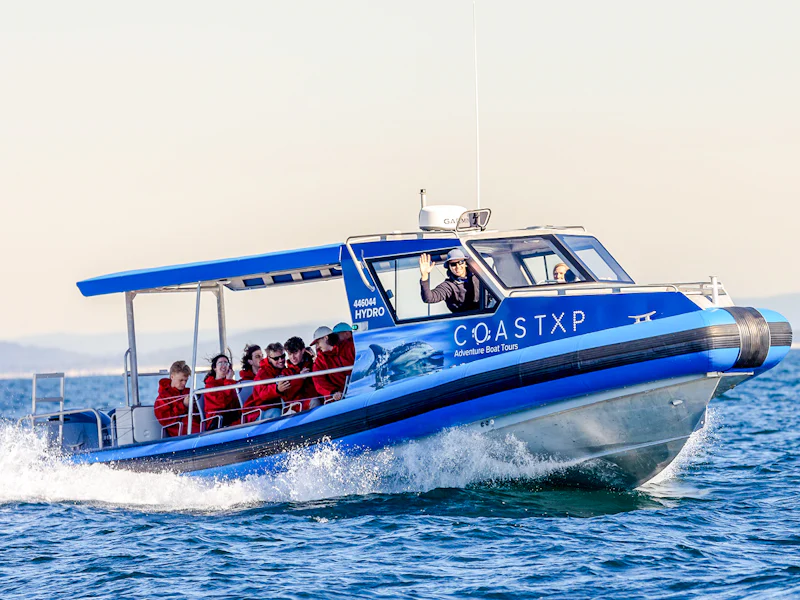
About 2.5 hours including a 55-minute jetboat ride, from about $112 on the Gold Coast. Faster and more thrilling than a standard cruise, with more time spent covering ground and less spent drifting.
2.5 hours, from about $93 to $142 on the Gold Coast. Whale watching paired with an onboard meal and a longer, more leisurely format, aimed at couples and special occasions as much as at wildlife.
4 to 11 hours, from about $193 for a full-day cruise out of Hervey Bay up to $331 for a hot-air-balloon-and-cruise combination on the Gold Coast. Built around a whole day out, often bundling reef time, an island visit, or breakfast and lunch with the whale watching itself.
As a rule of thumb, the core Australia whale watching tours sit in a band of about $75 to $114, with short dolphin-watch trips near Sydney starting from about $42 and full-day or premium combination trips running $193 to $331 at the top end. Pick the shorter, cheaper format if you mainly want the sighting; pick a full-day trip if you want to build a whole outing around it.
See every Australia tour side by side, with price, boat, duration and free cancellation listed for each.
See the toursYou want to be on deck when a 40-ton humpback breaches close enough to hear the splash. What is left to decide is the city, the month and the boat.
Australia's winter whale season still means a cold wind over open water, even on a sunny Sydney or Gold Coast day. Bring a windproof layer, closed shoes and sunscreen, since the glare off the water is stronger than it looks from land. Warm layers matter more the further south you travel and the earlier or later in the day your tour departs.
If you are at all prone to it, take a remedy before boarding rather than once the boat is moving, eat a light meal beforehand, and stay on deck with your eyes on the horizon. Sheltered options like the Gold Coast and Hervey Bay are the gentler choice over open-ocean departures further south.
The first sign is almost always a distant blow, and binoculars turn that puff into a clear view of the whale itself. A fast shutter speed beats a tripod on a moving deck for photos, and it is worth putting the camera down for at least a few sightings; the moments people remember are usually the ones they watched with their own eyes.
Whale watching in Australian waters is governed by national guidelines that keep vessels at least 100 meters from whales and leave it to a curious animal to decide whether to approach, inside the Australian Whale Sanctuary. According to the Australian Government's account of the east coast humpback population, whaling had reduced that population to a little over 100 animals by 1963, the year the International Whaling Commission banned Southern Hemisphere humpback whaling. Steady recovery of around 10 to 11 percent a year since is why close to 40,000 humpbacks travel the coast today. Choosing an operator that follows the guidelines helps keep it that way.
Hervey Bay's Whale Heritage Site status and the Great Barrier Reef's dwarf minke whale research both depend on long-term monitoring of individually recognizable whales, from tail-fluke markings to skin patterns. A whale you photograph on a Queensland cruise may already be known to researchers by name or by catalogue number, part of a population that has climbed back from an estimated 100 to 500 animals in the early 1960s to tens of thousands within a few human generations.
Come in June, July or October for the east coast, or September to November for Perth, pick the city that fits your route, choose a boat that matches your time and your stomach, and book early with free cancellation as your safety net, the same habit worth keeping wherever whale watching around the world takes you next.
June, July and October are the best months on the east coast, when sighting rates run about 96% along the humpback highway. June and July catch the northbound migration and October the southbound return of mothers with calves. Western Australia runs on a later calendar, with Perth's coastal season from about September to November.
It depends on what you want. Hervey Bay is the best-known humpback nursery in the country and the first Whale Heritage Site in the world, ideal for mothers and calves. Sydney is the most convenient city, and Cairns pairs the Great Barrier Reef with dwarf minke whales. There are seven main departure cities across two coasts.
Rarely on these tours. The whales you will realistically see here are humpbacks, southern right whales and common dolphins, which account for almost every sighting on the routes we compare. Orcas do pass Australian waters, most reliably off Bremer Bay in Western Australia, but they are not a feature of the humpback-highway cruises listed on this site.
Tours start from about $42 for a short dolphin cruise near Sydney, and most core whale watching trips fall between about $75 and $114 depending on the city, boat and duration. Full-day and premium combination trips run up to $331. A standard cruise is steadiest for families, while jetboats reach the whales faster.
Bookings are processed through Headout, which partners with vetted local operators. Whale Watching is an independent affiliate site. We may earn a small commission if you book through a link here, at no extra cost to you.
Compare tours in Australia and book in minutes. Most offer free cancellation.
See tours in Australia


