Perth
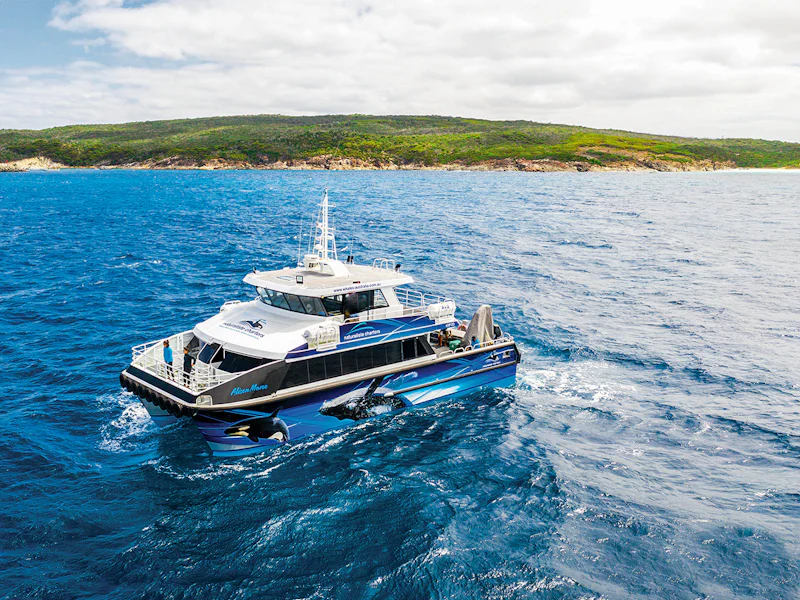
2.5 Hour Guided Whale Watching Cruise In Augusta
Free cancellation2.5 hrs
from $76
Check availabilityMore in Australia: Sydney Gold Coast Newcastle Brisbane Cairns Hervey Bay All of Australia
When whales are around, month by month.
Based on operators' peak-season sighting records.
Chance of seeing whales or dolphins in Perth in peak season
Based on 723 verified sightings logged in Perth: real records, not estimates.
Source: GBIF.org, which aggregates marine mammal observations from OBIS-SEAMAP, Happywhale & iNaturalist. Retrieved October 2026.
The whales and dolphins you can realistically spot here, ranked by how often they are recorded.
Perth whale watching runs on its own calendar, out of step with the humpback-highway dates you may have read about for Australia's east coast. Here on the west coast the show starts in spring: humpbacks stream south past Fremantle and the Sunset Coast from around September, with southern right whales close inshore in late winter and early spring, close enough to shore that a Hillarys Boat Harbour cruise can find them within twenty minutes of leaving the marina. Offshore, out past Rottnest Island in the deep water of the Perth Canyon, something rarer happens each autumn, when blue whales, the largest animals that have ever lived, arrive to feed on krill in one of the very few places on the planet where you can watch them from a boat.
Read on for the Perth whale watching basics: the west-coast season (which differs from the dates quoted for Sydney or the Gold Coast), the species you are likely to meet, the harbors the boats leave from, what a trip costs, and how to pick the right one. Prices come from the tours we track for this coast, and free cancellation means a date you hold now can still move if your plans do.
Perth sits on Australia's west coast, which puts it on a different calendar. Most of what gets written about Australian whale watching describes the east coast's humpback highway, where whales pass Sydney and the Gold Coast heading north in winter and south again through spring. Off Perth, Fremantle and Hillarys, the pattern is different: humpbacks make their southbound migration back toward Antarctic feeding grounds close inshore roughly between September and November, with stragglers into December, tracking down the coast past Rottnest Island and the Sunset Coast suburbs. The west-coast coastal season peaks in that spring window, and that is when the scheduled Hillarys Boat Harbour cruises run. If you are comparing regions, our guide to the best time to go whale watching breaks the whole country down month by month, and the same comparison shows why whale watching in Sydney peaks on a different schedule to Perth.
During that September-to-November stretch, sighting rates on the coastal cruises run high, around the 96 percent peak-season rate we see for Australia as a whole. Outside those months, coastal sightings thin out fast: the whales have either not yet arrived on their way south or have already passed, and a midsummer cruise off Perth is a much longer shot. January through April is the quietest stretch close to shore, though that is when the offshore season below gets going.
The Perth Canyon secret. Roughly thirty nautical miles offshore, where the continental shelf drops into deep water, the Perth Canyon becomes a magnet for blue whales each autumn, broadly March to May, as they gather to feed on the dense krill swarms the canyon's upwelling produces. Full-day safaris leave from the Fremantle Fishing Boat Harbour to reach them, and it is one of only a handful of places worldwide where blue whales, the largest animals ever known to have lived, can be reliably found close enough for a boat trip. It runs on a separate calendar from the coastal humpback season, so if autumn is when you are traveling, this is the trip to look for.
Three cetaceans account for almost every Perth whale watching encounter, and each keeps to its own part of the calendar and coastline. Humpbacks are the volume species and southern rights the closer, calmer encounter, while common dolphins turn up in any month.
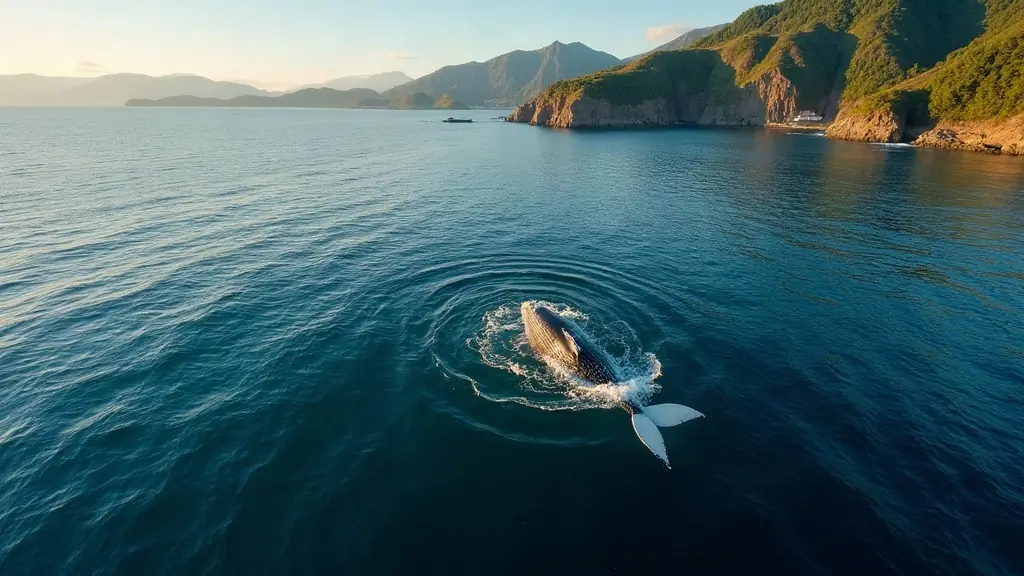
Perth's headline species and the reason the Hillarys season exists. Tens of thousands of humpbacks make the round trip along Australia's coastline every year, and the group passing Rottnest Island and the Sunset Coast on its southbound leg between September and November is part of that same population, heading back to Antarctic feeding grounds after calving in tropical waters further north. Adults reach up to about 60 feet and 40 tons, and close to shore they are often traveling as mother-calf pairs, with breaches and tail slaps common as calves practice the surface behavior they will need for a lifetime of migration. According to NOAA Fisheries, the species has recovered strongly since commercial whaling ended, though several populations remain protected.
Less numerous off Perth than humpbacks, but unmistakable when they show up: a rotund, dark body up to around 55 feet, no dorsal fin at all, and pale, roughened patches of skin called callosities on the head. They favor calmer, sheltered water close to shore for calving, and sightings along the Western Australian coast run from about June into October, overlapping the first weeks of the spring humpback passage off Perth. According to Whale and Dolphin Conservation, the species was hunted close to extinction before international protection took hold in the 1930s, and it has been recovering slowly ever since, though some populations elsewhere remain critically low.
Common dolphins are the reliable extra on almost every Perth cruise, coastal or offshore. Fast, social and often traveling in pods of dozens, they ride a boat's bow wave for the fun of it and are frequently the first marine wildlife spotted on the way out to deeper water. They do not follow the whales' seasonal pattern, so a cruise that comes up short on whales in the wrong month will usually still deliver a good dolphin encounter.
Two harbors, on opposite sides of the city, cover two very different trips, and both run on a calendar unlike most of the rest of whale watching in Australia.
Hillarys Boat Harbour, on Perth's Sunset Coast north of the city center, is the main base for the coastal spring season. Scheduled cruises run through September, October and November on the pattern described above, typically a two-hour round trip aboard a catamaran that rarely strays far from shore, with a marine biologist on board pointing out blows and breaches. It is the shorter, calmer option of the two harbors and the one built specifically around the humpback and southern right passage.
Fremantle Fishing Boat Harbour, at the mouth of the Swan River, is the departure point for the Perth Canyon safaris described above. These are a different kind of trip entirely: a full day at sea rather than a couple of hours, covering roughly thirty nautical miles each way to reach the canyon's deep water, chasing an autumn season that does not overlap with the coastal humpback months. If your travel dates only allow one Perth whale watching trip, decide first whether you want the easier coastal cruise or the longer offshore chase for blue whales, since the two run at opposite ends of the year.
Perth runs its whale season backward from the rest of Australia: spring for the coastal passage, autumn for the blue whales offshore.
A coastal cruise out of Hillarys follows a familiar rhythm: a briefing at the dock, a short run out past the harbor wall, then an hour or more scanning the water with the crew calling out blows and fins long before most passengers spot them themselves, and a run back to port. You can move between an open deck for photos and an indoor cabin out of the wind, so a two-hour trip never leaves you stuck in the weather the whole time. The offshore Perth Canyon safari is built differently, with a long transit each way and a bigger swell once you clear the shelter of Rottnest Island, in exchange for a shot at the rarest whale on the coast.
2 to 2.5 hours. The one whale watching cruise we currently track for this coast runs from about $76 per person for a 2.5-hour trip out of Augusta, near the state's southern tip and roughly 320 km south of Perth, so it is a separate trip rather than a Perth departure. Augusta's whales come earlier, from late May to August, but the format matches the scheduled Hillarys and Sunset Coast departures: an enclosed cabin, an open viewing deck, and a guide narrating. Best for families, first-timers, and anyone who would rather not commit a whole day to it.
Full day, roughly ten to twelve hours including the run out and back. No coastal cruise reaches the canyon; these trips use larger vessels built for open water and run only during the autumn blue whale window. Expect a longer day, rougher water once you are past Rottnest Island, and a much rarer payoff.
As a rule, the core Perth whale watching price band starts from about $76 for the standard coastal cruise in Augusta. That is the only tour we currently track in detail for this page, and none of our tracked listings leave from Hillarys or Fremantle yet, so treat it as a starting point and check current listings for the offshore Perth Canyon safaris, which are run by a small number of operators and priced separately.
Compare every Perth tour side by side: price, boat, duration, free cancellation.
See the toursIn Perth, your travel season picks the trip before any operator does, since the coastal cruise and the offshore safari barely overlap.
Even on a warm spring day the wind picks up once a boat is moving, and it is sharper still on the exposed run out to the Perth Canyon. Bring a windproof layer, sunglasses and sunscreen; the Western Australian sun is strong even outside summer, and there is little shade on an open deck.
The coastal Hillarys cruise stays in relatively sheltered water, but the Perth Canyon safari clears the protection of Rottnest Island and can turn choppy. If you are at all prone to motion sickness, take a remedy before boarding rather than after, eat a light meal beforehand, and stay on deck watching the horizon.
The first sign of a whale is usually a blow on the horizon, and binoculars turn a distant puff into a clear view of the species. A fast shutter speed and a wrist strap beat a tripod on a moving deck, and it is worth putting the camera down for a sighting or two; the moments people remember are the ones they watched with their own eyes.
Western Australia's Department of Biodiversity, Conservation and Attractions whale watching guidelines ask boats and swimmers to stay at least 100 meters from whales and to move away slowly, at low speed, if a whale approaches. Choose operators who visibly follow these rules and let the animals set the pace.
The state's last whaling station operated south of Perth, near Albany, until the late 1970s, among the last in the world to close. The humpback and southern right populations passing Perth today are still rebuilding from that era, so each season's sightings are part of a recovery that is still underway.
Pick your season first, coastal spring or offshore autumn, then choose the harbor and boat that match it, dress for wind rather than sunshine, and book early with free cancellation as your safety net, a rule that holds for whale watching trips the world over.
September to November. Perth runs on Western Australia's own calendar, later than the winter dates quoted for the east coast. Humpbacks move south past Fremantle and the Sunset Coast from about September, and scheduled Hillarys Boat Harbour cruises run through September, October and November. Blue whales appear offshore in the Perth Canyon in autumn.
Yes. Humpbacks pass close to shore on their southbound migration from about September to November, and a Hillarys Boat Harbour cruise can find them within twenty minutes of leaving the marina. Further offshore, past Rottnest Island in the Perth Canyon, blue whales feed each autumn. It is one of the few places you can watch them from a boat.
Yes, if you come in the right window. Between September and November the coastal cruises out of Hillarys are reliable, with about 96% peak-season sightings of humpbacks close to shore and the odd southern right early on. For something rarer, the full-day Perth Canyon safari offers a shot at blue whales, the largest animals that have ever lived.
The one cruise we track costs about $76 per person for 2.5 hours, but it sails from Augusta, roughly 320 km south of Perth, in the late May to August season. Hillarys departures and the full-day Perth Canyon blue whale safaris are run by other operators and priced separately, so check current listings for those.
Bookings are processed through Headout, which partners with vetted Perth operators. Whale Watching is an independent affiliate site. We may earn a small commission if you book through a link here, at no extra cost to you.
Compare tours in Perth and book in minutes. Most offer free cancellation.
See tours in Perth