Brisbane
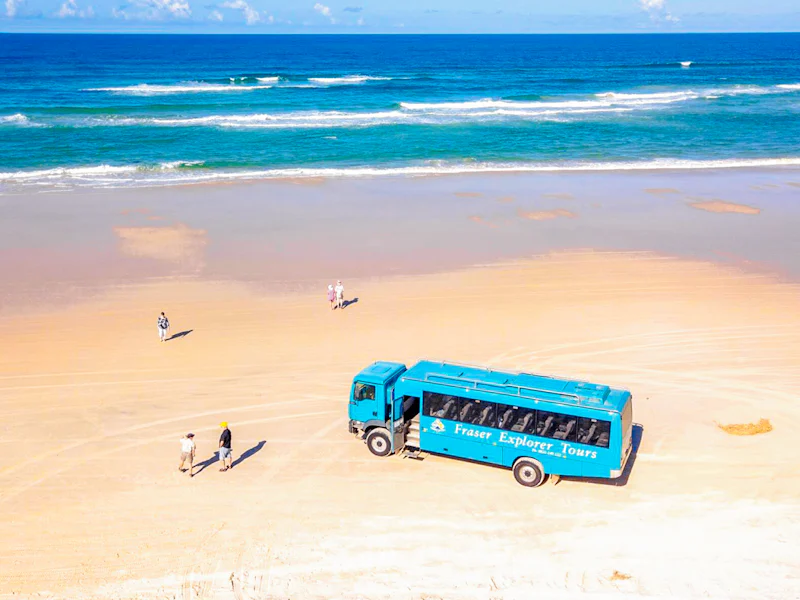
From Hervey Bay Kgari Fraser Island 1 Day Classic Coach Tour
Free cancellation11 hrs
from $201
Check availability New
New New
NewMore in Australia: Sydney Gold Coast Perth Newcastle Cairns Hervey Bay All of Australia
When whales are around, month by month.
Based on operators' peak-season sighting records.
Chance of seeing whales or dolphins in Brisbane in peak season
Based on 51,495 verified sightings logged in the wider Australia region: real records, not estimates.
Source: GBIF.org, which aggregates marine mammal observations from OBIS-SEAMAP, Happywhale & iNaturalist. Retrieved October 2026.
The whales and dolphins you can realistically spot here, ranked by how often they are recorded.
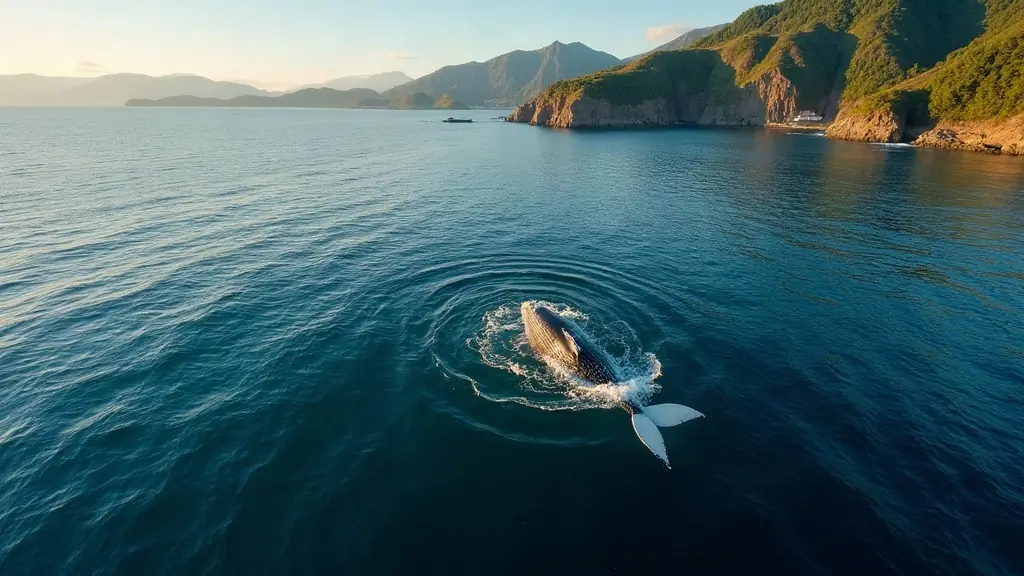
Brisbane whale watching, a highlight of whale watching in Australia, happens on some of the most sheltered water of any Australian departure point: Moreton Bay, the wide, island-fringed stretch of sea between the mainland and Moreton Island and North Stradbroke Island. Picture a 50-foot humpback rolling onto her side a few boat lengths away, flipper raised, a calf tucked against her flank, with the calm water of the bay barely rippling around them. Calm water is the appeal here. Instead of the open-ocean swell of some other Queensland ports, Brisbane has a wide, protected bay that whales use as a stopover on one of the longest migrations of any mammal on Earth.
Read on for the season month by month, the whales and dolphins you are likely to meet, where boats leave from around the bay, what a typical tour costs and includes, and how to choose between the handful of bookable trips. The figures come from tours we compare, and most carry free cancellation, so you can hold a peak-season date now and change it later for free.
June through November is the Brisbane whale watching season, and June, July and October are the peak of it. The east Australian humpback population moves north past Moreton Bay from about mid-June, heading for the warm breeding grounds of the Great Barrier Reef, then filters back south from August into November with mothers and new calves in tow. Peak-month sighting rates run around 96%, which is high for sheltered bay water away from the open ocean.
May, August, September and November are the shoulder months. Early and late in the season the numbers thin out a little and the migration is less concentrated, but whales are still moving through, and shoulder-season trips are usually easier to book and quieter on deck. If you are choosing between destinations by month, our guide to the best time to go whale watching lines up every region side by side.
December through April is the off season. The migration has moved on to Antarctic feeding grounds by then, and almost no operator runs dedicated whale trips through the Brisbane summer.
Moreton Bay is a rest stop on the highway. Research from the University of Queensland has identified Moreton Bay as a resting and stopover site for migrating humpbacks. The Queensland Government's Moreton Bay Marine Park pages note that whales pause here to rest and socialize, and that mothers with young calves take shelter in the bay's calm water before continuing the journey. An all-white humpback known as Migaloo has also been sighted moving through the bay over the years, which adds to Moreton Bay's standing as a migration waypoint.
Moreton Bay Marine Park has recorded nine species of whale passing through in a given year, making it one of the more cetacean-rich stretches of coast in Australia, though the vast majority of sightings on a Brisbane whale watching trip come down to one headline species plus regular dolphin company. Here is what you are likely to see on the water.
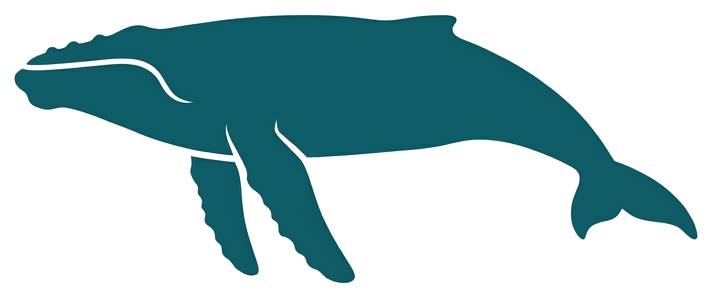
The whale the whole season is built around. Tens of thousands of humpbacks migrate along the Queensland coast each winter as part of the east Australian population, now estimated at more than 40,000 individuals, one of the great conservation recoveries since commercial whaling ended. Adults reach up to about 60 feet and 40 tons, and this is the whale you will see breaching, tail slapping and spy hopping close to the boat. According to NOAA Fisheries, humpbacks undertake some of the longest migrations of any mammal, and the Moreton Bay leg is a rest point partway through a round trip of roughly 10,000 kilometers between Antarctic waters and the Great Barrier Reef.
A rarer, quieter encounter, and one worth knowing about because Moreton Bay sits at one of the northernmost points in Australia where southern right whales have been recorded at all, and sightings remain occasional. Unlike the acrobatic humpback, southern rights are slow, buoyant whales that come close to shore to calve in spring, identifiable by the pale, roughened patches of skin called callosities on their heads. The species was hunted to the edge of extinction in the 19th century and is still recovering, so a Brisbane sighting is a lucky extra that you cannot plan a trip around.
Regular company on most cruises, and often the animal that keeps a slow whale-search entertaining. Common dolphins travel in active, vocal pods and will frequently ride a boat's bow wave, and Moreton Bay's resident bottlenose dolphins add to the mix, meaning most trips see some cetacean even on a quiet whale day. Whales and dolphins are what most tours here are built to find.
Moreton Bay's marine wildlife does not stop at cetaceans. Dugongs, gentle marine mammals related to manatees, graze the bay's seagrass meadows year-round, and while they are not whales or dolphins, spotting one is a bonus on a bay cruise. Moreton Bay is considered one of the richest marine habitats in Australia.
Moreton Bay is large, and boats reach the same migration corridor from a handful of different shorelines around Brisbane. Where you start changes how you reach the whales more than which whales you find. Further south, the same humpback migration passes closer to open ocean at whale watching in Sydney, a useful comparison if your trip spans both cities.
The Redcliffe peninsula sits directly on Moreton Bay, north of the Brisbane CBD, and its marinas put boats close to the migration corridor with a short run out rather than a long transit down a river first. It is the most direct route from shore to whale-watching water on the bay.
Some cruises leave from central Brisbane along the Brisbane River itself, cruising downstream to the mouth of the river and out into Moreton Bay. It is a slightly longer trip to the whales, but a convenient option if you are staying in the city and would rather not drive to a bayside marina.
A scatter of smaller marinas around the bay, closer to Moreton Island and North Stradbroke Island, offer the shortest crossing to the deeper channels where whales travel and rest. These departure points tend to suit operators running smaller or faster boats, and they put you nearest the sheltered water on the eastern side of the bay.
Moreton Bay is a wide, sheltered stretch of water the humpback migration already uses as a rest stop, right off Australia's third-largest city.
A typical Moreton Bay whale watching trip starts at a marina briefing on safety and what to expect, then a cruise out into the bay, an open stretch of searching and watching once whales are in range, and a return leg. Because Moreton Bay is so sheltered, the ride tends to be far calmer than an open-ocean whale trip, which makes it a comfortable choice for families or anyone nervous about seasickness. Crew narrate what is surfacing and where, and most boats let you move between an open deck for photos and a covered cabin out of the sun or wind.
About 4 hours, from about $86. A dolphin eco sailing cruise along K'gari (Fraser Island) that departs Hervey Bay, not Brisbane, so budget a drive of about four hours north first. The cheapest listing, and a good fit if dolphins and a calm sail appeal as much as whales.
About 9 hours, from about $193. A full-day whale watching cruise out of Hervey Bay with lunch included, more time on the water and a better shot at extended encounters once whales are found.
About 11 hours, from about $201. A full-day coach tour of K'gari from Hervey Bay, the longest option in the current lineup. It is an island day rather than a whale cruise, so pair it with a separate boat trip if whales are the goal.
As a rule of thumb, the Brisbane listings run from about $86 to $201, and all three leave from Hervey Bay, roughly 290 km north of the city, rather than from Moreton Bay itself. Only the $193 full-day cruise is a dedicated whale trip; the $86 sailing centers on dolphins and the $201 option tours K'gari by coach. Moreton Bay operators run their own whale cruises from Redcliffe and the river in season, which we do not yet track.
Every Brisbane tour in one list, with price, boat, duration and free cancellation for each.
See the toursThe decision here is simpler than in many whale watching destinations, because Moreton Bay's calm water removes a lot of the guesswork about boat type and sea conditions. What is left is timing, duration and value.
Moreton Bay is sheltered compared to the open ocean, but it is still open water, and the wind picks up once the boat is moving. Bring a light jacket even on a warm winter day, along with a hat and sunglasses, since Queensland sun on open water is stronger than it feels.
Because the bay is so protected, Brisbane whale watching is a gentler ride than most Australian whale trips. If you are especially prone to seasickness, take a remedy before boarding regardless, and choose the shorter half-day cruise for your first trip.
Do not fix your eyes only on the horizon for whales. Moreton Bay's seagrass meadows support a resident dugong population, and common and bottlenose dolphins often ride the bow, so keep scanning closer to the boat as well as further out.
Whale watching around Moreton Bay is regulated under Queensland's Nature Conservation Act and the Commonwealth's Australian Whale Sanctuary, which set minimum approach distances to limit disturbance during the migration. Groups such as Whale and Dolphin Conservation note that noise and close approaches can disrupt humpback social behavior, so a responsible operator lets the whales set the distance.
A city bay can sound like a lesser whale watching spot than a wild coastline, yet Moreton Bay Marine Park has recorded some of the highest cetacean diversity of any Australian marine park, and researchers now recognize it as a stopover on the humpback migration where whales break the journey to rest.
Come between June and November if you can, aiming for June, July or October, pick a departure point that suits your route around the bay, choose a duration that fits your day, and book with free cancellation so a weather shift does not cost you anything, the same low-risk approach worth taking with any whale watching trip anywhere.
June, July and October are the best months, with peak-month sighting rates around 96%. The east Australian humpbacks move north past Moreton Bay from about mid-June, then filter back south from August into November with new calves. The wider Brisbane season runs June through November.
Yes. Moreton Bay sits on the humpback migration corridor, where tens of thousands of humpbacks pass each winter and about 96% of peak-season trips find whales. Southern right whales turn up only occasionally this far north, and common and bottlenose dolphins keep most cruises company along the way.
The Brisbane listings we track run from about $86 to $201, and all three depart from Hervey Bay, roughly 290 km north. The $86 option is a 4-hour dolphin sailing cruise, the $193 trip is a full-day whale cruise with lunch, and the $201 option is a K'gari coach tour. Moreton Bay cruises from Redcliffe are priced separately.
Bookings are processed through Headout, which partners with vetted Brisbane operators. Whale Watching is an independent affiliate site. We may earn a small commission if you book through a link here, at no extra cost to you.
Compare tours in Brisbane and book in minutes. Most offer free cancellation.
See tours in Brisbane