 Bestseller
Gold Coast
Gold Coast 55 Minute Jetboat Ride Premium Whale Watching Cruise
Free cancellation2.5 hrs
$118from $1125% off
Check availabilityBestseller Bestseller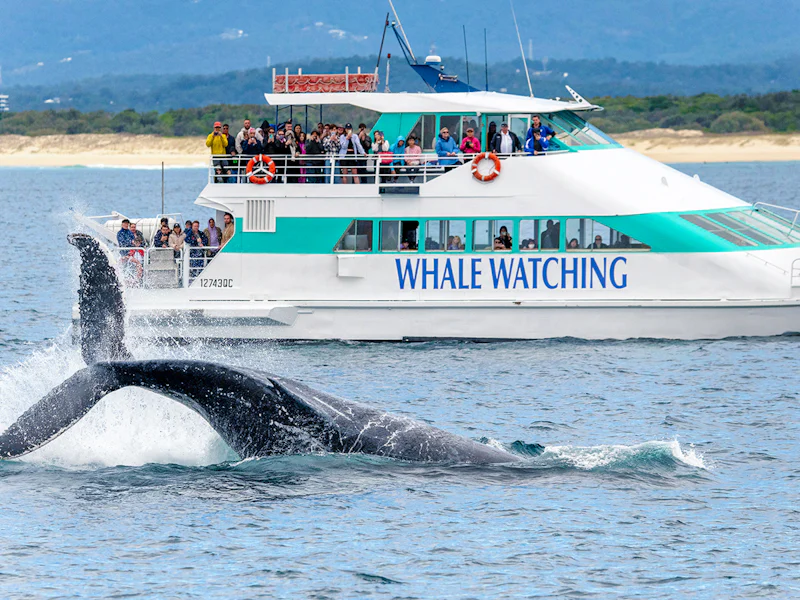
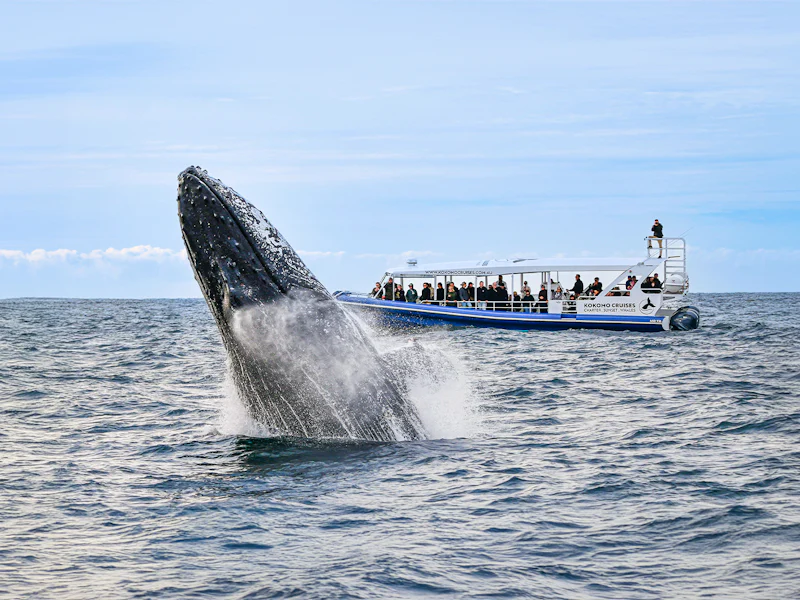
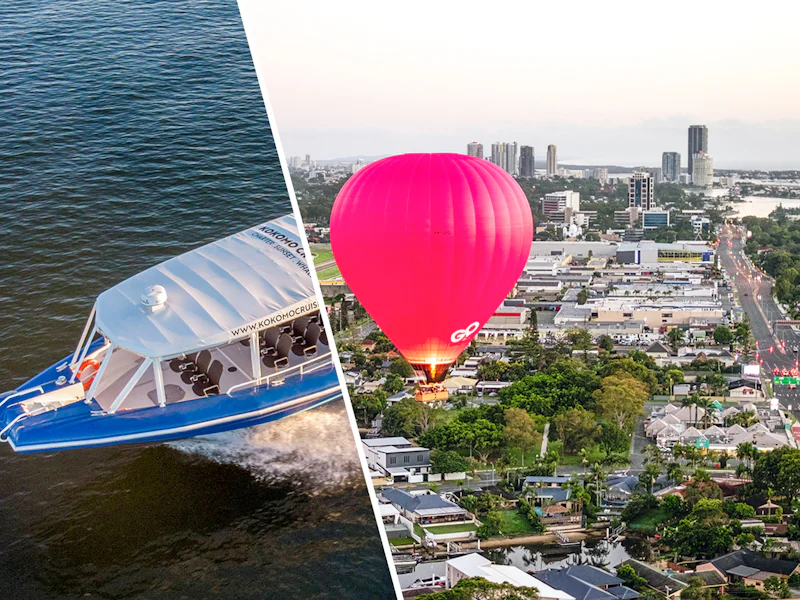
 New
NewMore in Australia: Sydney Perth Newcastle Brisbane Cairns Hervey Bay All of Australia
When whales are around, month by month.
Based on operators' peak-season sighting records.
Chance of seeing whales or dolphins in Gold Coast in peak season
Based on 2,499 verified sightings logged in Gold Coast: real records, not estimates.
Source: GBIF.org, which aggregates marine mammal observations from OBIS-SEAMAP, Happywhale & iNaturalist. Retrieved October 2026.
The whales and dolphins you can realistically spot here, ranked by how often they are recorded.
Gold Coast whale watching works differently from most of the migration route because the water here stays shallow and sheltered right up against the beaches, so the humpback highway runs close inshore, often visible from the sand before a boat even leaves the marina. That shallow, protected stretch behind the surf line is also why mothers slow down and rest here with new calves on the return leg south, floating and nursing in water calm enough that a small boat barely rocks alongside them. Picture a calf practicing its first breach a few boat-lengths off the rail while its mother rests just beneath the surface, Surfers Paradise still on the skyline behind the spray.
Below is the month-by-month season, the species you are likely to meet, the Main Beach and Southport departure points, the free shoreline lookouts nearby, what a tour costs, and how to pick between the tours we compare. Prices are snapshots taken from live listings, most bookable through Headout with free cancellation, so a peak-season date can be held now and dropped later at no cost. For how the Gold Coast compares with the rest of the route, the whale watching in Australia hub sets every region side by side.
The season here runs roughly June through November, and June, July and October give the strongest odds. June and July carry the northbound leg, as humpbacks push up from Antarctic waters toward the breeding grounds off the Great Barrier Reef, moving in fairly steady numbers close along this stretch of coast. October is the busier of the two peaks here, because the southbound mothers with young calves that make this shallow water their resting stop move slowly and stay for days rather than hours, stacking the odds in a boat's favor before it even leaves the Broadwater. In those peak months, tours we track land sighting rates around 96%, and the odds hold up well through the spring resting period.
May, August, September and November sit a step below the peak: May brings the first scattered northbound arrivals, August is the quiet handover between directions, and September and November are steady months for southbound mothers and calves, often with smaller crowds than the October rush. From December through April the resting pods have moved on and most dedicated tours pause until the following June. The best time to go whale watching guide lines this calendar up against every other destination we cover.
Why mothers and calves choose this stretch of coast. The water behind the Gold Coast Seaway and along the open beaches out front stays shallower and calmer for longer than most of the migration route, sheltered from the deep swell that runs further offshore. For a newborn calf still building strength, that calmer water is safer to rest and nurse in than open ocean, which is why southbound mothers slow down and linger here, while the northbound adults in June push straight through. It also means the ride out to find them is short and comparatively gentle.
Three animals account for almost every sighting logged here, and the balance between fast-moving adults and resting mother-calf pairs shifts noticeably as the season goes on.
The reason this stretch of coast has a season at all. Adults reach up to about 60 feet and 40 tons, and while June and July bring faster-moving northbound animals through, it is the October return that defines the Gold Coast, when mothers travel with calves born earlier in the year and rest in shallow inshore water before continuing south. That resting behavior, floating, nursing, occasional tail slaps from a calf still learning its own body, is a slower, closer sighting than the breaching displays further south. Government surveys have tracked this stock rebuilding from an estimated 100 to 500 whales when hunting stopped in 1962 to tens of thousands today.
Rare this far north, since the species favors the cooler waters off southern Australia to calve. No dorsal fin and pale, roughened patches called callosities on the head make an individual unmistakable when one does turn up, and each callosity pattern is distinctive enough that researchers use it to identify specific whales. A confirmed sighting off the Gold Coast is uncommon enough that it is worth reporting to the crew's logbook rather than assumed to be a humpback at a distance.
A near-constant presence in the Broadwater and just beyond the Seaway, whale season or not. Bottlenose dolphins tend to work the sheltered marina and channel water close to Main Beach, while common dolphins range further out and often ride a boat's bow wave once it clears the Seaway. Crews frequently spot dolphins first and use them as a marker for where the whales might be resting nearby.
Nearly every boat works out of the same sheltered stretch of the Broadwater, and a short run of ocean-facing hills nearby covers the free, land-based option.
Boats leave from Mariners Cove Marina and the Main Beach precinct on the Broadwater, opposite Sea World, then make a short run through the Gold Coast Seaway before turning along the open beaches where the whales are traveling. That crossing stays protected almost the whole way, a large part of why this is one of the gentler starting points on the east coast route: the Broadwater rarely has much chop, and the water just beyond the Seaway is shallower and calmer than most ocean departures further south. The Spit, the sandy strip running out toward the Seaway, puts walkers close enough that whales are sometimes visible from the pier without a boat at all.
South of the marina precinct, a string of headlands gives you a fair chance of a sighting from dry land. Tumgun Lookout, above Burleigh Heads National Park, sits high enough to scan a wide stretch of water on a clear day, and Point Danger, right on the Queensland-New South Wales border at Coolangatta, offers an open, unobstructed view out to sea. A boat still gives you the close, drifting encounter with a resting mother and calf. The headlands are worth a stop on the way to or from the marina, especially in the slower southbound months when whales are moving less and staying visible longer.
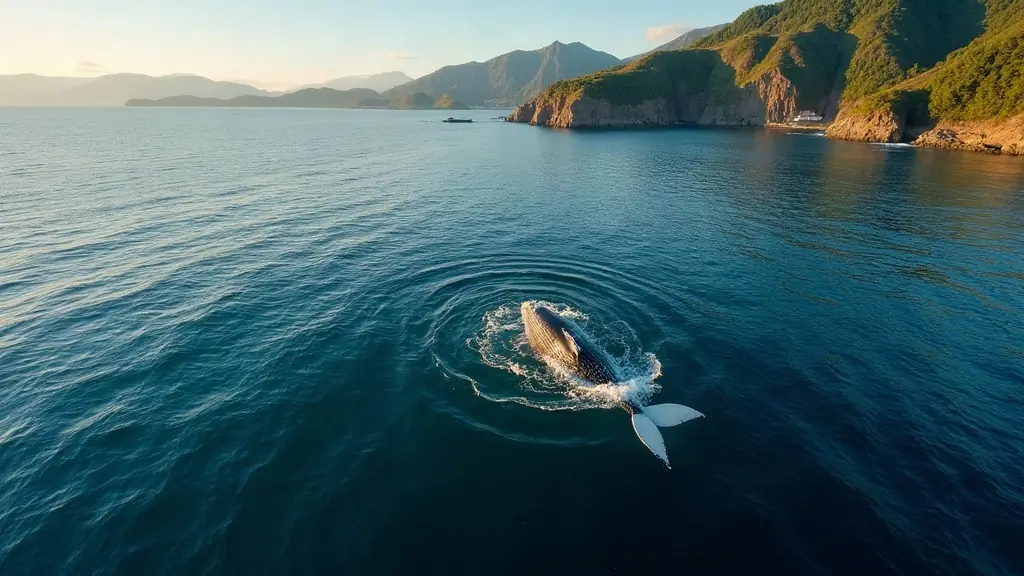
On the Gold Coast the humpback highway runs along the beach, close enough to watch a calf learn to breach.
Most trips run about 2.5 hours: a short briefing at the marina, a calm run through the Broadwater, then the Seaway crossing into open water where spotters start scanning. Because that crossing is both short and sheltered, boats are usually searching within twenty to thirty minutes of leaving the dock, and the shallow, calmer conditions mean the ride rarely feels rough even for passengers who dread open water elsewhere. Once whales are found, especially a resting mother and calf, boats typically cut engines and drift, since a resting pair often stays in roughly the same patch of water for an extended stretch, giving everyone aboard a long, unhurried look.
About 2.5 hours, from about $53 to $63. The core Gold Coast format: a stable cruise boat with an outdoor deck and a straightforward run through the Seaway and back. Built for families, first-timers and anyone who wants the calmest ride on offer.
About 2.5 hours, from about $112, pairing a 55-minute jetboat ride with the whale cruise. Faster and more maneuverable than the standard cruise, with a livelier crossing of the Seaway itself, though still working the same sheltered inshore water once out.
About 2.5 hours, from about $93 to $142. Whale watching folded into an evening out, pairing a meal on board with broader Broadwater sightseeing.
Up to 4 hours, from about $331. The premium tier, pairing the cruise with a second activity such as a scenic flight, aimed at people making a full day of it.
As a rough guide, the core Gold Coast tours span about $53 to $142, with the standard cruise the cheapest full trip and the jetboat and dinner-cruise formats filling the middle. The $331 combo sits in its own category: a longer day built around a second activity, and the wrong pick if you want a reliable sighting for the least money.
Gold Coast tours, laid out side by side on price, boat, duration and free cancellation.
See the toursWith almost every boat working the same sheltered Broadwater-to-Seaway route, you are mostly picking a month, a boat type and how much of a family day you want built around it.
Winter and spring in southeast Queensland stay mild, but the breeze picks up once the boat clears the Seaway and picks up further with the boat's own speed. A light jacket, a hat that ties on, sunglasses and reef-safe sunscreen cover most conditions here without the bulkier layers other legs of the migration need.
The sheltered Broadwater start and short Seaway crossing make this one of the gentler rides on the whole coast, though the open water beyond can still have a light swell. Eating lightly beforehand and watching the horizon during the crossing covers most of what anyone prone to it needs to do.
Tumgun Lookout above Burleigh Heads and the open view from Point Danger both look over the whales' route at no cost, useful either as a warm-up before a booked cruise or a backup on a morning when tours are full. Binoculars turn a distant blow into a clear look from either spot.
Queensland sets minimum approach distances for vessels around whales, with extra caution built in around a calf, since a resting mother and calf pair is more sensitive to disturbance than a fast-moving adult passing through. A crew that drifts and leaves the pair be is following the spirit of those rules.
The east coast humpback population fell to a few hundred animals at most under commercial whaling and has since rebuilt into the tens of thousands that now use this coast as a nursery each spring. Conservation groups tracking humpback numbers worldwide point to this recovery as one of the more complete ones on record, so a mother and calf resting off the Gold Coast are that recovery in plain view.
Aim for June, July or October, book a standard cruise for the calmest, most family-friendly ride, and hold your date with free cancellation. If deeper water and dramatic sandstone cliffs sound more like your trip, whale watching in Sydney covers the same migration more than 800 kilometers south by road, on a very different stretch of coast.
June, July and October are the best months, when about 96% of Gold Coast tours find whales. June and July catch the humpbacks heading north, and October brings mothers and calves back south. The wider season runs June to November. The calendar above shows the month-by-month pattern.
Yes. The humpback highway runs a short boat ride off the coast, so tours reach the whales within twenty to thirty minutes of leaving the Broadwater. In peak season about 96% of trips find whales, mostly humpbacks, with common dolphins often riding the bow on the way out.
For most visitors between June and November, yes. Peak-season sighting rates run about 96%, the water behind the Seaway is calm and sheltered, and the crossing is short, which makes it one of the more comfortable, family-friendly bases in Australia. Outside those months there is little to see, so timing matters most.
Gold Coast tours start from about $53 per person, with most falling between about $53 and $142 depending on the boat, the duration and extras like a meal. A cruise with a 55-minute jetboat ride runs from about $112 and dinner cruises from about $93 to $142, while a standard cruise is the steadier, cheaper choice for families.
Bookings are processed through Headout, which partners with vetted Gold Coast operators. Whale Watching is an independent affiliate site. We may earn a small commission if you book through a link here, at no extra cost to you.
Compare tours in Gold Coast and book in minutes. Most offer free cancellation.
See tours in Gold Coast