Cairns
Cairns To Fitzroy Island Whale Watching Cruise Free Island Time
Free cancellation6.5 hrs
from $114
Check availability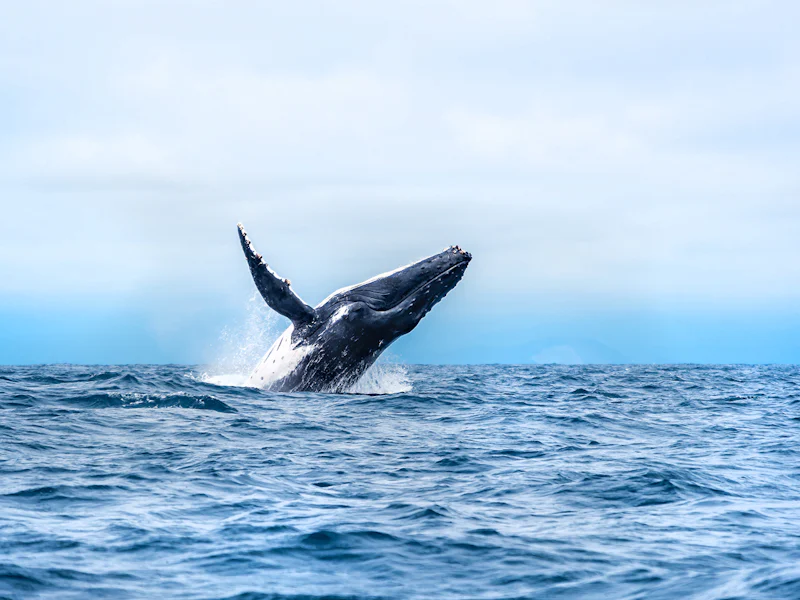
More in Australia: Sydney Gold Coast Perth Newcastle Brisbane Hervey Bay All of Australia
When whales are around, month by month.
Based on operators' peak-season sighting records.
Chance of seeing whales or dolphins in Cairns in peak season
Based on 51,495 verified sightings logged in the wider Australia region: real records, not estimates.
Source: GBIF.org, which aggregates marine mammal observations from OBIS-SEAMAP, Happywhale & iNaturalist. Retrieved October 2026.
The whales and dolphins you can realistically spot here, ranked by how often they are recorded.

Cairns whale watching has one trick no other city on this list can offer: for a few weeks every winter, dwarf minke whales gather on the northern Great Barrier Reef in numbers, and swim right up to boats and snorkelers of their own accord. Picture a whale about half the length of a city bus easing out of the blue a few meters from your snorkel mask, circling once, and drifting off again without ever being chased or crowded. Add humpback whales passing offshore on their winter migration and dolphins riding the bow on the way out, and a Great Barrier Reef day trip out of Cairns becomes as much about wildlife as scenery.
Below you will find what sets Cairns apart from other Australian whale watching ports: the narrow window when dwarf minkes show up, the humpback season layered over the top, where the boats leave from, what the tours cost, and how to choose between a reef day cruise and a specialist multi-day expedition. For the rest of the country, our guide to whale watching in Australia puts every region side by side. Prices below are for bookable tours, most with free cancellation, so you can hold a date through the peak weeks and change your mind later at no cost.
The Cairns whale watching calendar has two seasons stacked on top of each other. Dwarf minke whales arrive on the northern Great Barrier Reef each austral winter on their migration from Antarctic waters, and June and July account for around 90 percent of all sightings, according to the Minke Whale Project, the James Cook University-affiliated research group that has monitored the population since 1996. Outside that six to eight week window, the whales that made Cairns famous are not there in any predictable number. If a dwarf minke encounter is the goal, build the trip around June or July.
Humpback whales layer a second, slightly wider season over the same months. They pass the reef on their migration between Antarctic feeding grounds and warmer breeding waters further north, and local operators run dedicated Cairns whale watching cruises from around mid-July through early September, with sightings tapering off into shoulder weeks either side. May and late September into October are fringe months, worth a look if your trip only lines up then, though sightings are less dependable. Compare that against destinations further south on our best time to go whale watching guide, since several Australian ports run on an entirely different calendar to Cairns.
The voluntary encounter. Dwarf minke whales visiting the northern Great Barrier Reef are the only population of this whale anywhere in the world known to form a predictable, approachable aggregation, and they do it on their own terms. Under the Great Barrier Reef Marine Park Authority's Code of Practice for dwarf minke whale interactions, only a small number of specially endorsed operators can run in-water encounters, and the whale always chooses whether to approach, circle or swim on. Boats never chase or herd the whales and nothing is guaranteed, but when a curious 6-meter whale decides to stay, it can hold position beside snorkelers for many minutes at a time.
Three cetaceans anchor most Cairns whale watching trips, and together they cover the two very different experiences on offer here: an in-water encounter with a curious whale, and a deck-rail sighting of one of the ocean's biggest migrations. A fourth species sometimes listed for this stretch of coast, the southern right whale, is a cool-water animal of Australia's southern states. It calves close to shore around South Australia and Victoria and is not a realistic sighting this far north in tropical Queensland, so it is left off the list below.
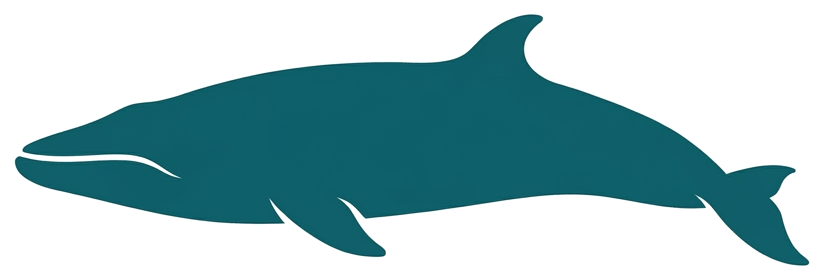
The reason serious whale watchers put Cairns on the calendar. Whale & Dolphin Conservation lists it as an unnamed dwarf subspecies of the common minke whale, found almost nowhere else with this kind of predictability. Dwarf minkes grow to around 6 to 8 meters, far smaller than a humpback, and are strikingly inquisitive, often approaching a drifting boat or a line of snorkelers and lingering for a close look. They gather on the northern Great Barrier Reef every austral winter in what researchers describe as the only known predictable aggregation of this whale anywhere on Earth.
The larger, more acrobatic whale of the two, passing Cairns on one leg of an ocean-spanning migration. According to NOAA Fisheries, humpbacks can reach about 60 feet and 40 tons, breach and tail-slap at the surface, and were reduced by more than 95 percent in most populations before commercial whaling ended, with numbers recovering strongly since. Tens of thousands migrate along Australia's east coast each winter, and the pods that pass the reef off Cairns are frequently mothers traveling with a calf, which is why breaching and tail-slapping are common sights on a Cairns whale watching cruise.
Regular company on the run out to the reef, whether or not a whale shows up that day. Fast, social pods often ride the bow wave on the way to the whale grounds, breaking the surface in tight, splashy groups that are usually the first marine wildlife of the trip. On a quiet stretch of water they are often what keeps everyone's camera up.
Cairns whale watching splits into two very different trips, and they leave from two different places.
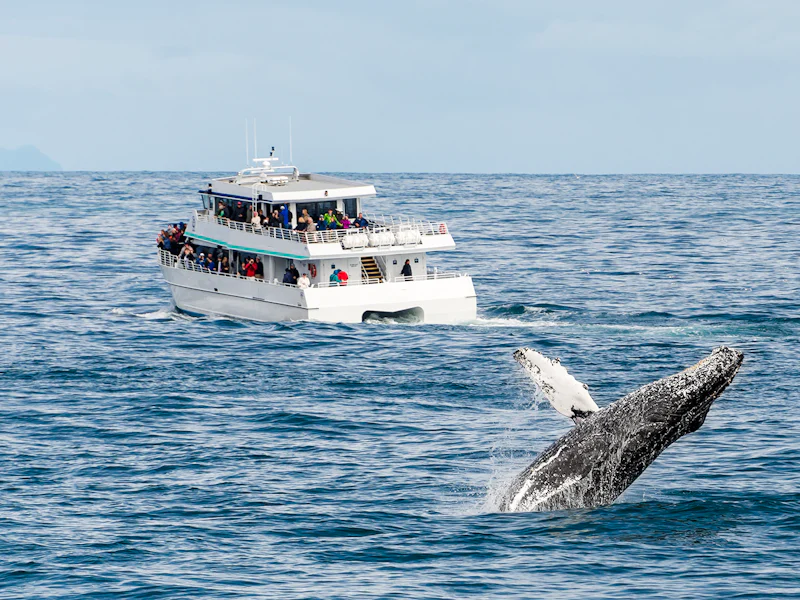
The city's main reef terminal is where the day boats leave for Fitzroy Island, combining a dedicated whale watching cruise with free time on the island itself, whether that means snorkeling the fringing reef or just stretching out on the beach. These trips run through the winter humpback season and are built around surface sightings of humpbacks passing offshore, with no in-water encounters. They suit anyone who wants a full day out on the reef with a fair chance of whales along the way.
The dedicated dwarf minke whale encounters run differently again. Specialist dive and snorkel operators run multi-day liveaboard expeditions out to the Ribbon Reefs between Port Douglas and Lizard Island, some departing by boat from the Marlin Marina and others transferring guests north by light aircraft to join the vessel already positioned near the reef. These trips are built entirely around the whales, with the number of swims each day depending on how long the whales choose to stay, and they sit well outside the price and length of a standard reef day trip, so book them separately from any Fitzroy Island cruise.
Both departure points sit within greater Cairns. If your trip also runs down Australia's east coast, the season and species mix change considerably by the time you reach whale watching in Sydney, a passing migration route rather than a reef with a resident winter aggregation.
A humpback breaching offshore is a great afternoon. A dwarf minke whale choosing to circle back for a second look is the reason people fly across the world for a few weeks in June.
A standard Cairns whale watching day starts at the Reef Fleet Terminal with check-in and a safety briefing, then a cruise out through the inner reef toward Fitzroy Island, with crew scanning the water and slowing for any blow, breach or dorsal fin along the way. The dedicated whale watching segment runs for part of the day, with the rest given over to the island itself, so the pace is closer to a relaxed reef day trip than a single-purpose wildlife tour. A dwarf minke expedition runs to a different rhythm: days built around drifting near a known aggregation point, briefings on the Code of Practice before anyone enters the water, and in-water time that the whales decide.
6.5 hours, from about $114. A dedicated whale watching cruise combined with free time on Fitzroy Island, either relaxing on the beach or exploring the fringing reef. The standard way to see humpbacks off Cairns without giving up a reef day.
6 hours, from about $139. The same winter whale watching cruise with a snorkel-focused Fitzroy Island stop built in, for travelers who want guaranteed reef time alongside the chance of whales.
Multi-day liveaboard trips to the Ribbon Reefs, running in June and July only, operated by a small number of GBRMPA-endorsed dive and snorkel companies. Priced and booked separately from the day cruises above, these are the trips built specifically around in-water dwarf minke encounters.
As a rule of thumb, the bookable Cairns whale watching day cruises sit in a tight band from about $114 to $139, both anchored around six hours and both combining the whale watching itself with time on Fitzroy Island. That makes Cairns one of the cheaper places on this site to add whales to a reef day out, with the specialist dwarf minke trips sitting at the top end.
Compare every Cairns tour side by side: price, duration and free cancellation.
See the toursIn Cairns, pick the goal before the boat: a reef day trip and a dwarf minke expedition are different products.
Cairns sits in the tropics, so the risk on deck is sunburn more than cold. Bring a hat, reef-safe sunscreen and a light long-sleeved layer for the middle of the day, and pack a warmer layer anyway for an early morning departure or a breezy run back to port.
Whale watching cruises here are usually bundled with island time, so bring a swimsuit and towel even if whales are the main draw, and eat something before boarding if you are prone to seasickness on the open crossing to the outer reef.
If a dwarf minke encounter is the point of your trip, book only with an operator endorsed under the Great Barrier Reef Marine Park Authority's Code of Practice for dwarf minke whale interactions. The code sets minimum viewing distances and rules against touching or chasing a whale, so the animal is always the one deciding how close to come.
On a Fitzroy Island whale watching cruise, the first sign of a humpback is usually a distant blow rather than a breach. Binoculars turn that puff on the horizon into a clear sighting, and a fast shutter beats a zoom lens for freezing a tail slap from a moving deck.
The Minke Whale Project has studied this population since 1996, working with the Great Barrier Reef Marine Park Authority and licensed operators to build one of the world's few sustainable models for in-water whale tourism. Guides on endorsed vessels often log sightings for the project, so a whale you swim with off Cairns may end up in a scientific record that goes back to 1996.
Want a relaxed reef day with a good chance of humpbacks: book a Fitzroy Island whale watching cruise any time from July to September. Want the in-water dwarf minke encounter itself: block out June or July and book a specialist multi-day expedition well ahead. Both trips put you on the Great Barrier Reef, which already sets Cairns apart among the world's whale watching destinations.
June and July are the core window, when dwarf minke whales gather on the northern Great Barrier Reef, and about 90% of minke sightings fall in these two months. Humpback whales layer a slightly wider season over the top, passing the reef from around mid-July through early September on their winter migration.
Yes. For a few weeks each winter, inquisitive dwarf minke whales approach boats and snorkelers of their own accord on the northern Great Barrier Reef, something no other city here offers. Humpbacks also pass offshore, and dolphins turn up on the run out.
Cairns reef day trips to Fitzroy Island run from about $114 to $139 per person, each around six hours and combining whale watching with island time. Dedicated dwarf minke encounters are multi-day liveaboard expeditions to the Ribbon Reefs, booked and priced separately.
Bookings are processed through Headout, which partners with vetted Cairns operators. Whale Watching is an independent affiliate site. We may earn a small commission if you book through a link here, at no extra cost to you.
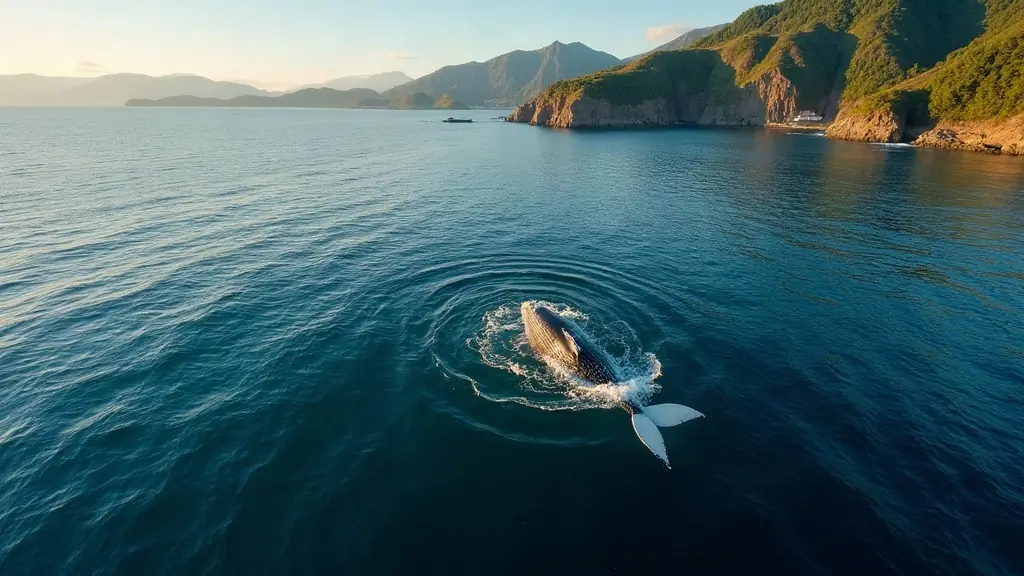
Compare tours in Cairns and book in minutes. Most offer free cancellation.
See tours in Cairns