Bestseller
Boston
Boston Whale Watching With The New England Aquarium
Free cancellation3.5 hrs
from $86
Check availabilityBestseller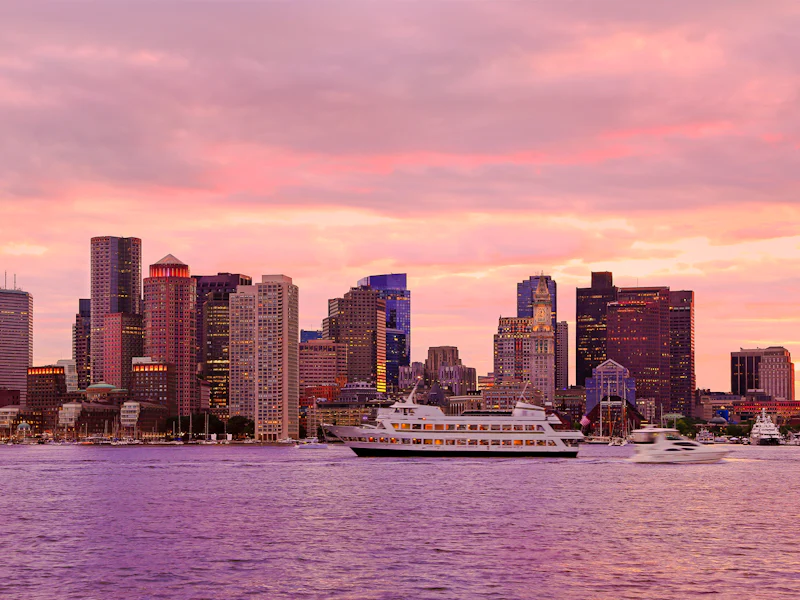
Each region runs on its own calendar. The rows below show roughly when to go where. Open a region for its full month-by-month odds, sighting records and tours.
Based on 193,570 verified sightings logged in the United States: real records, not estimates.
Source: GBIF.org, which aggregates marine mammal observations from OBIS-SEAMAP, Happywhale & iNaturalist. Retrieved October 2026.
The whales and dolphins you can realistically spot here, ranked by how often they are recorded.
United States whale watching does not run on a single calendar the way most countries' whale seasons do, because the country itself spans an entire ocean's worth of habitat. Off Maui in February, a humpback calf breaches beside its mother in body-warm water while snow still sits on the volcanoes a few thousand miles north. Off Juneau in July, another humpback lunges through a bait ball it helped herd there with a ring of its own bubbles. Off San Diego on that same July afternoon, a blue whale, the largest animal that has ever lived, rolls slow and unhurried through the swell a mile offshore. That is USA whale watching across three oceans: somewhere on the map, in nearly every month of the year, whales are doing something worth a boat ride to see.
Below is a coast-by-coast read on when to go, the species you are likely to meet on each one, links to the five region pages we track in full detail (Hawaii, Alaska, California, Boston's Stellwagen Bank and Seattle's San Juan Islands), what an American whale watching tour involves, and how to pick one for your dates. Prices are snapshots of the tours we compare, most bookable through Headout with free cancellation, so you can hold a date on whichever coast and season suit your trip and change your mind later without losing anything.
Ask when the best time for whale watching in the United States is, and the answer depends on which coast you mean, because the five regions run on almost opposite clocks. Hawaii peaks in deep winter, January through March, when a large share of the North Pacific humpback population, estimated at up to around 12,000 whales by NOAA's Hawaiian Islands Humpback Whale National Marine Sanctuary, gathers in shallow water off Maui and Oahu to breed, calve and nurse. Alaska and the New England coast off Boston do the opposite, peaking in the height of summer, June through August, when humpbacks, fin whales and orcas crowd in to feed rather than breed. Seattle's Salish Sea sits between the two, with orcas and humpbacks most reliable from May through September. California fills the gaps: gray whales pass close to shore in winter on their migration between Alaska and Mexico, blue and humpback whales feed offshore all summer, and the state posts strong sighting odds across nearly the entire year.
Line those five calendars up and almost every month has at least one American coast near its peak. January and February belong to Hawaii's breeding season and California's gray whale migration at once. June through August cover Alaska, Boston and Seattle simultaneously, on top of California's summer feeding season. Only late autumn is quiet everywhere except California, where humpbacks and dolphins are still reliable into November. If your travel dates are already fixed and you are choosing the destination to fit them, our guide to the best time for whale watching lines up every country and region we cover against the calendar.
There is no single US season, because there is a season for almost every month. Most whale watching countries hand you one good window and a long off season on either side of it. Spread across the Pacific, the Gulf of Alaska and the Atlantic, the United States has at least one coast close to its best sightings in whatever month you are planning around. The tradeoff is that "USA whale watching" is really five separate decisions, and the region page linked for each one below is where the trip planning happens.
American waters host an unusually wide range of cetaceans and other marine wildlife for one country, and which ones you meet depends heavily on which coast and season you pick. A handful of species account for almost every encounter across the five regions this hub covers, and each one behaves differently depending on where you find it.
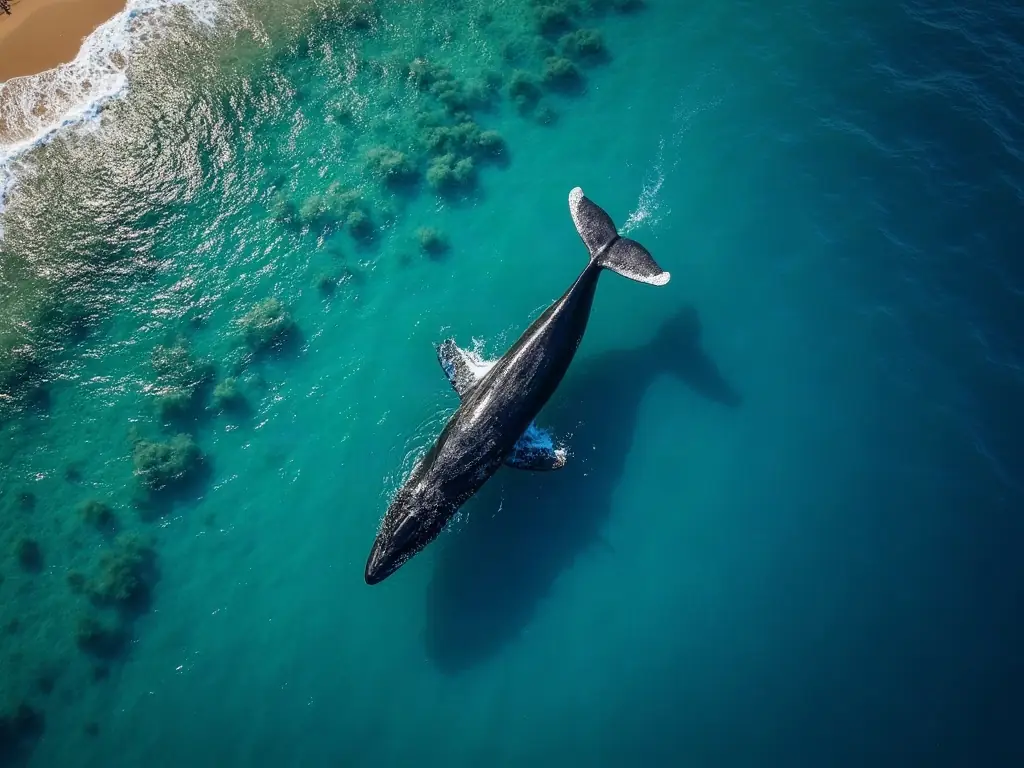
The one species you'll meet on almost every American coast, doing something different each time. In Hawaii it arrives by the thousand each winter purely to breed, calve and nurse, with no feeding at all. In Alaska and off Boston it is there to feed, sometimes using bubble-net or coordinated seafloor-hunting techniques that scientists at Stellwagen Bank have only recently documented in detail. Adults reach roughly 60 feet and 40 tons, and they are the whale most likely to breach, slap a fin or lift a fluke clear of the water for you.
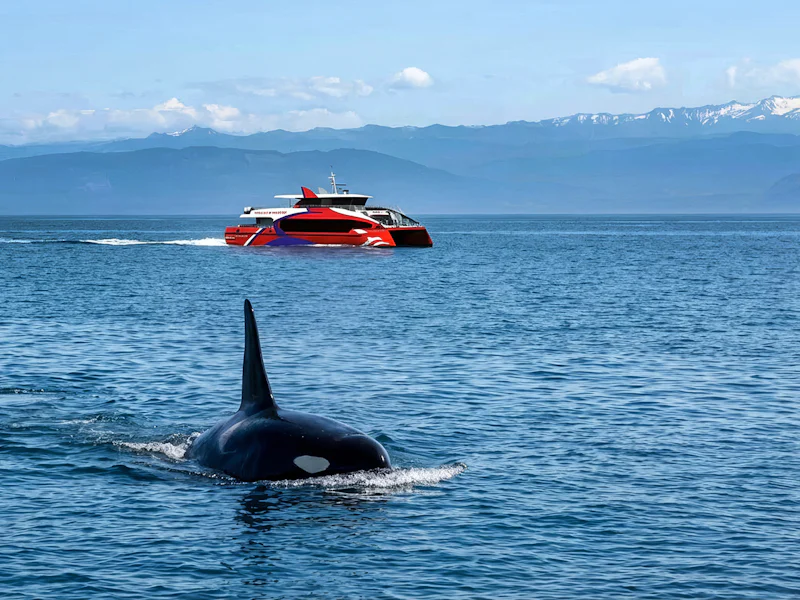
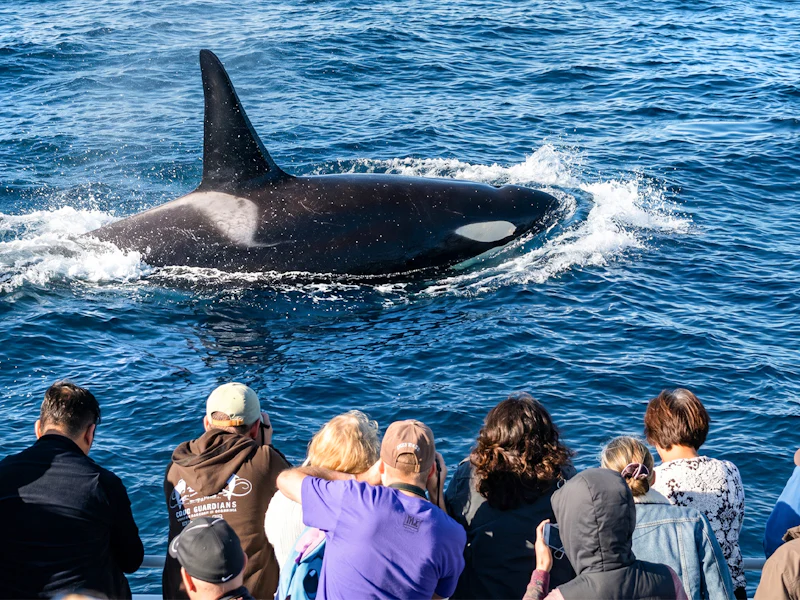
The headline sighting off Seattle and a strong possibility in Alaska. Seattle's Salish Sea and San Juan Islands hold both resident pods, which favor salmon and stay close to the islands through summer, and transient pods that roam further and hunt seals. Alaska sees both types too, often crossing paths with feeding humpbacks in the same channel. A pod of orcas traveling together, tall dorsal fins breaking the surface in a line, is a highlight anywhere in the country.
The migration specialist. Gray whales travel roughly 10,000 miles round trip each year between Arctic feeding grounds and warm Mexican lagoons, passing close along the California coast in winter and again in spring, with a smaller population also seen off Alaska and Seattle. Because their route hugs the shoreline, they are often visible from headlands as well as boats, surfacing in a slow, rolling rhythm as they cover ground. They carry patches of barnacles and whale lice that give their skin a mottled, gray-white look.
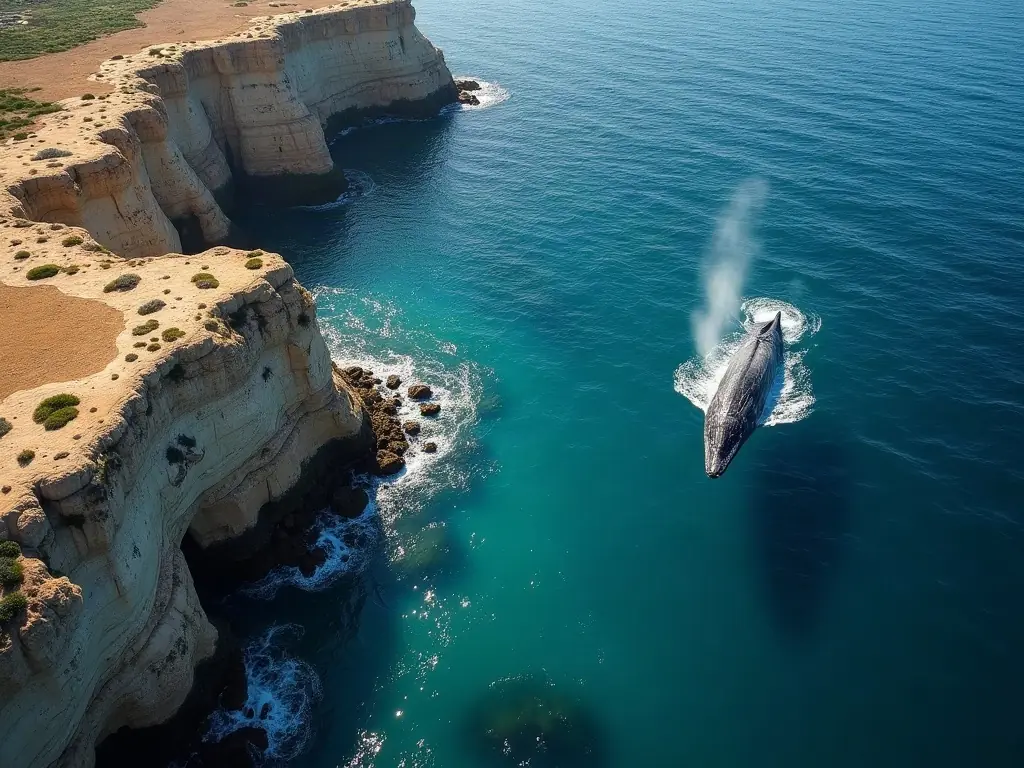
The largest animal on Earth, and California's summer specialty. Blue whales gather off the California coast from roughly June through September to feed on dense krill swarms, drawn in by cold, nutrient-rich upwelling water close to shore. A blue whale's blow is a column taller than the boat, and the back seems to keep surfacing long after you expect the dive. Do not plan a trip around one, though a California summer tour gives you a fair chance.
The steady, unglamorous regular of the New England and Pacific Northwest seasons. Smaller than the other great whales at up to about 35 feet, minkes travel alone or in loose groups and surface quickly, a sleek back and small curved dorsal fin rolling through and vanishing again. They are seen throughout the season off both Boston's Stellwagen Bank and Seattle's Salish Sea, less dramatic than a breaching humpback but reliable enough that guides count on them.
Every US region has its own signature pod. Hawaii's spinner dolphins rest in bays by day and spin clear of the water in acrobatic leaps. California's common dolphins travel in super-pods thousands strong, sometimes surrounding a boat on every side. Boston's Atlantic white-sided dolphins ride the bow wake in large, playful groups. Wherever you go, dolphins tend to be the fastest, most active marine wildlife on the water, and often the easiest to photograph from a moving deck.
Five regions carry almost all of United States whale watching between them, and they suit very different trips. Each has its own page with the full month-by-month calendar, tours and prices.
Hawaii is the winter breeding ground for a large share of the North Pacific's humpback whales, and the odds reflect it: sighting rates run close to 99% at the height of the season. Tours leave from Maui and Oahu into the shallow, protected channels of the Hawaiian Islands Humpback Whale National Marine Sanctuary, where mothers nurse calves in warm water and males compete loudly for mates nearby. Spinner dolphins are a near-constant bonus alongside the whales. If you can only travel in a US winter, go here. See the full guide to whale watching in Hawaii for tours, prices and the Maui and Oahu breakdown.
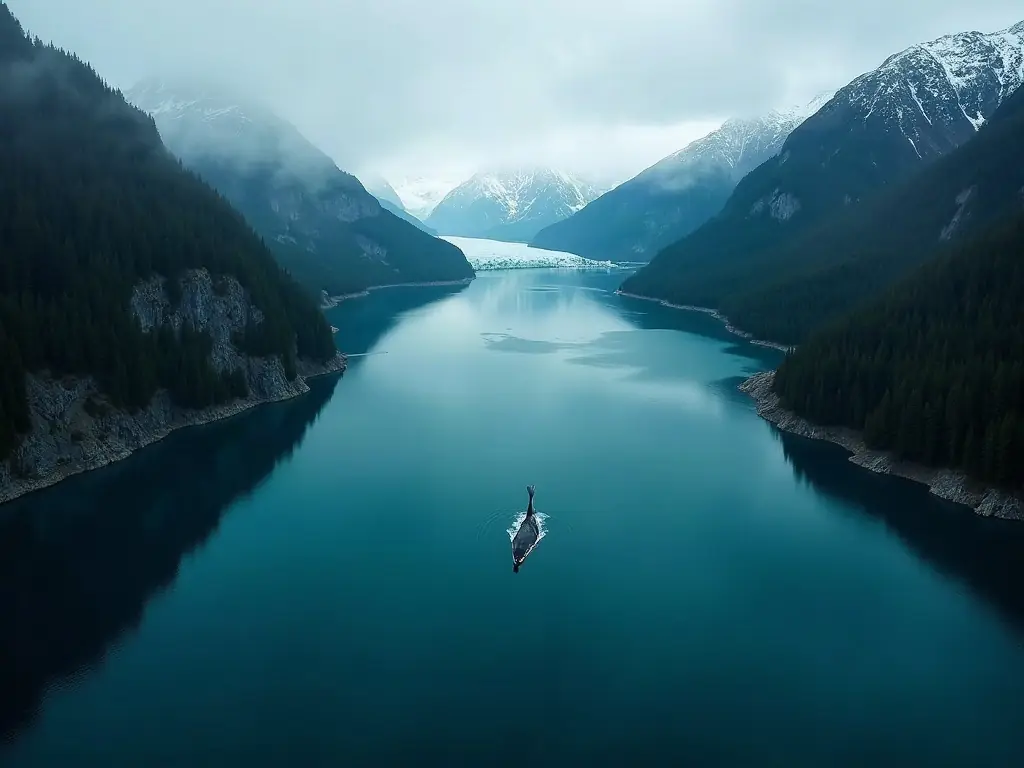
Alaska flips Hawaii's calendar on its head: whales arrive here to feed through the long summer daylight rather than to breed. Humpbacks work the channels around Juneau, sometimes in coordinated bubble-net groups that corral fish with a ring of bubbles before lunging through together, while both resident and transient orca pods and migrating gray whales add to the mix. Sighting rates run around 96% at peak, against a backdrop of glaciers and forested fjords. Read the full guide to whale watching in Alaska for the season and tour details.
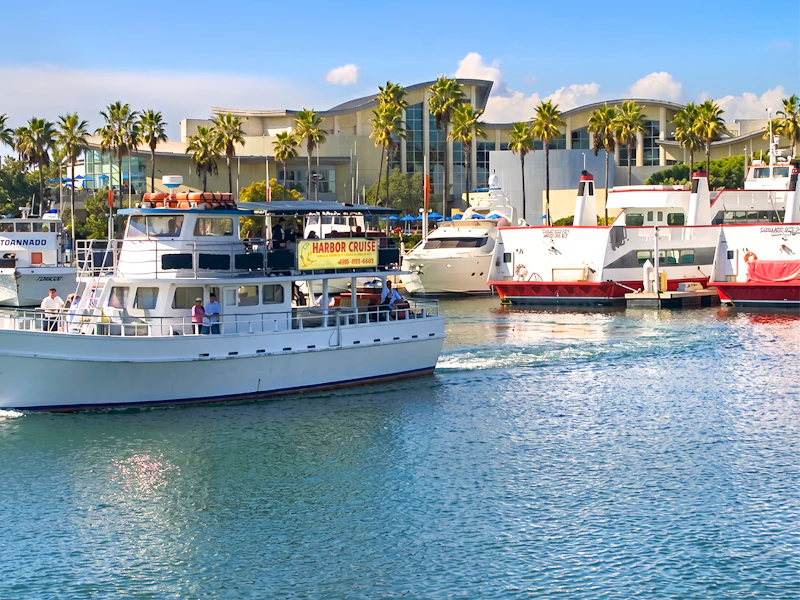
California is the closest thing the US has to a year-round whale watching coast. Gray whales pass close to shore in winter and again in spring on their long migration, blue and humpback whales feed offshore all summer, and common dolphins travel in super-pods that can number in the thousands. San Diego, Los Angeles and San Francisco all run boats, and the sighting rate reaches around 95% in peak season and stays strong for most of the calendar. It is also the most affordable US region: a 2.5-hour Los Angeles whale and dolphin trip runs about $45, and short harbor sightseeing cruises start from about $15. Full details are on our whale watching in California page, covering all three port cities.
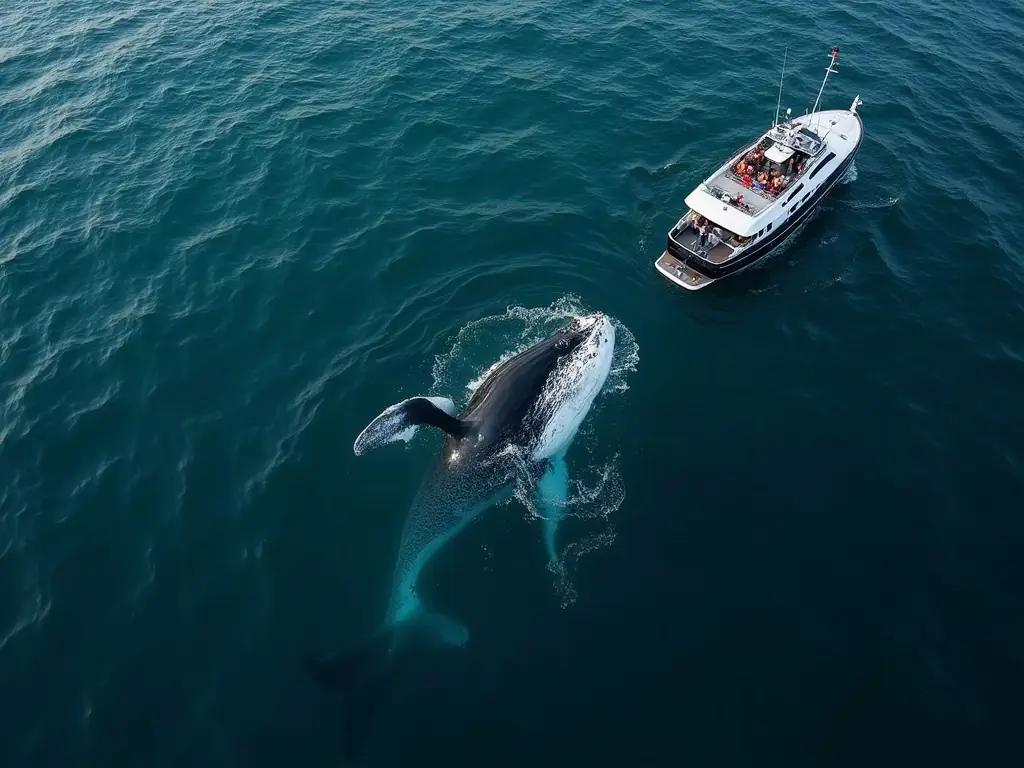
Boston's boats run out to Stellwagen Bank, a shallow underwater plateau in Massachusetts Bay that concentrates fish and, with them, humpback, fin and minke whales through the summer. It is the only national marine sanctuary in New England, and researchers there have documented humpbacks hunting cooperatively along the seafloor, a behavior caught on camera for the first time in these waters. Sighting rates run around 96% at peak, and large Atlantic white-sided dolphin pods often ride alongside the boat on the way out or back. See whale watching in Boston for the region's tours and season.
Seattle's whale watching centers on the Salish Sea and San Juan Islands, home to both resident orca pods that favor salmon and transient pods that hunt seals, plus a fast-growing summer humpback population and passing gray whales. The season runs May through September with sightings around 92% at peak, slightly lower than the other regions, and the scenery is forested islands rising out of calm inland water. Full tours and prices are on our whale watching in Seattle page.
Pick the month first and the coast follows: Hawaii in January, Alaska or Boston in July, Seattle in August, California almost any time in between.
Most American whale watching tours follow a similar shape regardless of coast: a dockside safety briefing, a run out to the feeding or breeding grounds, an hour or more searching and watching while a naturalist narrates what is surfacing where, then the trip back. NOAA-certified naturalists are common on the larger boats and will point out blows, footprints (the flat, glassy patch a whale leaves when it dives) and dorsal fins well before most passengers spot them. The bigger variable is the type of boat, and the US runs a wide mix of them.
3.5 to 4 hours, from about $150 in Seattle and $184 in Alaska. The stable, roomy default with an enclosed cabin, large viewing windows and an open deck, plus an onboard naturalist. Best for families, first-timers and anyone who wants shelter between sightings.
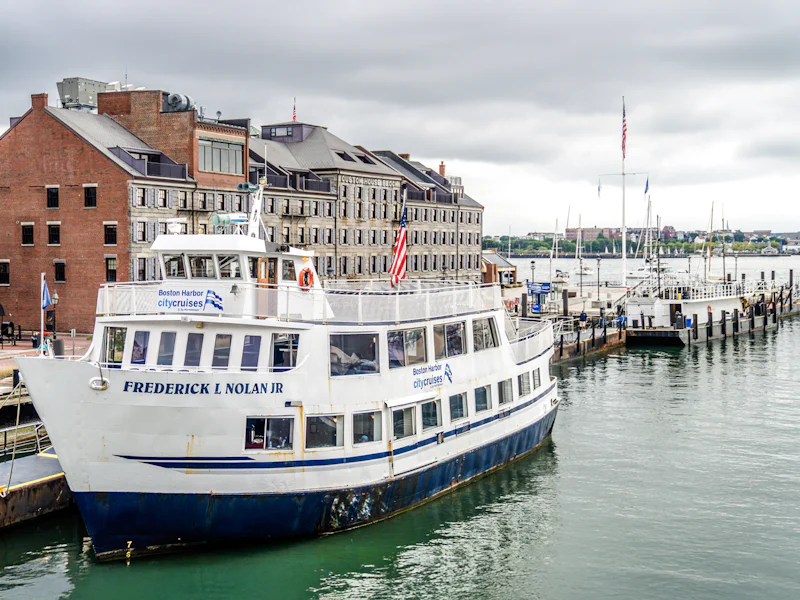
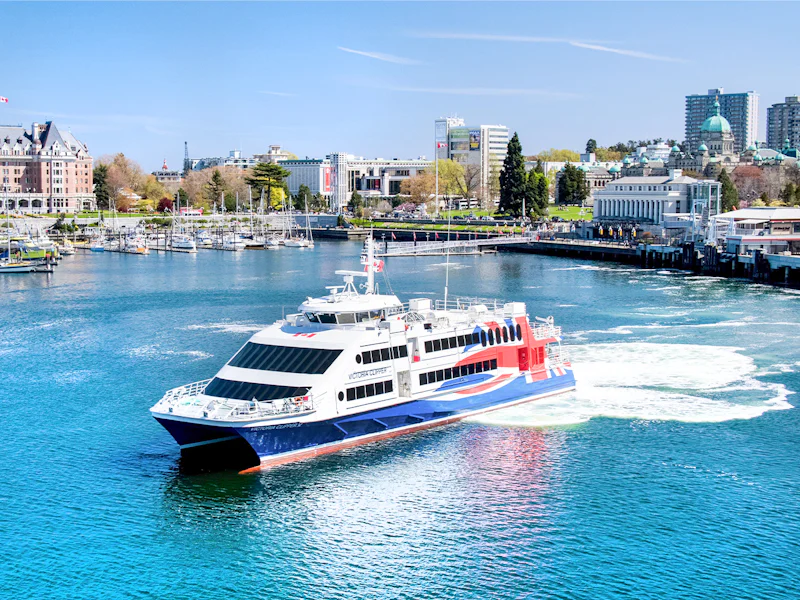
3.5 to 4 hours, from about $86 in Boston. Faster hulls built to reach distant feeding grounds like Stellwagen Bank, 25 miles out, and still leave time on site once you arrive. Roomy and stable despite the speed.
2 to 3 hours, priced closer to the standard boats but with a fraction of the passengers. Common in the Pacific Northwest and Alaska, where a smaller hull can hold a respectful distance in narrower channels without crowding a pod. Closer to the water and the action, less shelter from wind and spray.
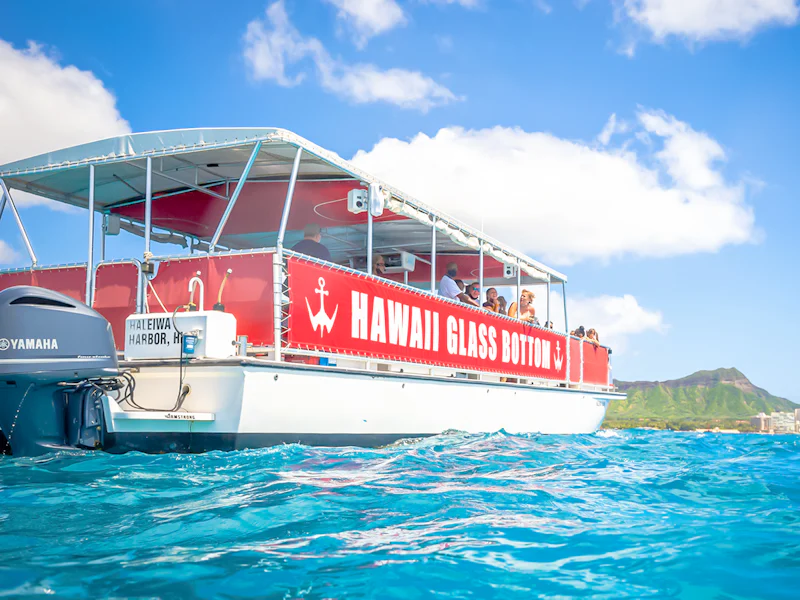
2 to 2.5 hours, from about $45 in California and $82 in Hawaii. Sail-assisted or low-wake catamarans that cut engine noise near the whales, often run by operators that sign up to voluntary responsible-viewing schemes, such as NOAA's Whale SENSE program on the Atlantic coast and in Alaska. A quieter, gentler option for calmer water.
As a rule of thumb, the core United States whale watching tours sit in a band of about $45 to $199, with California's 2.5-hour coastal trips at the affordable end and the longer Alaska and Seattle departures at the top. A handful of sightseeing or sunset cruises, around $15 to $64, are general harbor tours rather than dedicated whale trips, so treat any whale sighting on one as a bonus.
Compare every United States tour side by side by region, price, boat and free cancellation.
See the toursWith five regions on offer, the decision tree for USA whale watching starts a step earlier than it does for a single-destination trip: you are choosing a coast and a month before you choose a boat at all.
"United States whale watching" spans warm Hawaiian trade winds and cold Alaskan or New England spray, so pack for the specific coast rather than the calendar month. A windproof layer and something for your hands matter even in a Hawaiian summer once the boat is moving; in Alaska or Boston, add a warm insulating layer. If you are prone to seasickness, take a remedy before boarding, eat lightly beforehand and watch the horizon from the open deck rather than the cabin.
The first sign of a whale is almost always a distant blow, and binoculars turn that puff on the horizon into a clear view of the species long before the boat gets close. For photos, a fast shutter speed and a wrist strap serve better than a heavy tripod on a moving deck. Keep the camera down for a few sightings, too.
US federal rules set specific distances: stay at least 100 yards from most large whales, including humpbacks in Hawaii and Alaska, at least 200 yards from orcas in Washington's inland waters, and at least 500 yards from the critically endangered North Atlantic right whale anywhere in US waters. Responsible operators let the whales set the pace and hold these distances without being told; choosing one is an easy way to make sure your trip does not add stress to the animals you came to see.
Much of US whale watching happens inside a national marine sanctuary, and each one turns visitors into data. Hawaii's Sanctuary Ocean Count has logged shore-based humpback sightings from volunteers each winter for roughly three decades, while researchers at Stellwagen Bank off Boston have used tour-boat sightings to help document cooperative seafloor feeding in humpbacks for the first time. The whale you watch may already be part of an ongoing study.
A quiet sailing catamaran and a fast naturalist-led boat can both make for a great US whale watching trip, but no boat fixes the wrong coast for your travel month. Settle the region and the season first; the boat type is the smaller decision.
Match your travel month to a coast (Hawaii in winter, Alaska, Boston or Seattle in summer, California almost anytime), pick the port that fits your itinerary, choose a boat that matches your budget and your stomach, and book early with free cancellation as your safety net, the same discipline that applies to every whale watching trip you plan.
There is no single best place, because the five main US regions peak at different times. Hawaii is unmatched for winter humpback breeding, Alaska and Boston are strongest for summer feeding, Seattle's San Juan Islands are the top choice for orcas, and California offers the widest variety across almost the whole year.
It depends on the coast. Hawaii peaks January through March for humpback breeding, Alaska and Boston peak June through August for feeding whales, and Seattle peaks May through September for orcas. California is the exception, with strong sightings across nearly every month thanks to migrating gray whales in winter and feeding blue and humpback whales in summer.
The West Coast (California, Seattle) and Alaska offer the widest range of species, including orcas, gray whales and blue whales, while the East Coast around Boston is strongest for humpback, fin and minke whales feeding on Stellwagen Bank. Hawaii, though not a coast in the same sense, has the highest sighting rate of any US region during its winter peak.
Dedicated US whale watching tours we compare run from about $45 for a 2.5-hour Los Angeles trip up to around $199 for a 5.5-hour Juneau whale and glacier combo, with a full-day Alaska kayak trip at about $471. Most fall between about $75 and $199 depending on the region and boat. Harbor and sunset cruises start lower, from about $15 in Los Angeles, but are not dedicated whale tours.
Humpback whales are seen on nearly every coast, from Hawaii's winter breeding grounds to summer feeding in Alaska, Boston and Seattle. Other regulars include orcas in Seattle and Alaska, gray whales migrating past California, Alaska and Seattle, blue and minke whales, and dolphins such as Hawaii's spinners, California's common dolphins and Boston's Atlantic white-sided dolphins.
No sighting is ever guaranteed, but odds are high in peak season, running from about 92% in Seattle to around 99% in Hawaii at the height of winter. Many operators also offer a free return trip if no whales are seen, so check a tour's policy before booking.
Compare tours in the United States and book in minutes. Most offer free cancellation.
See tours in the United States