 Bestseller
Boston
Boston Whale Watching With The New England Aquarium
Free cancellation3.5 hrs
from $86
Check availabilityBestseller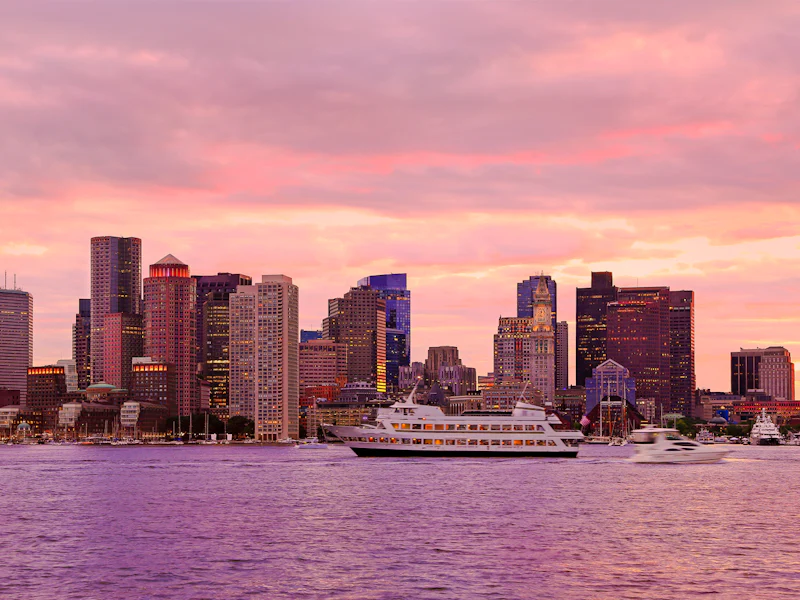
When whales are around, month by month.
Based on operators' peak-season sighting records.
Chance of seeing whales or dolphins in Boston in peak season
Based on 12,730 verified sightings logged in Boston: real records, not estimates.
Source: GBIF.org, which aggregates marine mammal observations from OBIS-SEAMAP, Happywhale & iNaturalist. Retrieved October 2026.
The whales and dolphins you can realistically spot here, ranked by how often they are recorded.




Boston whale watching puts you within an hour's boat ride of one of the richest feeding grounds on the entire US East Coast. Picture a 40-ton humpback whale exploding through the surface off the bow, seawater sheeting off its pleated throat, while the Boston skyline is still a smudge on the horizon behind you. That happens on summer afternoons at Stellwagen Bank, the marine sanctuary that makes Boston one of the more reliable whale watching bases in the country.
Below you will find the month-by-month best time to go, the four species you are most likely to meet on Stellwagen Bank, where in Boston the boats leave from, what a typical high-speed catamaran tour costs and includes, and how to pick one. A full whale watch to Stellwagen Bank starts at about $86 among the tours we compare (harbor cruises from the same docks start near $46), most bookable through Headout with free cancellation, and you will not need a rental car or an overnight stay, which keeps Boston among the cheaper and easier whale watching trips in the United States.
The short answer is June through September. Those four months are the peak of the Boston whale watching season: Stellwagen Bank's feeding grounds are at their busiest, and boats report sighting rates of around 96%. Humpback whales spend the summer bulking up on sand lance and other schooling fish, often surface-feeding and breaching close enough to make a naturalist reach for the microphone. If you can only make one trip, aim for a midsummer weekday, when the water tends to be calmer and the boat less crowded than a Saturday in July.
April, May and October are the shoulder months, and often a smart trade. Minke whales and finback whales are already moving through the bank by April, humpback numbers build through late spring, and the crowds thin out once the school-holiday rush ends in September. Prices soften a little too, and the water can be glassy on a good fall day. If you are weighing Boston against other East Coast or worldwide options for a specific month, our guide to the best time for whale watching lines up the seasons side by side.
November through March is the off season. Most Boston whale watching boats stop running for the winter, since Stellwagen Bank's food supply thins out and the open Atlantic gets rough and cold for a 25-mile crossing. Nearly every Boston departure falls in the spring-to-fall window, so plan your trip inside it.
Naturalists who know the whales by name. Many Boston whale watches, including the leading catamaran trips out of Long Wharf, carry naturalists trained through partnerships with groups like the Whale Center of New England, which has tracked individual Stellwagen Bank humpbacks by their tail flukes for decades. So the humpback off the bow may have a recorded history, narrated by someone who recognizes it.
Stellwagen Bank National Marine Sanctuary, a shallow underwater plateau about 25 miles east of Boston between Cape Ann and Cape Cod, concentrates an enormous amount of food each summer, and with it a working population of marine wildlife rarely visible so close to a major US city. Four cetaceans account for nearly every encounter on a typical Boston whale watching trip.
The star of Stellwagen Bank, and the whale every naturalist is scanning for. Adults reach up to about 60 feet and 40 tons, and they are often surface-feeding, which means long, active sessions of breaching, flipper-slapping and lunging. Whale and Dolphin Conservation notes that the Gulf of Maine population, which includes Stellwagen Bank, practices a distinctive kick-feeding technique, slapping the surface with their tails to disturb prey before blowing a bubble net around it. Some of the species' distinct population segments remain listed as endangered even as the wider North Atlantic population has rebounded since the 1985 whaling moratorium.
The second-largest whale on Earth, behind only the blue whale, and a common offshore sighting on Stellwagen Bank. NOAA Fisheries lists adults at 75 to 85 feet and up to 80 tons, sleek and fast-swimming, usually surfacing alone or in small, loose groups rather than putting on the acrobatic show a humpback does. Finbacks are listed as endangered under the US Endangered Species Act throughout their range, so a good look at one on a Boston whale watch is something to savor.
Small, fast and present through the whole season, the minke is the whale you are most likely to see close to the boat on any given trip. NOAA Fisheries puts adults at up to about 35 feet, the smallest of the great whales, typically alone or in twos and threes, lunging through schools of small fish rather than feeding at the surface the way a humpback does. Their population is considered stable across most of their range, a rare piece of good news among the great whales.
Fast, social and often the whale watch's most photogenic guest. NOAA Fisheries describes pods that typically run 5 to 50 animals, though groups of several hundred turn up in the Gulf of Maine, and they frequently travel alongside humpback whales, riding the bow wake and leaping clear of the water. Reaching up to about 9 feet, they are easy to miss on a still day and impossible to miss once a pod decides to put on a show.
Boston whale watching is a one-port operation: you choose a boat and a departure time.
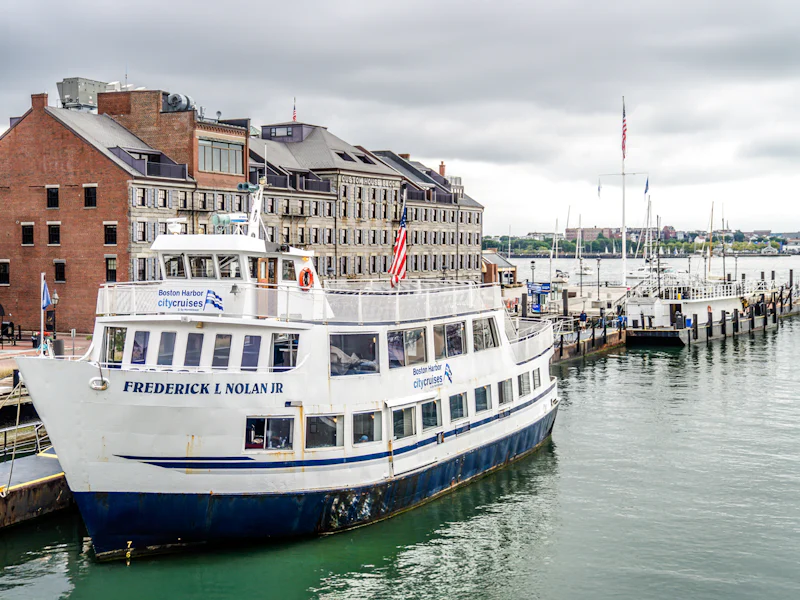
Nearly every Boston whale watch leaves from Long Wharf or a nearby downtown pier, a short walk or rideshare from the Financial District, the North End and most downtown hotels. That makes a half-day trip easy to fold into a city visit without a rental car: check out of your hotel, walk to the water, and be back in time for dinner in the North End. The main whale watching departures run 3.5 to 4 hours round trip on high-speed catamarans; shorter harbor and sunset cruises from the same docks run 1 to 1.5 hours and stay inside the inner harbor, so they make a pleasant add-on but are not whale trips in their own right.
Stellwagen Bank National Marine Sanctuary is what makes Boston whale watching work. It sits between Cape Ann and Cape Cod, close enough that a fast catamaran covers the crossing in under an hour, yet productive enough to draw humpbacks, finbacks, minke whales and Atlantic white-sided dolphins every summer. NOAA manages the sanctuary because that stretch of seafloor concentrates food for such a wide range of marine life, within sight of one of the busiest shipping lanes on the East Coast. If you are planning trips beyond Boston too, our whale watching destinations guide covers the rest of the US and worldwide seasons.
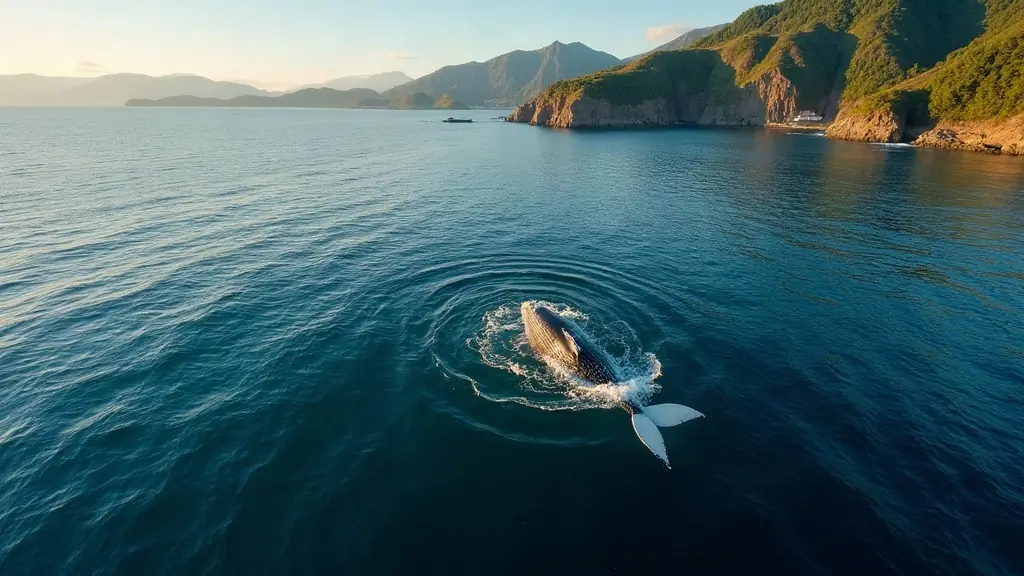
Boston whale watching takes you just 25 miles out of a major American city, and the water still looks like this.
Most Boston whale watches run 3.5 to 4 hours door to door and follow the same shape: a safety briefing at the dock, roughly an hour's run out to Stellwagen Bank at speed, then as long as it takes among the whales before heading back. Naturalists, often trained through partnerships with the New England Aquarium and regional research groups, narrate the whole way, calling out blows, footprints and fins long before most passengers spot them, and explaining what the behavior in front of you means. The boats are catamarans, so you can move between an open upper deck for photos and a heated, glassed-in cabin when the wind picks up.
3.5 hours, from about $86. The core Boston whale watching product: naturalist-narrated, with an indoor cabin and open decks, and a hull fast enough to leave more of the trip for time on the bank.
1 to 1.5 hours, from about $46. These stay inside Boston Harbor and are not whale trips, but they pair well with a whale watch if you are in town for more than a day and want a lower-key evening on the water.
As a rule of thumb, a full Boston whale watching trip runs from about $86, and that price typically buys a 3.5-hour round trip with a naturalist on board and a strong chance of humpbacks. If you also want a taste of the harbor itself, the shorter cruises start closer to $46, though those do not go anywhere near Stellwagen Bank. For every format and operator side by side, our full whale watching tours guide compares departures across the whole US East Coast.
Line up every Boston tour by price, boat, duration and free cancellation.
See the toursWith one port, the decisions are when to go and which boat, and both take a few minutes to settle.
A warm summer afternoon in Boston can feel 15 degrees colder at speed on open water, and the wind off a moving catamaran cuts through anything short of a windproof layer. Bring a hat, gloves and something for your neck even in July, and add sunglasses and sunscreen for the long crossing out.
If you are at all prone to it, take a remedy before the boat leaves the dock rather than once you are underway, eat something light beforehand, and stay out on deck watching the horizon rather than reading below. The larger catamarans that run the main Stellwagen Bank route are steadier than a small boat, which helps too.
The first sign of a whale is almost always a blow on the horizon long before a body breaks the surface, and binoculars turn that distant puff into your first clear view. For photos, a fast shutter speed and a wrist strap beat a tripod on a moving deck, and leave the camera in your bag for at least one sighting.
Boston-area whale watches operate under voluntary guidelines set out by NOAA's Stellwagen Bank National Marine Sanctuary and the Whale SENSE program, which sets standards for keeping a safe, non-disruptive distance from whales and educating passengers on board. Ask whether your operator participates, or look for the Whale SENSE name when you book.
Stellwagen Bank supports one of the longest-running humpback photo-identification projects on the East Coast, built on the same tail-fluke markings naturalists point out on your trip. Guides who call out individual whales by name are drawing on decades of tracking data, and every good sighting adds to that record.
Come between June and September if you can, book the full 3.5-hour trip to Stellwagen Bank rather than a harbor cruise, dress for open water rather than the city forecast, and book early with free cancellation as your safety net, the same discipline worth applying when planning a whale watching trip anywhere else.
June through September is the best time, the peak of the Boston season, when Stellwagen Bank is at its busiest and boats report sighting rates around 96%. Humpbacks spend the summer surface-feeding and breaching close to the boat. April, May and October are quieter shoulder months, with minke and finback whales already moving through.
For most visitors between June and September, yes. Stellwagen Bank sits just 25 miles offshore, sighting rates run around 96% in peak season, and humpbacks feed and breach close to the boat within an hour of leaving Long Wharf. Outside the spring-to-fall window most boats stop running.
A full Boston whale watching trip to Stellwagen Bank runs from about $86, typically a 3.5-hour round trip on a high-speed catamaran with a naturalist on board. Shorter harbor and sunset cruises start closer to $46 but stay inside the inner harbor, so they are not whale trips. Larger catamarans are steadier if you are prone to seasickness.
Bookings are processed through Headout, which partners with vetted local operators. Whale Watching is an independent affiliate site. We may earn a small commission if you book through a link here, at no extra cost to you.
Compare tours in Boston and book in minutes. Most offer free cancellation.
See tours in Boston