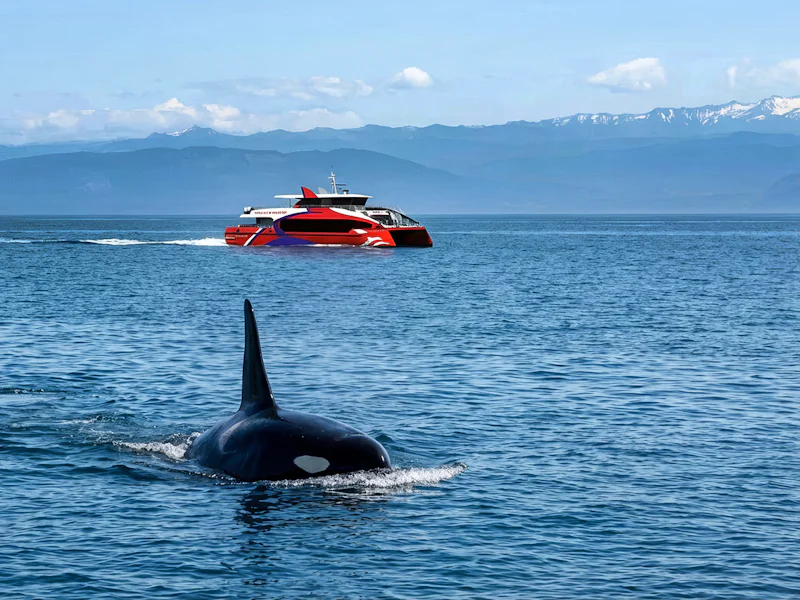
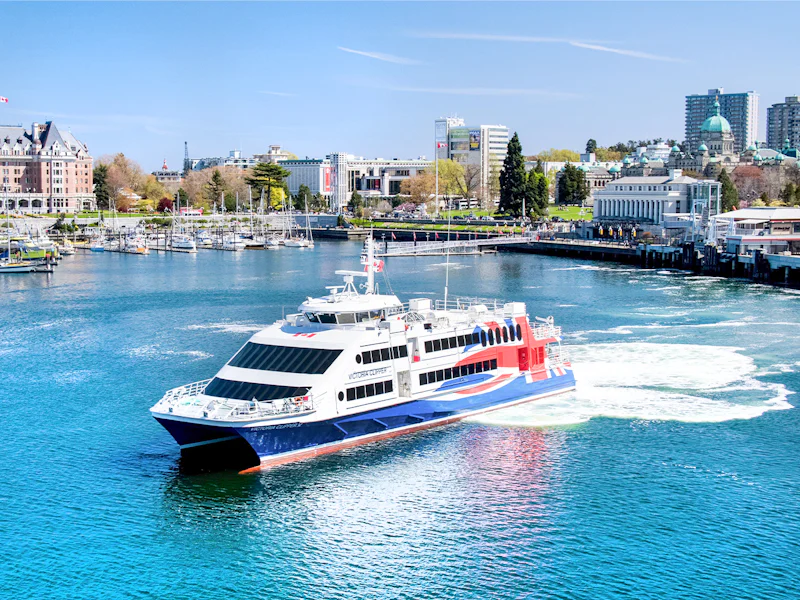
Seattle
Seattle Tofrom Victoria Direct Fast Ferry Tickets
Free cancellation3 hrs
from $145
Check availabilityPlan your trip
When to go & what you'll see in Seattle
Best time to go
When whales are around, month by month.
J
F
M
A
M
J
J
A
S
O
N
D
Peak seasonGoodOff-season
Sighting probability
Based on operators' peak-season sighting records.
Chance of seeing whales or dolphins in Seattle in peak season
Real sightings by month
Based on 7,392 verified sightings logged in Seattle: real records, not estimates.
Source: GBIF.org, which aggregates marine mammal observations from OBIS-SEAMAP, Happywhale & iNaturalist. Retrieved October 2026.
What you'll see
The whales and dolphins you can realistically spot here, ranked by how often they are recorded.
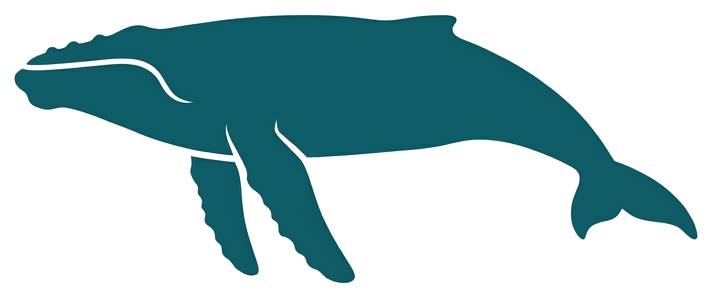
Humpback whaleA fast-growing summer population.4,732 sightings
OrcaResident and transient pods roam the Salish Sea.2,088 sightings
Grey whalePasses on its spring migration.456 sightings
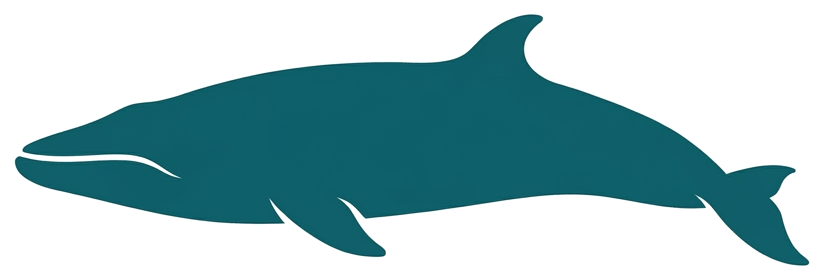
Minke whaleSeen through the summer season.116 sightings
Seattle whale watching: orcas of the Salish Sea and a humpback comeback
Seattle whale watching puts you within a few hours of some of the richest orca waters in the United States, where the Salish Sea and the San Juan Islands funnel salmon, seals and whales through a maze of channels between Washington and British Columbia. Picture a black dorsal fin as tall as a person slicing through flat, gray-green water off San Juan Island, a second fin rising beside it, then a third, while a naturalist on deck quietly narrates which family group just surfaced. Good summer days in Haro Strait often go like that.
Below are the month-by-month best time to go, the five whales and orca types you are most likely to meet, the two departure areas that anchor the trip, what a typical tour costs and includes, and how to choose a boat. Prices are snapshots of the tours we compare, bookable through Headout with free cancellation, so a peak-summer date can be held now and dropped later at no cost.
~92%peak-season sighting rate
2orca types plus humpback, gray & minke whales
2departure areas covered
$145+real tours compared
Best time for whale watching in Seattle
The short answer is May through September. That five-month stretch is the peak of the Seattle whale watching season, when Bigg's killer whales, humpbacks and minke whales are all reliably present in the Salish Sea and operators report sighting rates around 92%. June, July and August sit at the heart of it, with long daylight hours and the calmest water of the year for the run out to the San Juan Islands.
April and October are solid shoulder months. Gray whales are still moving through in April on their spring migration north, some Bigg's killer whale activity continues, and boats run with noticeably smaller crowds than in midsummer. November through March is the off season for most dedicated whale watching tours out of Seattle, as shorter days and rougher Puget Sound crossings make the trip less reliable, though sightings are not impossible. If you are weighing a Seattle trip against other months, our guide to the best time for whale watching lines up seasons side by side across every region we cover, and our full list of whale watching destinations is worth a look if winter travel dates are fixed and Seattle's season does not line up.
The humpback comeback. Twenty years ago a humpback whale sighting in the Salish Sea was newsworthy. Commercial whaling had all but emptied these waters of them by the mid-1900s, and for decades they were a rare visitor rather than a regular feature. Since international protection took hold, researchers who catalog individual whales by their tail flukes have documented a rebound, with the population feeding here in summer now numbering in the hundreds where a single animal was once notable. Seattle whale watching tours that once promised orcas and hoped for a humpback now often see both on the same afternoon.
What whales you'll see in Seattle
The Salish Sea and Puget Sound support a varied mix of marine wildlife, and a Seattle whale watching trip usually means two kinds of orca plus a few baleen whales. Five species and orca types account for almost every sighting a naturalist logs on a typical tour.
Southern Resident killer whale
The Salish Sea's most famous and most fragile residents. These orcas eat only fish, overwhelmingly Chinook salmon, and travel in tight, stable family pods led by older females, distinguished by rounded dorsal fins and varied saddle patch markings. According to NOAA Fisheries, the population has not grown since the mid-1980s, and NOAA's dedicated Southern Resident killer whale program puts the July 2025 census at only 74 whales, part of why they were listed as endangered under the US Endangered Species Act in 2005. Globally, the IUCN Red List still classifies killer whales as Data Deficient as a species rather than assessing this specific population, a reminder of how differently the world's orca populations are faring. Sightings of Southern Residents are far from certain, and their decline is the reason viewing rules here are stricter than almost anywhere else in the country.
Bigg's (transient) killer whale
The Salish Sea's other orcas, and the ones behind most of a Seattle whale watching tour's excitement in recent years. Bigg's killer whales hunt seals, sea lions and porpoises rather than fish, travel in smaller, more mobile groups with straighter dorsal fins and largely solid white saddle patches, and their numbers have been increasing steadily as harbor seal populations have recovered along the coast. Encounters have become markedly more frequent through the Salish Sea, and a hunt in progress, several orcas working together on a seal, is something few passengers forget.
Humpback whale
The whale behind the region's biggest recent conservation story. According to NOAA Fisheries, adults reach roughly 60 feet and 40 tons, and they are known for breaching clear of the water, slapping their long pectoral fins and lifting a distinctive black-and-white tail fluke before a deep dive. They feed on small fish and krill, sometimes using bubble-net techniques to corral a school before lunging through it. Humpbacks are now present through the Salish Sea from spring into fall, a sharp change from a generation ago, and Seattle-area boats increasingly find them on the same trips as orcas.
Gray whale
A spring visitor on one of the longest migrations of any mammal, traveling between Baja California and the Bering and Chukchi seas, according to NOAA Fisheries. Most gray whales pass Washington offshore, but a small, well-known group nicknamed the Sounders breaks off the migration each spring to feed for several weeks in the shallows around Whidbey Island, rolling onto their sides to filter ghost shrimp and other invertebrates out of the mud. Look for a mottled gray body without a dorsal fin, just a low hump and knuckles along the back, usually in April.
Minke whale
The smallest baleen whale you are likely to meet here, usually seen alone rather than in groups. Minke whales surface briefly and quietly, a sleek dark back and small curved fin rolling through the water with little fanfare, then are gone again before most cameras are ready. They are present through the summer season and are often the whale a sharp-eyed naturalist spots that a less experienced passenger would miss entirely.
Where to go: Seattle whale watching departure points
Two departure areas cover almost every Seattle whale watching trip, and the choice mostly comes down to how much travel time you want to spend to get closer to the whales.
Seattle waterfront
- Best for: Convenience
- From $145
- Elliott Bay & Puget Sound
Boats leave directly from the downtown Seattle waterfront on Elliott Bay, which makes this the easiest option if you are based in the city without a car or working around a short layover. Tours run several hours out into Puget Sound and the wider Salish Sea searching for orcas, humpbacks and other marine wildlife, often alongside bald eagles, harbor seals and the sweep of the Olympic Mountains across the water. Some Seattle departures also connect into a fast ferry crossing toward Victoria, British Columbia, which follows some of the same productive channels. It is the simplest way to try Seattle whale watching without adding a day to your itinerary.
San Juan Islands, via Anacortes and Friday Harbor
- Best for: Closer to critical habitat
- Longer day trip
- Reached via Anacortes ferry
The San Juan Islands sit at the center of the Salish Sea and are, by most measures, the best base in the country for orca watching. Friday Harbor, reached by a Washington State Ferry from the mainland terminal at Anacortes, puts you within a short boat ride of Haro Strait and the waters both Southern Resident and Bigg's killer whales use most heavily through the season. Trips that depart from or board near the islands trade a longer travel day for a shorter run to the whales themselves, which matters if the tightest sighting window of your trip is a single afternoon. It suits travelers who are building a full day, or an overnight, around whale watching rather than fitting it around a city visit.
Two orcas call the same water home here, one hunting salmon and barely holding on, the other hunting seals and thriving, and a single Seattle whale watching trip can show you both.
What a Seattle whale watching tour is like
Most tours follow a similar rhythm: a safety briefing at the dock, a run out through Puget Sound or the San Juan Islands toward known feeding and travel corridors, an extended stretch of searching and watching as the naturalist calls out blows and fins, and the run back to port. Crews communicate with each other and with shore-based researchers to relocate whale groups quickly, and a good naturalist will explain which pod or ecotype you are looking at as well as the species. Because the best waters sit some distance from downtown, expect several hours on the water.
Naturalist-led wildlife cruises
Around 4 hours, from about $150. The core Seattle whale watching product: a dedicated search of Puget Sound and the Salish Sea with a naturalist narrating sightings of orcas, humpbacks and other wildlife along the way. Best for anyone whose main goal is finding whales rather than reaching a specific destination.
Fast ferry crossings toward Victoria
Around 3 hours, from about $145. A quicker crossing through the same productive waters, built primarily as transport to Victoria, British Columbia. Whales along the route are a bonus, so treat this as travel with a chance of an encounter, and book the wildlife cruise if whales are the point.
As a rough guide, the two Seattle tours we compare sit in a band of about $145 to $150 for three to four hours on the water, the $150 wildlife cruise being the dedicated whale trip, with ratings in the high 4s from a modest but solid number of reviews. With so little spread in price, pick on departure point and format.
Compare every Seattle tour on price, duration, rating and free cancellation.
See the toursHow to choose the right Seattle whale watching tour
You already know what you are hoping for: a fin cutting the surface of the Salish Sea, close enough that the boat goes quiet. What is left to decide is which departure area fits your schedule, when to go, and which tour's reviews back up its promises.
- Pick the departure area that matches your time.Short on time or based downtown? Sail from the Seattle waterfront. Building a full day, or staying overnight, around the best odds? Route through Anacortes to the San Juan Islands instead.
- Aim for May through September if you can.That is when sighting rates run around 92% and both Bigg's killer whales and humpbacks are most active. April brings a chance at migrating gray whales; outside that window, tours are far less common.
- Book peak dates early, worry later.Summer weekends fill quickly, especially on smaller boats. Most tours we compare let you cancel free, so an early booking is easy to undo if your plans change.
- Weigh convenience against proximity.A Seattle waterfront departure saves you a travel day. A San Juan Islands departure puts you closer to Haro Strait, where the whales spend more of their time.
- Check ratings, not just price.The tours we track carry ratings from 4.6 to 4.8, a better signal of a good trip than a small difference in cost. Browse the full list of whale watching tours to compare formats, and hold a date with free cancellation on most listings.
Tips for whale watching in Seattle
Dress in layers, whatever the forecast
Puget Sound and the open channels around the San Juan Islands are cooler and windier than downtown Seattle, even on a warm day. Bring a windproof jacket, a hat and gloves you can pack away if the sun comes out, and expect the wind to pick up noticeably once the boat is moving.
Plan for seasickness before you board
The crossing to the San Juan Islands can run choppy in open water, even when Puget Sound itself is calm. Take a remedy before departure rather than after you feel unwell, eat something light beforehand, and stay on deck facing the horizon if you start to feel it.
Bring binoculars and a long lens
A blow or a distant fin is often the first sign of a whale, and binoculars turn that into a proper look. For photos, a fast shutter speed matters more than a tripod on a moving deck, and some sightings are better watched without a viewfinder in the way.
Follow Be Whale Wise on the water
Washington and British Columbia enforce some of the strictest viewing distances in the world around Southern Resident killer whales, and the Be Whale Wise guidelines set the standard operators here follow: staying well back and slowing down near any orca, and giving even more space to this endangered population. Choosing an operator who visibly follows these rules is a good sign of a responsible trip, a point Whale and Dolphin Conservation makes about responsible whale watching everywhere.
Your sighting can add to real science
Friday Harbor's Whale Museum has run a marine naturalist and boater education program in these waters for decades, and researchers up and down the coast identify individual orcas and humpbacks from photographs of their fins and flukes. The orca or humpback your boat finds off the San Juan Islands may already be known by name.
The simple recipe
Come between May and September if your schedule allows it, choose the Seattle waterfront for convenience or the San Juan Islands for the best odds, and book early with free cancellation as your safety net, sensible advice for any whale watching getaway you plan.
Good to know
Seattle whale watching FAQ
May through September is the best time, when transient killer whales, humpbacks and minke whales are all reliably present in the Salish Sea and operators report sighting rates around 92%. June, July and August sit at the heart of it, with long daylight and the calmest water of the year for the run out to the islands.
Yes. The San Juan Islands sit at the center of the Salish Sea and are, by most measures, the best base in the country for orca watching. Friday Harbor, reached by ferry from Anacortes, puts you a short boat ride from Haro Strait, the water that both resident and transient killer whales use most heavily through summer.
June, July and August are the best months near Seattle, the heart of the May-to-September peak, when transient orcas and a growing humpback population feed in the Salish Sea and the water is calmest. Sightings run around 92% in peak season. April and October are quieter shoulder months on either side.
A dedicated Seattle whale watching cruise costs from about $150 per person for a roughly 4-hour naturalist-led trip into Puget Sound and the Salish Sea. A 3-hour fast ferry toward Victoria runs about $145, with whales as a bonus along the route. Pick a boat with a naturalist and a solid track record over the cheapest seat.
Bookings are processed through Headout, which partners with vetted local operators. Whale Watching is an independent affiliate site. We may earn a small commission if you book through a link here, at no extra cost to you.
Ready to find your whale in Seattle?
Compare tours in Seattle and book in minutes. Most offer free cancellation.
See tours in Seattle