Ponta Delgada
Guided Sao Miguel Whale Watching Tour
Free cancellation3 hrs
from $76
Check availability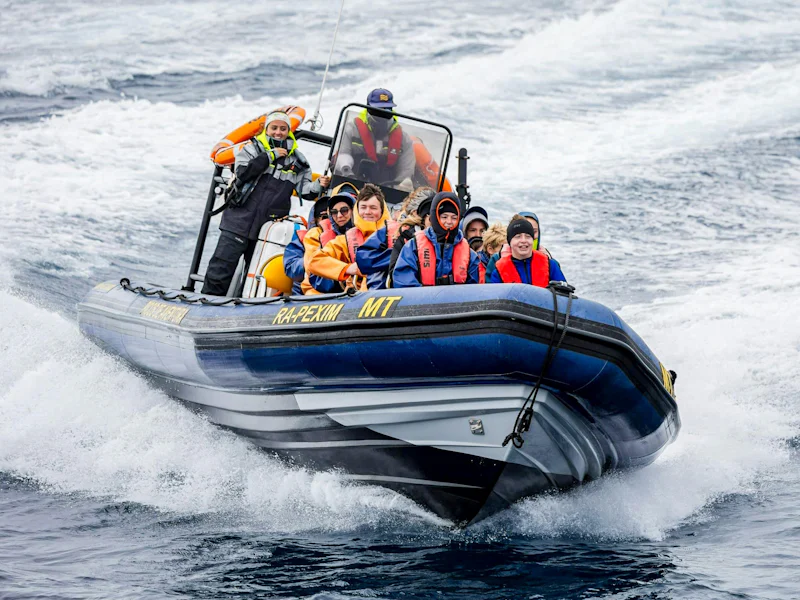
 New
Here's the season at a glance. Open the Azores guide for the full month-by-month calendar, sighting odds and tours.
Based on 92,042 verified sightings logged in Portugal: real records, not estimates.
Source: GBIF.org, which aggregates marine mammal observations from OBIS-SEAMAP, Happywhale & iNaturalist. Retrieved October 2026.
The whales and dolphins you can realistically spot here, ranked by how often they are recorded.


Portugal whale watching is three different trips under one flag. Out in the mid-Atlantic, the volcanic Azores hold a resident sperm whale population and a spring parade of blue and fin whales. Further south, the subtropical island of Madeira runs a whale watching industry of its own, built on short-finned pilot whales that never leave. And on the mainland, a short drive from Lisbon, a small family of resident bottlenose dolphins has lived in the Sado estuary near Setubal for generations, with more dolphins off Sesimbra and Sagres. None of these three shares a season, a species list or even an ocean temperature, so start by deciding which one you want.
Here the three are compared at a national level: where each one sits, when each one peaks, and what you are likely to see. The Azores get the most space, since they have the country's largest, best-documented whale watching industry and the only tours on this site you can currently book, but planning around the Azores alone leaves out two of Portugal's three regions.
Three regions carry almost all of Portugal's whale watching between them, and they suit different trips: a bucket-list encounter with the biggest animals on Earth, a reliable year-round add-on to a subtropical beach holiday, or an easy half-day out of Lisbon.
Most people who book a whale watching trip to Portugal come for the Azores. Close to a third of the world's whale and dolphin species have been recorded in Azorean waters, deep water sits very close to shore, and a network of clifftop lookouts called vigias, once used to spot prey for whaling boats, now radios sightings straight to tour operators. Sao Miguel and Pico carry almost every tour, and the full whale watching in the Azores guide breaks both down, including the month-by-month season, current tour prices and which island fits which trip.
Madeira is Portugal's other major whale watching island, and its calendar works differently from the Azores'. Short-finned pilot whales and bottlenose dolphins live here year-round, so a Madeira boat trip has a good shot at cetaceans in any month, with sperm whales also present through the year and more frequently sighted from spring into autumn. Bryde's whales pass seasonally between spring and autumn, drawn in by the same steep underwater slopes that keep deep-diving species close to the coast. Madeira is not currently bookable on this site, so treat a Funchal boat trip as something to add once you are on the island.
The mainland sees far less whale traffic than the Azores, but it has a resident dolphin family you can reach in under an hour from Lisbon. The Sado estuary at Setubal is home to mainland Portugal's only resident population of bottlenose dolphins, a group of around 30 named individuals that Portugal's nature conservation institute has tracked for more than four decades, and one of just three resident dolphin populations left in Europe. Further south, boats out of Sesimbra and the Algarve town of Sagres run shorter dolphin watching trips along the open coast, where common and bottlenose dolphins are the regular sightings and a pilot whale or passing orca is an occasional bonus. It does not rival the Azores for variety, but it needs no flight, which is where a lot of Portugal whale watching trips start.
Pick the region that matches your dates first; if that turns out to be the Azores, the Azores guide covers the rest.
The best time for whale watching in Portugal depends on which of the three regions you mean, because each runs on its own calendar. The Azores are the most seasonal of the three: April through June is peak season, when blue and fin whales pass on their spring migration and sighting rates climb to around 90%, while resident sperm whales and dolphins keep the shoulder months from March to October solid too. Winter, November through February, is the quiet season, with rougher Atlantic swells and far fewer boats running.
Madeira flips that pattern. Its resident short-finned pilot whales and bottlenose dolphins do not migrate, so sightings are possible in any month, with local operators reporting cetacean sighting rates in the 70 to 90% range across the whole year. Spring and early autumn are still the strongest windows, adding Bryde's whales and more frequent sperm whale sightings to the resident species, and Madeira is the one Portuguese region where "any time of year" holds up.
The mainland sits between the two. The Sado estuary's resident dolphins can be seen year-round since the family never leaves the estuary, but spring through autumn brings calmer seas and more daily departures from Setubal, Sesimbra and Sagres, so those months are the practical best time.
Start from your travel month, then choose the region. A Portugal whale watching trip has no single best time, because it covers three places. Dates fixed to April, May or June point straight at the Azores' migrating giants. Dates in January or another island off month still work, since Madeira's residents and the Sado estuary's dolphins are always there. Our guide to the best time for whale watching lines up every country and region we cover against the calendar for anyone choosing a destination to fit fixed travel dates.
Species overlap across Portugal's three whale watching regions more than the season calendars do, but which ones you are likely to encounter still depends heavily on where you go.
Present in Azorean waters year-round and the main reason many visitors choose Portugal for whale watching in the first place; Madeira holds sperm whales too, present through the year but more often sighted from spring into autumn. Males can reach roughly 52 feet and routinely dive for squid to 2,000 feet, a hunt that typically lasts around 45 minutes and sometimes runs past an hour before the whale surfaces to breathe again. Both island groups owe their numbers to deep water that turns steep close to shore, the biggest natural advantage Portugal whale watching has.
The Azores' spring specialty, and the closest thing Portugal has to a bucket-list sighting. Blue whales, the largest animals that have ever lived, and fin whales, the second largest, pass the islands on a northbound migration each April through June, tracking the krill and small fish that draw them this far into the Atlantic. Neither stays in Portuguese waters, so if one of them is the point of your trip, book the spring window.
Madeira's headline resident, living in family pods around the island year-round. Pilot whales are deep divers and highly social, traveling in tight groups that mix calves with adults, and Madeira's steep underwater slopes put that within easy reach of a short boat ride from Funchal. They turn up in the Azores too, though far less consistently than off Madeira, where local operators count them as close to a daily sighting.
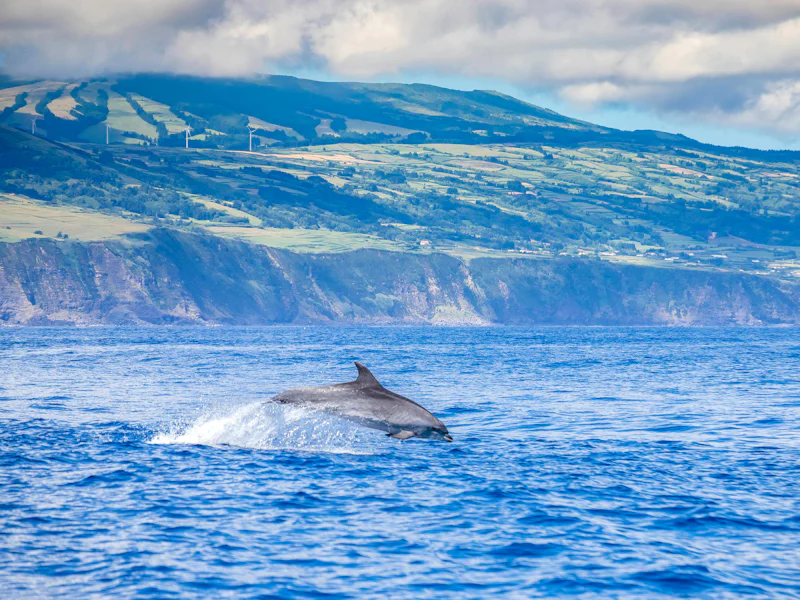
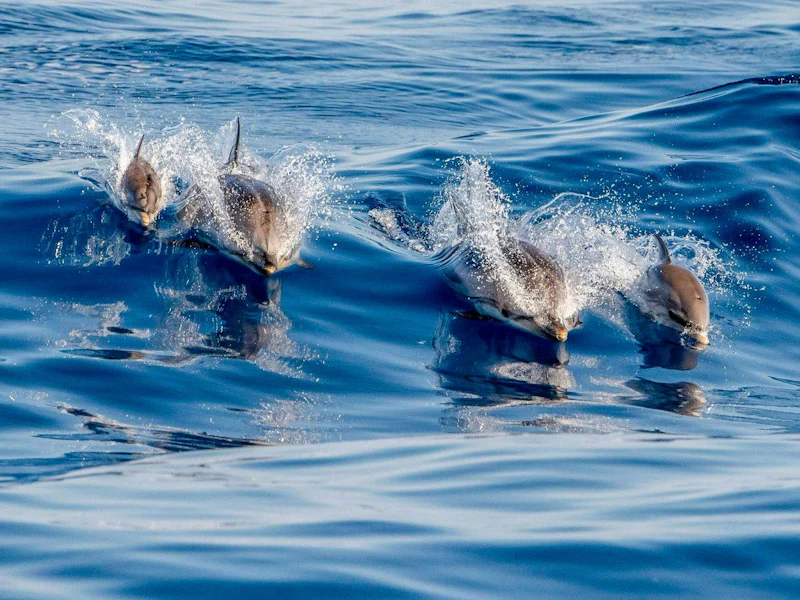
The species most likely to show up wherever you go in Portugal. Common dolphins move through Azorean waters in pods that can run into the hundreds, Madeira holds its own resident bottlenose population alongside the pilot whales, and on the mainland the Sado estuary's resident family, plus dolphins off Sesimbra and Sagres, are what make a trip out of Lisbon worth booking. Fast, curious and quick to ride a bow wave, dolphins are usually the first marine wildlife any guide in the country points out.
With three regions on the table, choosing where in Portugal to go whale watching comes first; boats and departure times can wait.
All the Azores tours we track, compared on price, boat, duration and free cancellation.
See the toursWhether you are on a Sado estuary boat, a Funchal catamaran or an Azores tour, wind off open water is colder than the air on shore suggests. Bring a windproof layer and something for your hands even on a warm-looking day, and if you are prone to seasickness, take a remedy before boarding, eat lightly beforehand, and watch the horizon from the open deck.
Across all three regions, the first sign of a whale or dolphin is almost always distant: a blow, a fin, a splash well before the boat closes the gap. Binoculars turn that far-off cue into a clear view of the species, while a fast shutter speed serves photography better than a heavy lens on a moving deck. A few minutes without the camera, just watching, is usually what people remember most.
The Azores operate under a regional code of conduct that sets minimum approach distances and caps how many boats can gather at one sighting, echoed in guidance from the International Whaling Commission. Madeira and the Sado estuary fall under Portugal's national and EU rules on cetacean disturbance, enforced in the estuary by the country's nature conservation institute, which has tracked the resident dolphin family there for more than 40 years. Wherever you book, pick an operator that lets the animal set the pace.
The Azores' vigia lookouts once guided whaling boats before they guided tourists, and whaling wound down after Portugal joined the European Economic Community in 1986, with the last sperm whale taken off Pico in 1987. Many Azorean guides today are descended from the whalers who worked the same cliffs a generation earlier, and most are glad to talk about that fast turnaround if you ask.
A two-week Portugal trip has room for more than one of these three: a few days in Lisbon with a Sado estuary or Sesimbra dolphin trip, a Madeira stopover for the resident pilot whales, and an Azores leg for the spring giants and sperm whales.
Pick the region that matches your dates and priorities first, the Azores for spring giants and resident sperm whales, Madeira for year-round residents, the mainland for a quick trip from Lisbon, then choose a boat that matches your budget and your stomach, and book early with free cancellation as your safety net, wherever your next whale watching trip takes you.
Peak season runs April to June, when blue and fin whales pass the Azores on their spring migration and sighting rates reach about 90%. March, July through October are good shoulder months for resident sperm whales and common dolphins, which are present all season and do not migrate away. November to February is the off season, with rougher Atlantic swells and far fewer tours running.
Most whale watching in Portugal happens in the Azores, a group of islands in the mid-Atlantic and the country's biggest whale watching region, with Madeira and the mainland coast near Lisbon as smaller options. Sao Miguel and Pico are the two main Azores departure islands, each with its own boats, prices and season, and the only ones with tours compared on this site.
Sao Miguel, home to the capital Ponta Delgada, is the more convenient base, with more flights and the widest choice of daily departures, from about $76. Pico, the historic whaling island, sits over some of the deepest water close to shore and is the stronger pick if a resident sperm whale sighting is your priority, from about $77.
Core whale watching tours in the Azores run from about $76 to $81 for a 3-hour trip on Sao Miguel or Pico, among the most affordable prices in the region. A specialist swim-with-dolphins trip on Terceira costs more, from about $128 for a shorter 2-hour outing.
Sperm whales are the Azores' signature species, resident year-round rather than migratory. Blue and fin whales pass through on their spring migration from April to June, and large pods of common dolphins are seen throughout the season. Researchers have recorded around 20 to 28 whale and dolphin species in Azorean waters over the years.
Sighting rates run around 90% during the April to June peak season, helped by the Azores' vigia system, shore-based lookouts on clifftop watch points who spot whales and dolphins and radio their position straight to the boats. Outside peak season, sightings of resident sperm whales and common dolphins stay reliable, since neither species migrates away.
Compare tours in Portugal and book in minutes. Most offer free cancellation.
See tours in Portugal