Ponta Delgada
Guided Sao Miguel Whale Watching Tour
Free cancellation3 hrs
from $76
Check availability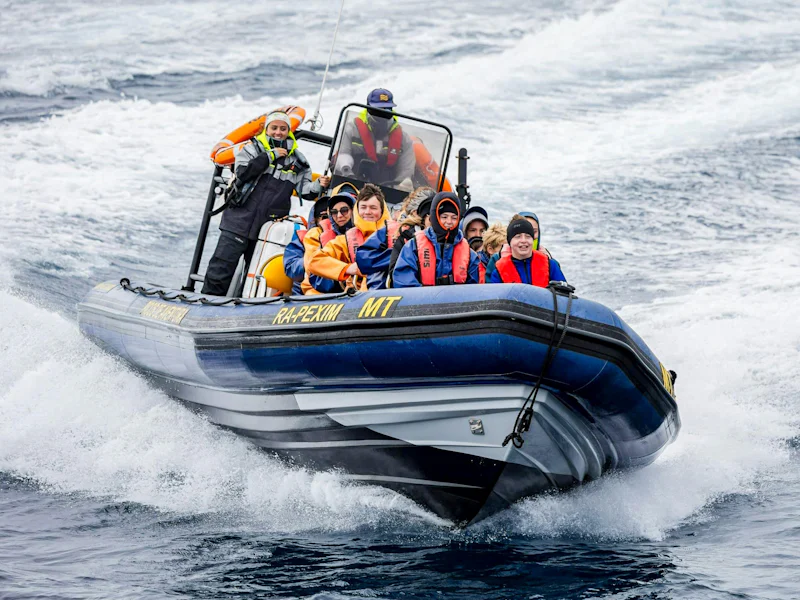
More in Azores: Pico All of Azores
When whales are around, month by month.
Based on operators' peak-season sighting records.
Chance of seeing whales or dolphins in Sao Miguel in peak season
Chance of seeing both whales and dolphins
Based on 39,771 verified sightings logged in Sao Miguel: real records, not estimates.
Source: GBIF.org, which aggregates marine mammal observations from OBIS-SEAMAP, Happywhale & iNaturalist. Retrieved October 2026.
The whales and dolphins you can realistically spot here, ranked by how often they are recorded.



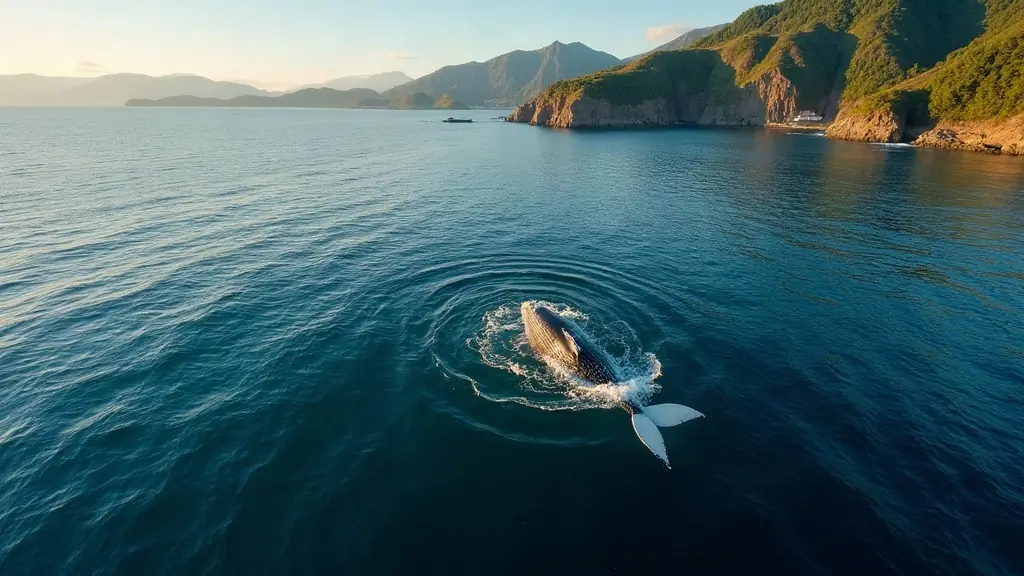
Sao Miguel whale watching runs on two stories at once. A resident population of sperm whales lives in these waters year-round, hunting squid in the deep channel just offshore, so a boat out of Ponta Delgada has a good shot at finding one on any given morning. Then, for a few weeks each spring, the giants pass through: blue whales and fin whales moving north on migration, feeding as they go, sometimes surfacing within sight of the same boats searching for sperm whales. Picture a guide's radio crackling with a position call from a clifftop lookout miles away, the boat turning hard toward the spot, and a few minutes later a huge gray head breaking the surface, a small dorsal hump, and a slow roll back under.
Sao Miguel is the largest and most visited island in the Azores, and its capital, Ponta Delgada, is where nearly every whale watching trip on the island begins, with a second, quieter departure point at Vila Franca do Campo along the coast. You'll find when to come for the best odds of a spring giant, the four headline species, where the boats leave from, what a typical tour costs and feels like, and how to choose between the tours on offer. For the rest of the archipelago, our guide to whale watching in Azores puts every island side by side. Prices are current listings we compare, and most can be canceled free if your plans move.
The short answer is April, May and June. Those three months are the peak of the Sao Miguel whale watching season, when the resident sperm whales that live here all year overlap with blue and fin whales passing through on their spring migration, and combined sighting rates run around 90%. Aim for this window if you want a shot at one of the giant baleen whales on top of the resident sperm whales.
March, July, August, September and October are solid shoulder months. The spring migrants have moved on by midsummer, but the resident sperm whales and the island's dolphins keep sightings strong right through the warmer months, and boats run a full schedule. If you cannot travel in spring, this stretch of the year still gives a good chance of a sperm whale encounter without the crowds of the peak weeks.
November through February is the quiet season. The migrating blue and fin whales are gone until the following spring, and this is the one part of the year our data does not rate as strong. The resident sperm whales do not migrate, so they are still present, but tours run less often. If you are choosing between Sao Miguel and another destination for a specific month, our guide to the best time to go whale watching lines up every region's season side by side.
The vigia trick. Long before whale watching existed, whalers stationed lookouts called vigias in stone huts on the clifftops, scanning the ocean for a blow and signaling boats to give chase. Whaling ended in the Azores in the 1980s, but the vigia network never disappeared: the same clifftop posts are now staffed by spotters who radio GPS positions straight to the tour boats, sometimes covering tens of kilometers of coastline from a single high vantage point. That network is why Sao Miguel whale watching finds animals as efficiently as it does.
According to Visit Azores, the official regional tourism board, more than 20 different types of cetaceans have been recorded across the archipelago, and Sao Miguel's mix of resident and migrant marine wildlife covers a wide slice of that variety in a single trip. Four species anchor a typical outing, and the island's dolphins, especially large pods of common dolphins, plus regular bottlenose, Risso's and, in summer, Atlantic spotted dolphins, fill in the gaps between whale sightings.
The species that keeps Sao Miguel whale watching running all year. A resident population lives in the deep water off the island, diving for around 45 minutes at a time, sometimes longer, to depths that routinely reach 2,000 feet in search of squid, then resting at the surface for several minutes to breathe before the next dive. According to NOAA Fisheries, males can reach 52 feet and 45 tons, with an enormous head that accounts for roughly a third of the body, and the species remains listed as endangered under the US Endangered Species Act after centuries of commercial whaling. Vigia spotters and boat crews recognize individuals from photographs, and biologists on the island have tracked sperm whale sightings since the early 2000s.
The spring headline act. Blue whales pass Sao Miguel on their northward migration between April and June, feeding on krill as they travel and occasionally lingering for days if the water holds enough food. They are the largest animal that has ever lived, and according to Whale and Dolphin Conservation, an adult can top 100 feet and is listed as Endangered, with a global population still recovering from industrial whaling. A blue whale's blow is a tall, straight column visible long before the animal itself surfaces, and nobody can promise one, though spring in the Azores gives you better odds than most places in the world.
The blue whale's regular travel companion. Fin whales migrate through the same spring window, often in the same stretch of water, and are the second-largest whale on Earth after the blue. According to NOAA Fisheries, they reach 75 to 85 feet, are listed as endangered throughout their range, and can be identified by asymmetrical jaw coloring, dark on the left side and white on the right. They move fast and can cover a lot of water between surfacings, so a vigia's radio call is often the difference between missing one and getting a good look.
The most reliable sighting of the day, in pods that can number in the hundreds. Common dolphins ride a boat's bow wave and break the surface in fast, splashy bursts throughout the season, and they are usually the liveliest few minutes of any Sao Miguel whale watching trip, whale sighting or not. Bottlenose dolphins are also regular, Risso's dolphins turn up year-round in smaller numbers, and Atlantic spotted dolphins add a fourth species to the mix through the summer months, so the dolphin sightings alone can carry a trip even on a slow whale day.
Almost every Sao Miguel whale watching tour leaves from one of two harbors, and both put you within reach of the same resident sperm whales and the same spring migration route.
Ponta Delgada is the Azores' largest town and Sao Miguel's main port, and most whale watching boats leave straight from its marina, putting the deep water where sperm whales feed within easy reach of the harbor. Because it is the island's main hub for flights, hotels and restaurants, it is the natural base for most visitors, and it carries the widest choice of tour times and operators. Vigia spotters covering this stretch of coast can see a long way on a clear day, which keeps sighting rates high even on a boat's first pass out of the harbor.
A short drive east of Ponta Delgada, Vila Franca do Campo is a smaller marina town on Sao Miguel's south coast, and some of the island's whale watching boats run from here instead, reaching many of the same deep-water grounds. It makes a good base if you would rather stay somewhere quieter than the capital, or if you are combining a whale watching morning with a visit to the town's well-known islet nature reserve just offshore. If Pico's closer, more intimate encounters interest you as a second stop on an Azores trip, our page on whale watching in Pico covers that island's year-round sperm whale grounds in the channel between Pico and Faial.
A clifftop spotter miles away sees the blow before you do, and radios the boat to it, using a skill the island's whalers once relied on.
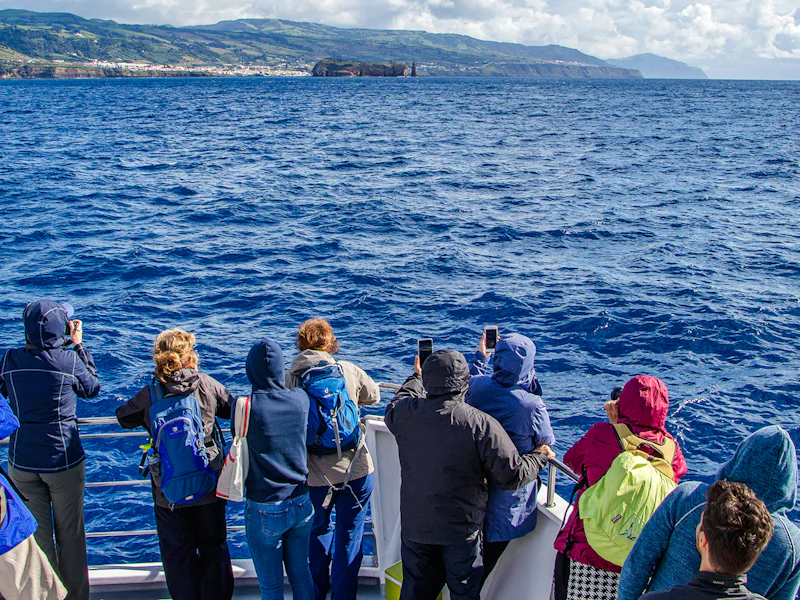
A typical Sao Miguel whale watching tour starts with a safety briefing at the harbor before the boat heads out toward the deep channel where sperm whales are known to feed. The crew stays in radio contact with the vigia network on shore, and a sighting, the species and a rough position often come through before the boat is even out of the marina. Once on site, the guide cuts the engine and lets the whale set the pace, watching for the "footprint," the flat patch of water a diving whale leaves behind, and timing the wait for its next surfacing. Dolphins usually appear along the way, riding the bow or crossing the boat's path in fast pods.
3 hours, from about $76, rated 4.9 from 193 reviews, the more reviewed of the two tours we compare. A guided open-boat trip that searches the vigia-covered waters off Ponta Delgada for sperm whales, dolphins and, in spring, migrating blue and fin whales.
Also 3 hours, also from about $76, rated 4.6 from 52 reviews. The same basic format and price as the tour above, with a smaller but still solid review count, and worth comparing on departure time and availability for your dates.
As a rule of thumb, the two Sao Miguel whale watching tours we compare both sit at around $76 for a 3-hour trip, so price won't decide it. Choose on the departure time that fits your day and, in spring, on whether the operator has been finding blue and fin whales that week; guides on the ground will usually tell you if you ask.
Put the Sao Miguel tours next to each other on price, duration and free cancellation.
See the toursBecause both tours run at almost the same price and length, the decision comes down to timing, port and which listing has the stronger reviews for your dates.
Sao Miguel sits well out in the open Atlantic, so wind and spray on deck are stronger than a sunny harbor morning suggests. Bring a windproof layer, something warm underneath even in summer, and sunglasses for the glare off the water.
The open swell around the island can catch out first-timers more than a calmer bay would. Take a remedy well before the boat leaves rather than once it is moving, eat something light beforehand, and stay on deck with your eyes on the horizon.
The first sign of a whale often comes over the guide's radio from a vigia spotter on shore, before anyone on deck sees a thing. Bring binoculars so that once the boat arrives on site, a distant blow or a footprint on the water turns into a clear view.
The Azores brand themselves as one of the world's largest whale sanctuaries, and Visit Azores, the regional tourism board, promotes sustainability and preservation as core values of the islands' whale watching industry. Choose an operator that lets the vigia's radio call and the whale's own behavior set the pace and never chases a sighting at speed.
Sao Miguel's whale watching industry grew directly out of the whaling stations that closed here in the 1980s, once Portugal joined the European Economic Community and its whaling rules, and the same clifftop knowledge that once found whales for hunters now feeds photo-identification research. Biologists working from the island's boats have tracked individual sperm whales through fluke and dorsal photographs since the early 2000s, so each trip out adds to a scientific record.
Come in spring if the blue and fin whale migration is the priority, pick whichever port suits your stay, and book early with free cancellation as your safety net. Any month you visit, the resident sperm whales are out there and the vigias are watching for them, wherever else your whale watching travels take you next.
April to June is the best time in Sao Miguel, when the resident sperm whales overlap with blue and fin whales on their spring migration and combined sighting rates run around 90%. March and July to October stay strong for sperm whales and dolphins on a full boat schedule, while November to February is the quiet season. The calendar above has the month-by-month view.
Pico and Sao Miguel are the two main whale watching bases in the Azores, and both find the same resident sperm whales and spring giants. Sao Miguel is the easiest to reach and runs the most tours from Ponta Delgada, while Pico offers the closest, most consistent sperm whale encounters from the old whaling port of Lajes do Pico.
Yes. The Azores are one of the most reliable whale watching regions in the Atlantic, with resident sperm whales present year-round and blue and fin whales passing each spring. Off Sao Miguel, boats out of Ponta Delgada log a sighting on around 90% of peak-season trips, helped by clifftop vigia spotters who radio the position straight to the boat.
Sao Miguel whale watching starts from about $76 per person for a 3-hour trip, and the two tours compared here both sit at around $76, so departure time and review history decide it: one boat rates 4.9 from 193 reviews, the other 4.6 from 52. Book early with free cancellation.
Bookings are processed through Headout, which partners with vetted local operators. Whale Watching is an independent affiliate site. We may earn a small commission if you book through a link here, at no extra cost to you.
Compare tours in Sao Miguel and book in minutes. Most offer free cancellation.
See tours in Sao Miguel