Teneriffa
Costa Adeje Whale Dolphin Watching Catamaran Cruise
Free cancellation5 hrs
from $53
Check availability




Here's the season at a glance. Open the Canary Islands guide for the full month-by-month calendar, sighting odds and tours.
Based on 2,827 verified sightings logged in Spain: real records, not estimates.
Source: GBIF.org, which aggregates marine mammal observations from OBIS-SEAMAP, Happywhale & iNaturalist. Retrieved October 2026.
The whales and dolphins you can realistically spot here, ranked by how often they are recorded.


Spain whale watching is two separate stories playing out roughly a thousand miles apart, and which one you book changes almost everything about the trip. Off the Canary Islands, a resident population of short-finned pilot whales and dolphins lives in the same warm Atlantic strait every day of the year, which turns a boat trip there into one of the more predictable outings in European wildlife travel. Off the Spanish mainland, at the narrow gap where the Atlantic meets the Mediterranean near Tarifa, an entirely different show runs on a seasonal clock: migrating sperm whales, fast pods of striped and common dolphins, and for a few weeks each summer, orcas hunting bluefin tuna in full view of the coast. One arena runs on residency, the other on migration, and the right pick depends on when you travel and what you most want to see.
Below, the Canary Islands and the Strait of Gibraltar go head to head: how their calendars differ, the species each one delivers, and how to decide which fits your dates. The Canaries get a short overview here, and their own regional guide breaks down every harbor, boat and price island by island. Tarifa is covered more briefly, as what it is and when it runs, since it currently sits outside the tour selection we track and book.
Almost every whale watching trip booked in Spain starts with one decision: the islands or the mainland. They are two different kinds of trip, and most visitors will only ever need one of them.
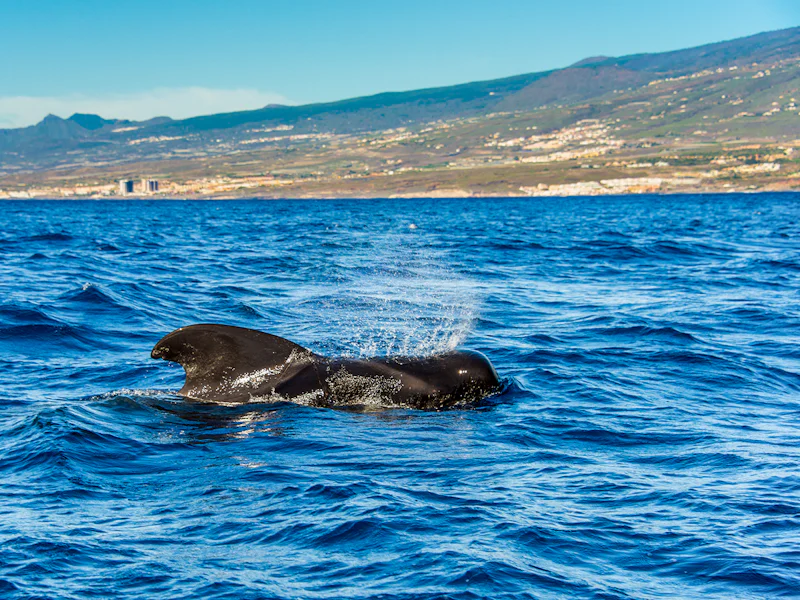
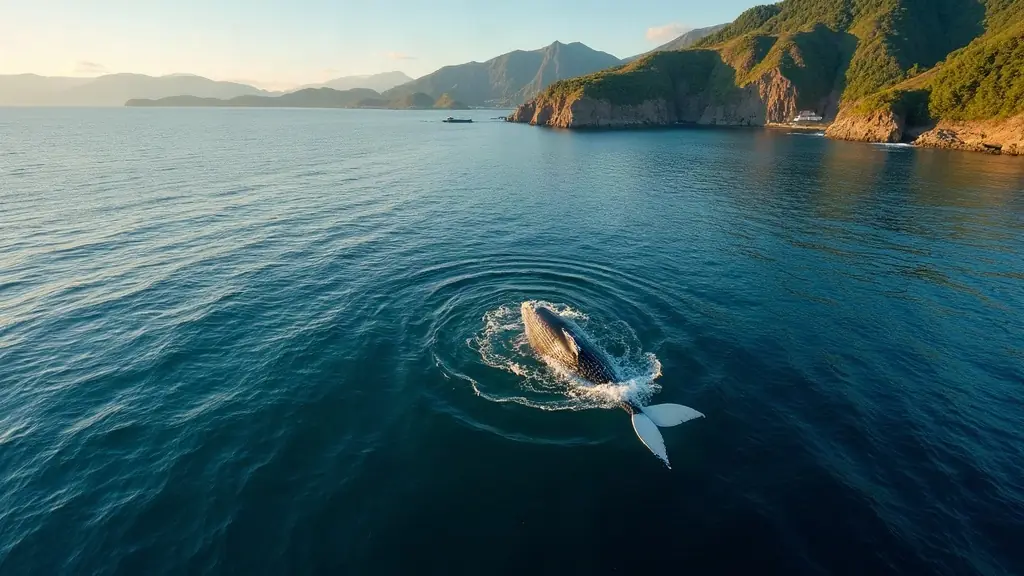
Spain's whale watching reputation comes from these islands. A community of short-finned pilot whales lives permanently in the deep channel off southwest Tenerife, alongside resident bottlenose dolphins and, in the warmer months, larger pods of Atlantic spotted dolphins, and boats find them on the vast majority of sailings in any month. With no migration window to time, the islands are usually the right answer for a first whale watching trip or a family outing. For the full breakdown of harbors, boats and prices, see our guide to whale watching in the Canary Islands, which covers the archipelago region by region.
Tarifa sits at the opposite end of the country, both geographically and in how its whale watching works. The Strait of Gibraltar is barely 9 miles wide at its narrowest point, a bottleneck between two seas that funnels an unusual mix of marine wildlife past the town for part of the year. Local pilot whale families and pods of striped, common and bottlenose dolphins are the steady presence through the warmer months, sperm whales pass through on a wider migration, and through July and August, sometimes into early September, a small, well-studied population of orcas moves into the strait to intercept Atlantic bluefin tuna as the fish leave the Mediterranean for the open Atlantic. It is a well-documented piece of Spanish wildlife. Operators based in Tarifa run these trips themselves, outside the tour partner behind the listings on this site, so use this section as background for planning your own trip to the strait; the links below will not book it.
Because Spain whale watching splits across two arenas, "best time" has two different answers depending on which one you are asking about. The Canary Islands have no best time. Every month carries close to the same odds, with about 96% of sailings finding whales or dolphins, and the busiest weeks of the year differ mainly in how many boats are out searching at once. A January sailing off Tenerife and an August one land on essentially the same result, because the animals involved live there all year.
The Strait of Gibraltar runs on the opposite logic. Tarifa's operators generally run boats from around April through October, tracking the months when the Atlantic is calm enough for a small boat to work the strait and when the resident dolphins and pilot whales are most active close to shore. Within that window, the middle of summer is its own event: in July and August, sometimes into early September, bluefin tuna heading back out to the Atlantic funnel through the strait and orcas follow them in, giving Tarifa a narrow, well-known peak with no equivalent in the Canaries. Outside that window, expect dolphins, resident pilot whales and the chance of a passing sperm whale rather than orcas. If your travel dates are fixed and you are choosing where to go around them, our guide to the best time for whale watching lines up regions and countries side by side, month by month.
Every month works in Spain if you pick the coast that suits it. Book the Canary Islands on any date on the calendar and the odds barely move. Book Tarifa outside its April-to-October run, or outside the July-to-August tuna season if orcas are the specific goal, and you are chasing a window that has already closed. So let your travel dates pick the arena.
A handful of species carry almost all of Spain's whale watching between the two arenas, three resident in the Canaries and four tied to the Strait of Gibraltar's seasonal traffic. None of them behave quite the same way in both places, so where you look matters as much as when.
Present in both arenas but resident in only one. Off the Canaries, a settled population of roughly 400 animals holds the same stretch of water year-round, which is the single biggest reason Spain's island sightings are so consistent. Off Tarifa, separate pilot whale families use the strait as a feeding ground through the warmer months rather than a permanent home. Either way, look for a low, curved dorsal fin and tight family pods moving slowly at the surface between dives.
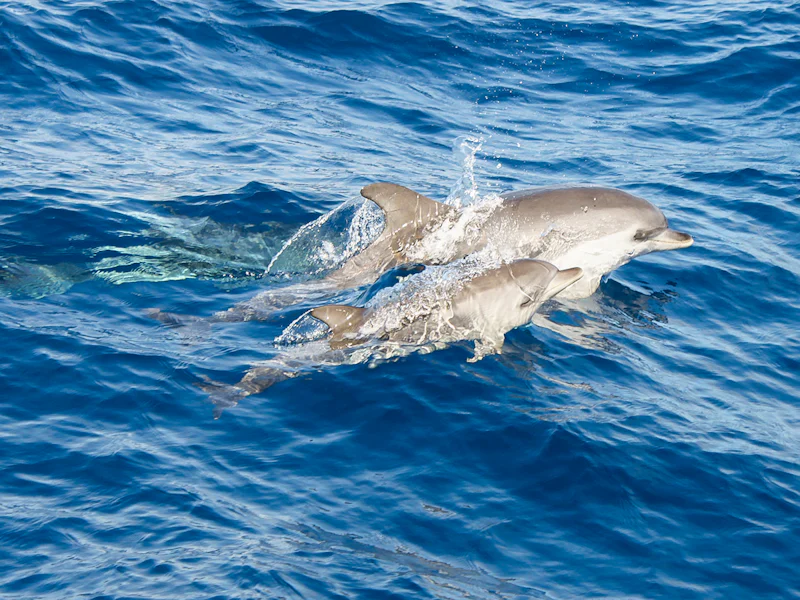
The Canary Islands' other two headline residents. Bottlenose dolphins hold territory alongside the pilot whales year-round and are the pod most likely to ride the bow wave right up to the boat. Atlantic spotted dolphins gather in larger, faster-moving groups through the warmer months, their gray flanks speckling with age, and a big pod of them turning up is a welcome bonus on top of the resident species.
The Strait of Gibraltar's signature animal and the reason Tarifa has its own dedicated summer season. A small, closely tracked population, thought to number in the dozens, moves into the strait from around July as Atlantic bluefin tuna migrate back out toward the Atlantic, and the orcas have learned to work alongside the tuna run as it passes. You will not see this behavior anywhere in the Canaries, and the window is narrow, so some travelers plan a whole trip around it.
The strait's everyday sighting, present through most of the operating season alongside the local bottlenose pods. Striped dolphins travel in fast, energetic groups and are easy to pick out by the dark stripe running from eye to flank, while common dolphins often appear in larger, looser pods that can stretch across a wide patch of water. Between the two, a dolphin sighting off Tarifa is close to a given on most sailings during the season.
A migrant through the Strait of Gibraltar, passing between the Mediterranean and the open Atlantic rather than settling anywhere close to shore. Sightings are less predictable than the dolphins or the summer orcas, since sperm whales tend to travel further offshore and spend long stretches submerged on deep dives, but a long, low blow angled forward and to the left is the giveaway when one does surface within range of a boat.
With two arenas on offer, settle which one your Spain whale watching trip needs before you start comparing boats.
Compare every bookable Spain tour side by side by price, boat, duration and free cancellation.
See the toursCanary Islands sailings are warm-water trips: a light layer, sunglasses and reef-safe sunscreen cover most of them, and seasickness is rarely a serious problem in the sheltered strait off Tenerife. A Strait of Gibraltar trip out of Tarifa is exposed to open Atlantic swell and often a stiff wind, so bring a proper windproof layer and take a seasickness remedy before you board.
Spain regulates how close a boat can get to a cetacean, and the Canary Islands go further with their own rule setting a minimum approach distance of 60 meters, a gentle angle of approach and a cap on how long any one boat can stay with a pod. Southwest Tenerife and La Gomera also carry Whale Heritage Site status from the World Cetacean Alliance, recognition of both the resident pilot whales and the local commitment to sustainable viewing. Choosing a licensed operator that follows these rules, in either arena, is the simplest way to make sure your trip does not add stress to the animals you came to see.
Pick the Canary Islands for a reliable, any-date trip with resident pods, or plan around Tarifa's July and August window if orcas are the goal. Either way, book with free cancellation where it is offered, so a change of plans costs you nothing. Spain has two whale watching calendars, and picking the right one is most of the work.
The Canary Islands, and specifically the strait off southwest Tenerife, known as the Teno-Rasca strait. A resident population of around 400 short-finned pilot whales lives there year-round alongside bottlenose dolphins, which is why tours find whales or dolphins on about 96% of sailings in any month. Lanzarote is a solid second option, especially for the crossing toward the Isla de Lobos nature reserve.
Yes, mainly around the Strait of Gibraltar near Tarifa, where boats run from roughly April to October and orcas follow the bluefin tuna through the strait in July and August. It has no resident pods to match the Canary Islands, though, which offer whale watching every month of the year, so most Spain whale watching trips, and the tours tracked on this page, are based there instead.
There isn't a bad one. Sighting rates hold around 96% in every month because the pilot whales and bottlenose dolphins are residents rather than migrants. Summer brings larger pods of Atlantic spotted dolphins, and spring is the best window for a bonus sighting of migrating fin whales.
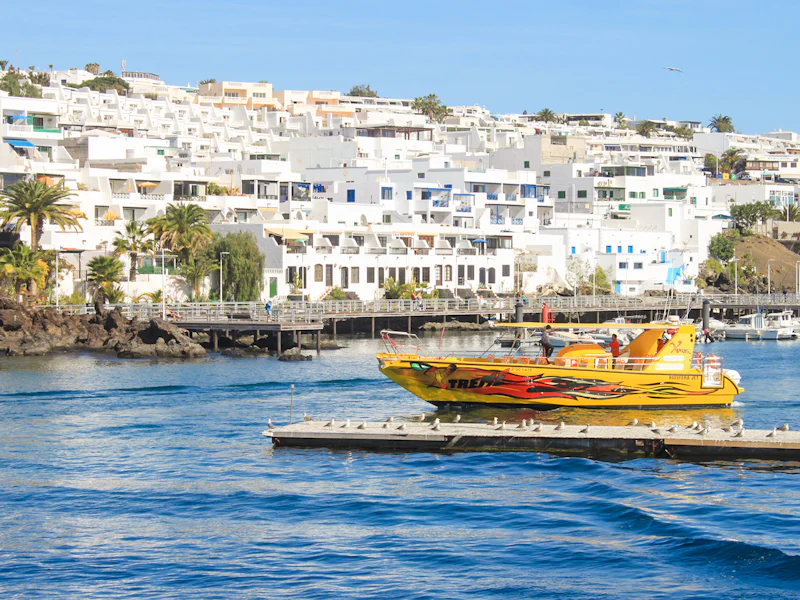
Tours start from about $31 for a short pirate-boat trip out of Tenerife, with most standard catamaran and speedboat tours falling between $31 and $87. A 3-hour eco-sailing cruise with snorkeling costs about $81, and full-day private charters with meals run about $692 to $756.
The headline species are the short-finned pilot whale and the bottlenose dolphin, both resident year-round off southwest Tenerife, plus Atlantic spotted dolphins in bigger pods through the warmer months and migrating fin whales in spring. Off Tarifa, orcas add a summer highlight. Up to 28 cetacean species have been recorded across the Canary Islands in total, though most tours center on these four.
Tenerife, by a wide margin. The Teno-Rasca strait off its southwest coast holds the resident pilot whale population behind the Canary Islands' 96% sighting rate, and the island has the widest range of tours and prices. Lanzarote is the main alternative, better known for its dolphin sightings and the half-day crossing to Isla de Lobos.
Compare tours in Spain and book in minutes. Most offer free cancellation.
See tours in Spain