Teneriffa
Costa Adeje Whale Dolphin Watching Catamaran Cruise
Free cancellation5 hrs
from $53
Check availability
 New
NewMore in Canary Islands: Lanzarote All of Canary Islands
When whales are around, month by month.
Based on operators' peak-season sighting records.
Chance of seeing whales or dolphins in Tenerife in peak season
Chance of seeing both whales and dolphins
Based on 1,520 verified sightings logged in Tenerife: real records, not estimates.
Source: GBIF.org, which aggregates marine mammal observations from OBIS-SEAMAP, Happywhale & iNaturalist. Retrieved October 2026.
The whales and dolphins you can realistically spot here, ranked by how often they are recorded.
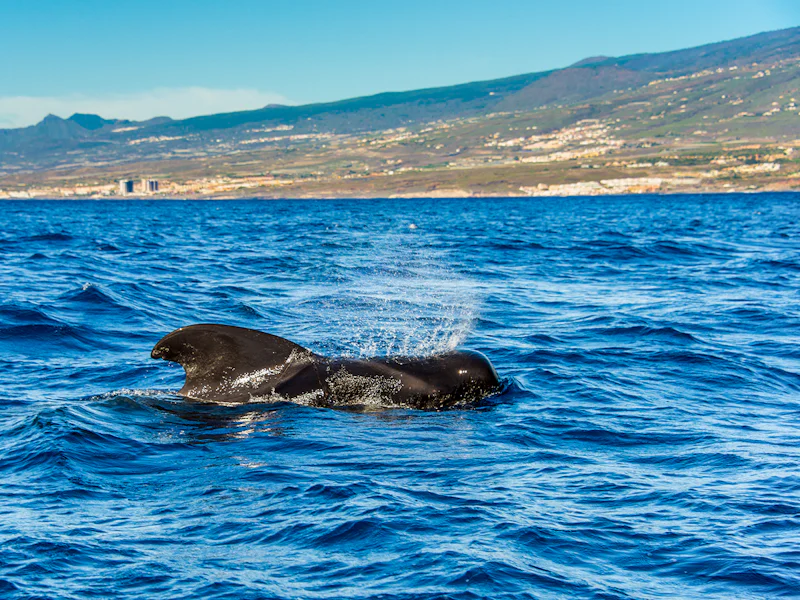
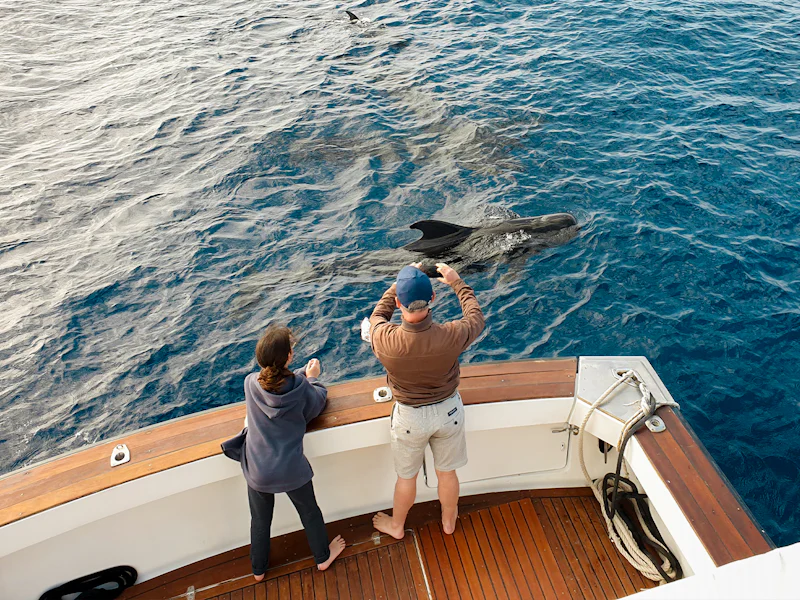
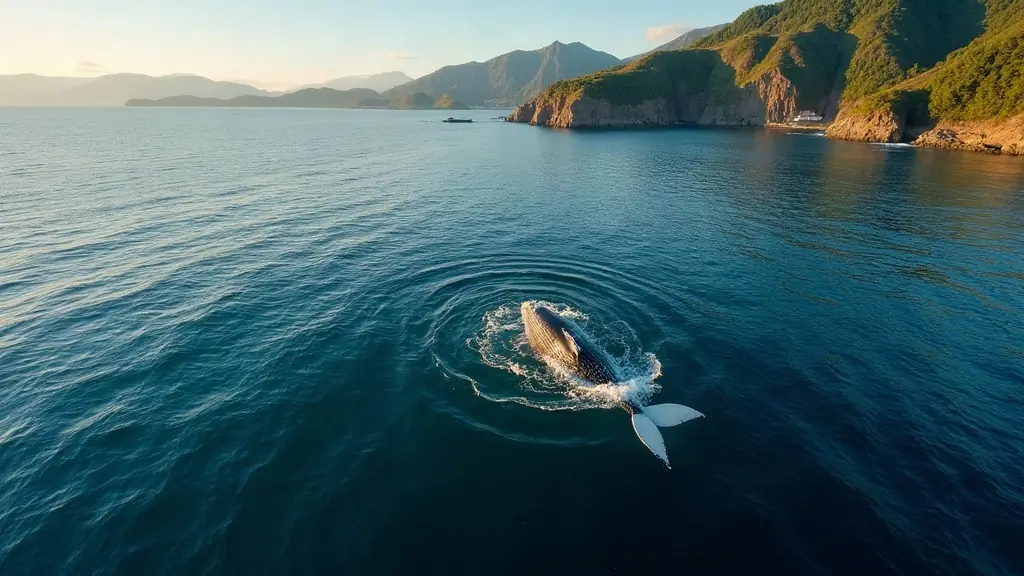
Tenerife whale watching starts close to shore. The short-finned pilot whales that give this island its reputation live inside the Teno-Rasca strait, a band of deep, sheltered water that begins almost within sight of the harbor walls at Los Cristianos, Puerto Colon and Las Galletas. Most crews are already drifting over the pod's core range within fifteen to twenty minutes of leaving the dock. About 96% of Tenerife sailings find pilot whales or dolphins, in January as much as in the busy July-to-September stretch, because the animals behind those numbers stay in the strait.
No other island in the archipelago has a resident pod this dense this close to shore. What follows is specific to Tenerife: which of the three harbors to sail from, the time of day that changes your odds, what a boat here costs, and how to fold a morning on the water into a Mount Teide day. For the wider archipelago picture, see the Canary Islands whale watching hub; if you are weighing a second island, our page on whale watching in Lanzarote covers the more spread-out alternative.
Every month works here, so the seasonal question that dominates most whale watching guides barely applies to Tenerife. The time of day matters more. The strait tends to be flattest in the first few hours after sunrise, before the alisios, the trade winds that build through the Canaries most afternoons, push a chop across the water off the southwest coast. Boats that leave Los Cristianos or Puerto Colon before mid-morning typically get a calmer crossing and a longer search window; afternoon departures still find the pod, but the ride home has more bounce in it.
July through September brings the closest thing Tenerife has to a peak season for visitors. The pilot whales are just as present as in other months; the difference is that the resort towns fill up and boats book out further in advance. If your trip has any flexibility, a morning sailing in the shoulder months of spring or late autumn often means a smaller boat, a quieter harbor and the same odds as August.
Pair it with Mount Teide. A 2-hour pirate boat or a 3-hour yacht cruise from Los Cristianos in the morning still leaves you a full afternoon to drive up to Mount Teide, Spain's highest peak, before the light fades. It is the most common way visitors structure a Tenerife day trip, and it works best when you book the earliest sailing you can find.
Southwest Tenerife and neighboring La Gomera were named a Whale Heritage Site by the World Cetacean Alliance, one of only a handful of places on Earth to hold that designation, and the strait between them is the reason. Four cetaceans account for nearly every sighting here.
The catalogued local population sits at roughly 400 animals, split into family units led by an older female, from a handful of individuals up to fifty in the larger groups. They feed on squid at depth after dark, so a Tenerife crossing usually finds them resting at the surface: slow, unhurried rolls, a calf pressed against its mother's side, occasionally a head lifted straight out of the water to look around. Because the pod rarely leaves the strait, the same family groups turn up on tours weeks or months apart.
Shares the strait with the pilot whales year-round and is usually the livelier half of a Tenerife sighting, riding the pressure wave off the bow and breaking the surface in tight arcs. Crews out of all three harbors recognize individual dorsal fins from one season to the next, a sign of how settled this population is.
Less of a fixture off Tenerife than the resident pair above, but pods pass through more often from late spring into early autumn, the same window when boats out of Puerto Colon and Las Galletas report the biggest, most acrobatic groups. A pod can mix plain-sided juveniles with heavily speckled older adults, all racing and leaping together at the surface.
A spring visitor that passes along Tenerife's coast on a wider Atlantic migration and reaching 75 to 85 feet, the second-largest whale on the planet after the blue whale. Fin whale sightings off Tenerife are rare, so do not count on one when you book; the tall, straight blow is unmistakable if one does surface nearby.
Every whale watching boat on Tenerife leaves from one of three harbors strung along the southwest coast, all inside or right at the edge of the Teno-Rasca strait. Most visitors fly into Tenerife South (Reina Sofia), a short drive from all three; land instead at Tenerife North near Santa Cruz and the transfer down to the south coast runs closer to an hour.
The busiest of the three and the default choice if you are staying anywhere near Playa de las Americas. The Los Cristianos Pirate Boat runs a 2-hour outing from about $31 and carries one of the highest ratings of any Tenerife listing on this site (4.8 stars from 17 reviews), while a smaller yacht cruise from the same harbor runs 3 hours from about $73. Walk-up ferries and day-trip boats to La Gomera also leave from here, so it is an easy harbor to combine whale watching with an island-hopping day.
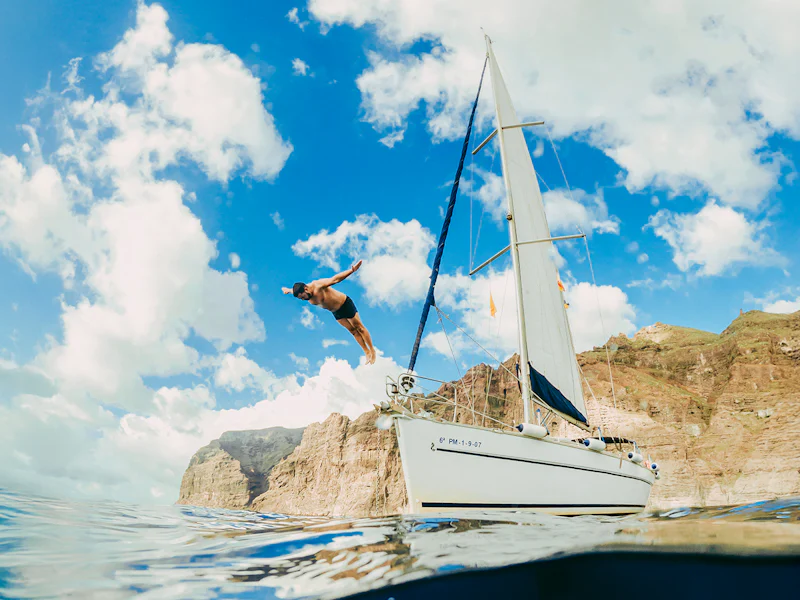
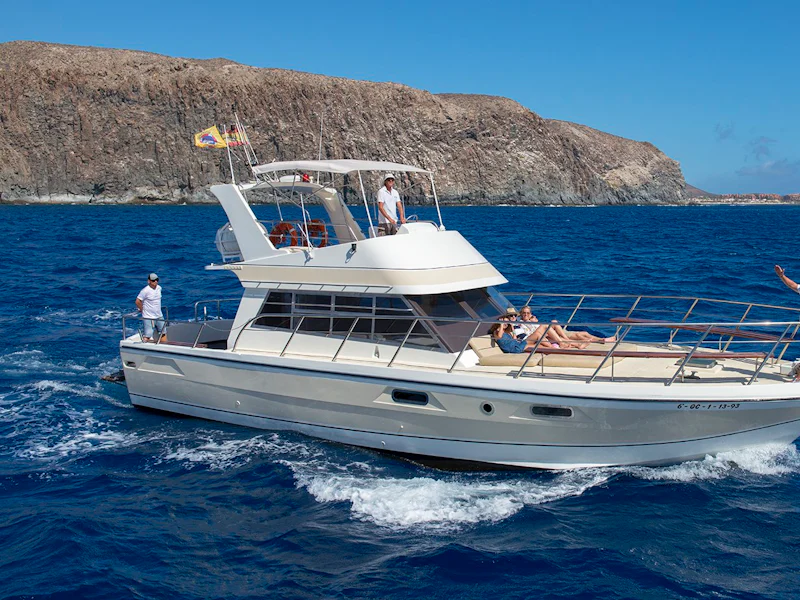
The marina serving Costa Adeje's resort strip runs Tenerife's longest standard outing, a 5-hour catamaran cruise from about $53, plus a 3-hour eco sailing cruise from about $81 that adds snorkeling and snacks under sail rather than motor power. A separate catamaran option bundles lunch and hotel transfers from about $66, useful if you would rather not arrange transport down to the marina yourself, though it is new enough to not yet carry a review history, worth weighing against the better-established options.
The smallest and least crowded of the three, sitting toward the eastern edge of the Whale Heritage Site. A 3-hour yacht cruise runs from about $73 with a strong 4.8-star record across 6 reviews, a solid pick if you would rather skip the crowds at Los Cristianos or Costa Adeje and do not mind a slightly longer run out to the pod's core range.
Three harbors, one strait: wherever you sail from off Tenerife, you are looking for the same resident pod.
Because all three harbors work the same stretch of water, crews keep an informal radio network going, which matters more here than on a single-harbor island: a boat out of one marina that finds the pod often passes the word to the other two. A typical trip crosses to open water in under half an hour, then settles into a drift once whales or dolphins are found, letting the animals set the pace. The boat you pick changes the day more than the harbor does.
2 hours, from about $31 out of Los Cristianos. The cheapest, quickest way onto the water and one of the best-rated listings on the island, a good fit for families or anyone slotting a sighting into a beach day.
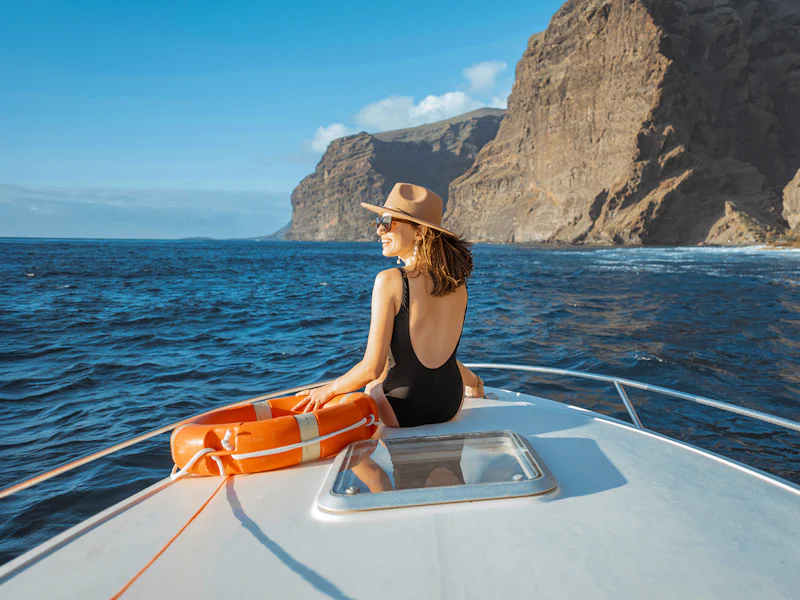
5 hours, from about $53 out of Puerto Colon. Stable and roomy, with by far the most time on the water of any standard tour, giving the crew the longest possible window to find the pod.
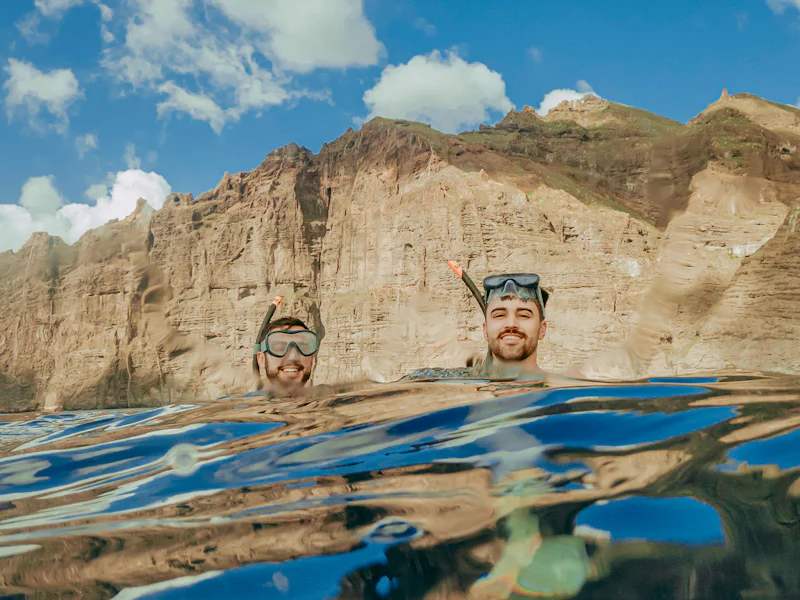
3 hours, from about $81, with snorkeling and snacks included. The crew raises sail and cuts the engine whenever the wind allows, a quieter approach for anyone who would rather not add engine noise around the whales.
6 to 8 hours, from about $692 out of the southwest harbors, with meals or tapas included on the longer sailings. Your own boat and crew for a full day, the option to book if a sighting is only part of what you want from the trip.
Set aside the private charters and the core Tenerife market sits in a tight $31 to $81 band, cheap for whale watching anywhere because the crossing is short and the pod does not have to be chased down. The private sailing options above $690, topping out near $756 for a full-day tapas cruise, buy you a boat to yourselves; they do not find the pod any faster.
Every Tenerife tour, side by side: price, boat, duration and free cancellation.
See the toursBeyond the calmer water, an early boat out of Los Cristianos or Puerto Colon means less midday sun on an open deck and first pick of seats along the rail, which matters on the busier catamaran departures out of Costa Adeje.
Southwest Tenerife and La Gomera hold that designation from the World Cetacean Alliance because local operators follow distance and approach rules around the resident pod. Choose a boat that holds the required government permit and keeps to those rules; it is also usually the operator with the calmer, more considerate ride.
Because sightings hold steady all year and most tours run a few hours in the morning, pairing an early sailing with an afternoon drive up Mount Teide gets you both signature Tenerife experiences without losing a full day to either one.
Any time. Tenerife has no closed season. The short-finned pilot whales and bottlenose dolphins that make up most sightings live in the strait off the southwest coast year-round, so a January trip and a July trip have about the same 96% odds. Summer adds larger Atlantic spotted dolphin pods, and spring can bring migrating fin whales.
Yes. Southwest Tenerife is a leading cetacean habitat in Europe, with around 400 resident pilot whales plus bottlenose dolphins in the sheltered Teno-Rasca strait. Boats sail year-round from Los Cristianos, Puerto Colon in Costa Adeje and Las Galletas, and find whales or dolphins on about 96% of trips.
For most visitors, yes. Sightings run at about 96% in any month, the resident pilot whales are often close to shore in calm, warm water, and trips start from just $31. The southwest coast holds Whale Heritage Site status, so timing matters far less than picking a responsible boat.
Tenerife tours start from about $31 per person, with most falling between $31 and $81 depending on the boat, the trip length and extras like snorkeling. A 2-hour pirate boat from Los Cristianos is the cheapest, while a 5-hour catamaran or eco sailing cruise costs more for longer on the water; full-day private charters run far higher.
Bookings are processed through Headout, which partners with vetted local operators. Whale Watching is an independent affiliate site. We may earn a small commission if you book through a link here, at no extra cost to you.
Compare tours in Tenerife and book in minutes. Most offer free cancellation.
See tours in Tenerife