Plan your trip
When to go & what you'll see in Vancouver
Best time to go
When whales are around, month by month.
J
F
M
A
M
J
J
A
S
O
N
D
Peak seasonGoodOff-season
Sighting probability
Based on operators' peak-season sighting records.
Chance of seeing whales or dolphins in Vancouver in peak season
Real sightings by month
Based on 4,543 verified sightings logged in Vancouver: real records, not estimates.
Source: GBIF.org, which aggregates marine mammal observations from OBIS-SEAMAP, Happywhale & iNaturalist. Retrieved October 2026.
What you'll see
The whales and dolphins you can realistically spot here, ranked by how often they are recorded.
Humpback whaleA fast-growing summer population.2,570 sightings
OrcaResident and transient killer whales patrol the strait.1,899 sightings
Grey whalePasses on migration in spring.72 sightings
Minke whaleSmall and elusive, seen through the season.2 sightings
Vancouver whale watching: a big-city day trip to the whales
Vancouver whale watching means picking one of two very different starting points before you even think about whales: Coal Harbour, a marina in the shadow of downtown's glass towers, or Steveston, a working fishing village in Richmond at the mouth of the Fraser River, about a 30-minute drive south. Either way, the boat has more distance to cover than one leaving Vancouver Island, threading out past the Gulf Islands before it reaches the open hunting grounds of the Strait of Georgia. Picture the city skyline shrinking behind the stern for the better part of an hour, then a compact pod of black-and-white shapes rising in loose formation ahead, animals that already know these channels and the seals that haul out along them. It fills a good part of the day, and you start and finish in a major city.
Below: the calendar for the wider Strait of Georgia, the whales you are likely to meet (including a species whose comeback here has changed the season), the two harbors boats leave from and how they differ, what the one tour we currently track costs, and when it makes more sense to drive to Vancouver Island instead. The price shown is for a bookable tour with free cancellation. For the region-wide picture, see our overview of whale watching in Canada.
~96%peak-season sighting rate
2harbors: Coal Harbour or Steveston
3-5 hrsround trip through the Gulf Islands
$186from, per person
Best time for whale watching in Vancouver
The season stretches roughly April through October, peaking from May to September, when boats out of both Vancouver harbors post sighting rates near 96%. What has changed here more than in most Salish Sea ports is the humpback count: a species barely logged in the Strait of Georgia twenty years ago now turns up on a large share of summer trips, feeding on the same herring and small schooling fish that draw seabirds and sea lions into the same channels.
April and October still deliver, just with fewer boats running and a bit more chop on the crossing. Fraser River salmon start moving through the strait in spring, the food that draws salmon-eating Southern Residents toward these channels, while Bigg's killer whales hunt seals and porpoises here in any month, and a few gray whales are usually still finishing their push north toward Alaska in April. Winter is effectively closed here: neither Coal Harbour nor Steveston runs a regular whale tour from November through March. Our best time to go whale watching guide compares the April to October window against other regions and months.
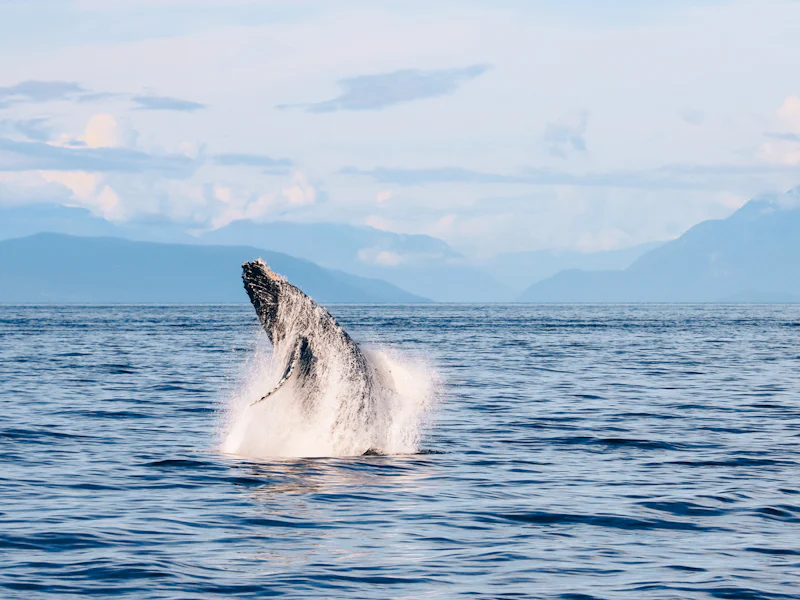
The humpback comeback is the big change off Vancouver. For decades a Strait of Georgia trip meant orcas or nothing. The humpback recovery has changed what a summer boat out of Coal Harbour or Steveston sees. Individual whales are now tracked and re-sighted year after year in these same waters, breaching and tail-slapping close enough to hear from the deck. Orcas, mostly the seal-hunting Bigg's ecotype, remain the headline draw, but on a growing number of trips a humpback steals the afternoon.
What whales you'll see in Vancouver
Four species make up nearly every Vancouver whale watching trip into the Strait of Georgia, alongside harbor seals and Steller's and California sea lions hauled out on channel markers and rocky islets along the way.
Orca (killer whale)
Not all orcas here are chasing the same prey. Bigg's killer whales hunt seals, sea lions and porpoises and have become the dependable sighting on a Vancouver trip, often moving in small, fast groups that can surface almost anywhere in the strait. The Southern Resident population, an endangered group tied to Fraser River Chinook, still passes through but far less predictably, making an encounter with them the rarer prize. Crews watching from Coal Harbour or Steveston can usually tell the two apart from the shape of the dorsal fin alone.
Humpback whale
The species that has changed summer on the Strait of Georgia. Nearly absent a generation ago, humpbacks now feed here through the warm months, rolling through slow breathing sequences before a raised tail marks a deeper dive. Some individuals photographed off Vancouver have been re-identified in the same waters for several summers running, giving guides a working sense of which whales tend to favor which stretch of the strait. Whale and Dolphin Conservation notes the species for its breaching and complex, far-carrying songs, both regularly logged on Vancouver trips.
Minke whale
Solitary and unshowy compared to everything else in the strait. Minkes surface with a quick, low roll and little else to give them away, so most sightings come from a guide who happened to be looking the right direction at the right second. They appear on and off across the whole season, so seeing one is more luck than timing.
Gray whale
A brief spring visitor near the Fraser River mouth. A handful of gray whales pass close to Steveston and the river delta each year on their way north, occasionally feeding in the shallow water off Iona and Point Grey before continuing on one of the longest migrations of any mammal. An early-season trip is the only realistic shot at this species from Vancouver.
Where to go: Vancouver whale watching departure points
Coal Harbour, downtown
- Best for: No car, walk from your hotel
- Longer run to open water
- Strait of Georgia
Boats dock in the marina beneath downtown's glass towers, so a whale watching trip slots into a city stay with no rental car and no drive anywhere. The tradeoff is distance: leaving from downtown means a longer crossing before the boat clears English Bay and the Gulf Islands and reaches open hunting ground, which is part of why Vancouver trips tend to run longer than the shortest departures on Vancouver Island.
Steveston, Richmond
- Best for: A shorter run to the strait
- Historic fishing village
- Fraser River mouth
A working fishing harbor at the mouth of the Fraser River, about 30 minutes south of downtown by car and close to the airport, with a cannery-era waterfront that feels nothing like a marina full of yachts. Steveston sits closer to open water than Coal Harbour does, so boats here spend less time in transit and more time searching, and the drive out gives a look at the delta's herons, eagles and seals before the boat even leaves the dock.
Coal Harbour trades a shorter drive for a longer boat ride; Steveston trades a longer drive for a shorter one. Either way, the Gulf Islands stand between the dock and the whales.
What a Vancouver whale watching tour is like
A typical trip runs three to five hours depending on the harbor and how far the pods have wandered that day: a safety briefing at the dock, a run out through the Gulf Islands toward wherever a shared spotter network has last placed whales, then open water searching before the return leg. Because the crossing itself takes longer here than on Vancouver Island, guides use that transit time to walk through what separates a Bigg's killer whale from a Southern Resident, so passengers already know what they are looking at once a fin appears.
Covered boats
The standard around Vancouver: a stable, heated cabin with open deck space to step out to once something surfaces. The tour we track, Vancouver Whale Watching Tours out of Steveston, runs about 3 hours from around $186 per person, rated 4.5 from 148 reviews. A dry, comfortable default for a longer crossing.
Open-air Zodiacs
Faster inflatables also run out of the region's harbors, sitting low for a closer, more physical ride at the cost of wind and spray over a longer stretch of open water than a Victoria Zodiac ever covers. The one Vancouver-area tour we currently track and compare runs on a covered vessel.
Expect to pay around $186 per person for the covered-boat tour out of Steveston, the one option we track for the city right now, roughly $30 to $38 above the shorter Victoria crossings. That gap reflects the extra distance; the boat and the guiding are comparable. If keeping cost down matters more than staying in the city, it is worth comparing against whale watching in Victoria directly.
Check current availability for the Vancouver tour, with dates, price and free cancellation.
See the toursHow to choose the right Vancouver whale watching tour
With one tour currently worth comparing from the city, the decisions left are which harbor fits your day and whether Vancouver or a Vancouver Island port suits the trip better.
- Weigh downtown convenience against the drive to Steveston.Coal Harbour needs no car but adds time on the water; Steveston needs a 30-minute drive but shortens the boat ride and adds a working-harbor stop of its own.
- Go May through September for the strongest odds.That is the stretch when sighting rates hold near 96% and the humpback population is most active in the strait.
- Book peak dates ahead of time.July and August fill fastest as boat traffic and whale activity peak together. Free cancellation on the listing means holding a date early costs nothing if plans change.
- Plan around Bigg's, hope for a humpback.Treat a Bigg's killer whale sighting as the likely outcome and a Southern Resident or a humpback breach as the bonus that makes the day memorable.
- Consider Victoria if the crossing length bothers you.A shorter run to the same broad region is available from Vancouver Island; it costs a drive or a ferry instead of a longer boat ride.
Tips for whale watching in Vancouver
Pick your harbor before you pick your hotel
Staying downtown points you toward Coal Harbour and zero transit time to the dock; renting a car or flying into YVR makes Steveston an easy add-on with a shorter boat ride once you are aboard.
Pack for a longer crossing than you'd expect
The Gulf Islands run adds extra time on open water before whales come into range. Swallow any seasickness remedy before boarding, and keep food light and eaten ashore.
Watch the Fraser delta on the way to Steveston
The drive south passes wetlands thick with herons, eagles and harbor seals well before the boat leaves the dock, a preview worth leaving extra time for on the way to check in.
Bring optics built for open water
The Strait of Georgia is wider than the harbor views suggest, and a distant blow can be easy to lose without help. A decent pair of binoculars finds it again, and a longer lens only pays off for photos when paired with a fast shutter speed, since the deck rarely holds still.
Look for a crew that lets the whales lead
Vancouver-area operators follow regional viewing rules that set minimum distances and speed limits around killer whales, and crews ease off the throttle as they near a pod. A boat that holds back and lets a pod come closer on its own terms usually means a calmer, more natural sighting.
The short version
Pick Coal Harbour for convenience or Steveston for a shorter ride, aim for May through September, and expect a Bigg's killer whale before a Southern Resident, with a good chance of a humpback stealing the show. The city stays within a short drive the whole time, the main reason to run a whale watching trip from here.
Good to know
Vancouver whale watching FAQ
July is the single best month, at the heart of a peak that runs May to September when Vancouver sighting rates hold near 96%. Longer daylight and calmer water in these months put more hours on the Strait of Georgia. April and October are workable shoulder months. The month-by-month calendar above breaks it down.
Yes. Boats leave downtown docks like Coal Harbour and reach orcas and humpbacks in the Strait of Georgia the same afternoon, with peak-season sighting rates around 96%. Transient killer whales are the most reliable sighting, while the endangered Southern Residents pass through less often, and rebounding humpbacks are now a regular summer sight.
It depends on your trip. Vancouver lets you sail from a downtown dock with no car or ferry, but the run out to open water is longer. Victoria, on Vancouver Island, sits closer to the Juan de Fuca Strait and San Juan Islands, so its crossings reach the prime orca waters faster. Both hold strong summer sightings.
Vancouver tours start from about $186 per person for a 3-hour covered-boat trip, the one bookable option we track for the city. That is a touch above the shorter Victoria crossings, which reflects the longer run to open water. Covered boats are steadier and drier, a comfortable default for families.
Bookings are processed through Headout, which partners with vetted local operators. Whale Watching is an independent affiliate site. We may earn a small commission if you book through a link here, at no extra cost to you.
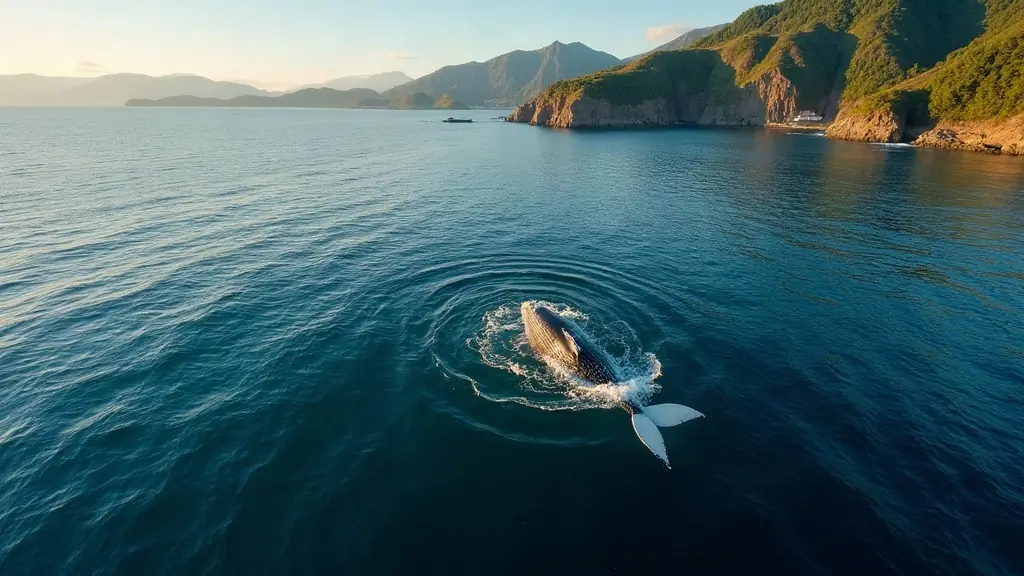
Ready to find your whale in Vancouver?
Compare tours in Vancouver and book in minutes. Most offer free cancellation.
See tours in Vancouver