Vancouver
Victoria Whale Watching Tours By Covered Boat
Free cancellation3 hrs
from $156
Check availability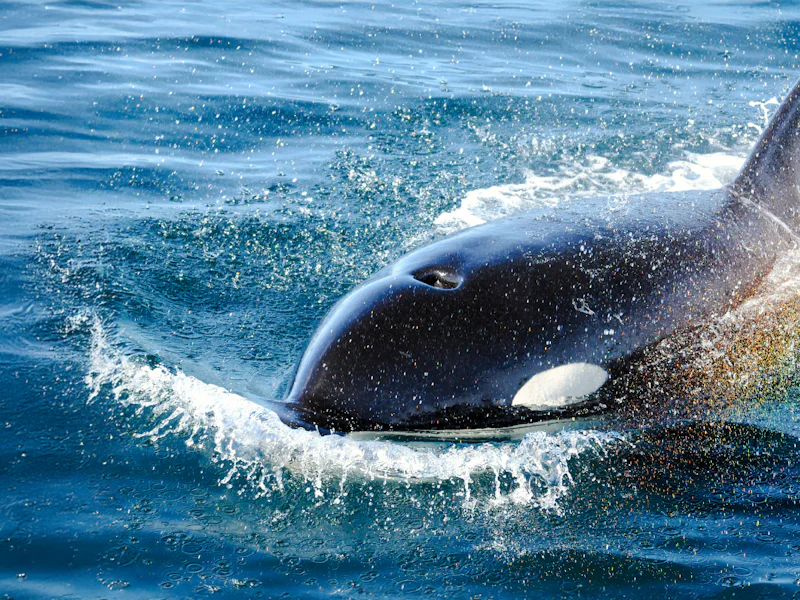
More in Canada: Vancouver All of Canada
When whales are around, month by month.
Based on operators' peak-season sighting records.
Chance of seeing whales or dolphins in Victoria in peak season
Based on 6,999 verified sightings logged in Victoria: real records, not estimates.
Source: GBIF.org, which aggregates marine mammal observations from OBIS-SEAMAP, Happywhale & iNaturalist. Retrieved October 2026.
The whales and dolphins you can realistically spot here, ranked by how often they are recorded.
Victoria whale watching begins downtown, right on the Inner Harbour, a two-minute walk from the Fairmont Empress and the seaplane dock where floatplanes lift off every few minutes through the summer. There is no ferry to catch and no distant marina to drive to at dawn: you buy a ticket at the water's edge and the boat pulls out from the same harbor where the city's tour buses and horse carriages gather. Within about twenty minutes the boat is already past Race Rocks, and inside an hour it can be idling in Haro Strait or the Juan de Fuca Strait watching a family of orcas surface in formation. Because the crossing is so short, more of the trip goes to watching.
What follows is the Victoria calendar month by month, the whales and other wildlife most likely to show up, where the boats leave from and what the harbor itself adds to the trip, what the two boats here charge and how they differ, and how to decide between an open Zodiac and a covered vessel. Prices come from bookable tours with free cancellation, so you can lock in a summer date and still change your mind later.
May through September is peak season out of Victoria, and sighting rates hold near 96% through those five months as orcas and a growing number of humpbacks work the strait within reach of the Inner Harbour. July and August pack the harbor: seaplanes on one side, whale boats loading on the other, and the longest daylight of the year stretching the search window well into the evening for anyone on a late-day departure.
April and October soften a little but stay worthwhile, and they carry a bonus most visitors do not expect: the water traffic thins out, boats are easier to book on a day's notice, and gray whales are often still passing on their way north in April, closer to shore than at any other point in the season. Race Rocks, meanwhile, keeps its seal and sea lion colonies year-round, so even a quieter month out of Victoria rarely means an empty trip.
Winter runs thin here. Most of the operators docked at the Inner Harbour scale back or pause between November and March. For how Victoria stacks up against other regions in a given month, our best time to go whale watching guide lines up the calendar.
Race Rocks turns the ride out into a wildlife stop of its own. Long before Victoria's boats reach open orca water, most routes pass this rocky, lighthouse-topped reserve about 17 kilometers southwest of the city, where harbor seals, Steller's and California sea lions and the occasional elephant seal haul out in numbers. It is Canada's first Marine Protected Area, and the upwelling around the rocks pulls in bald eagles and seabirds too. On a slow whale day it is often the sighting people remember most; on a good day it is the warm-up act before the orcas show up.
Four species cover almost every Victoria whale watching trip, and because the crossing is short, guides here often have time to circle back for a second or third look.
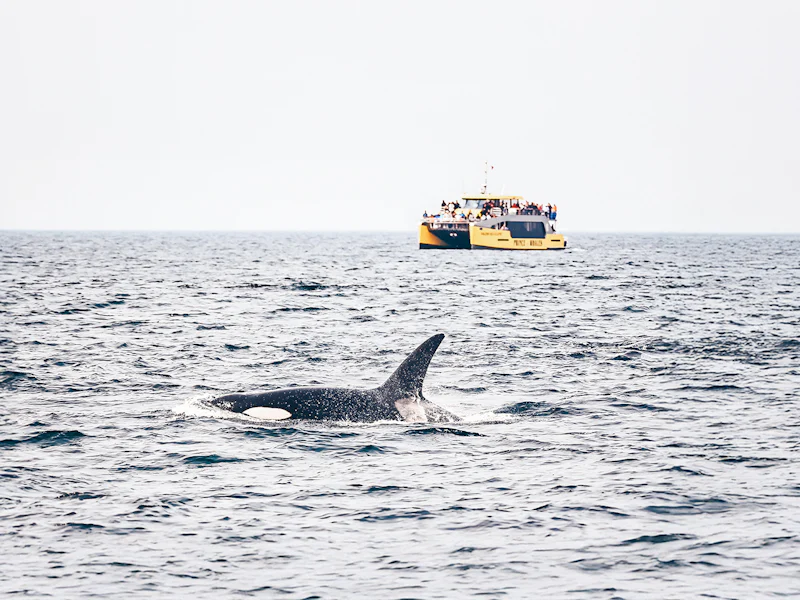
Haro Strait sits inside classic orca range, and it is the reason a Victoria boat can reach whales faster than one leaving from almost anywhere else on this coast. Bigg's killer whales, hunters that target seals and porpoises, turn up in tight, fast-moving groups and have become the steadiest sighting out of this harbor. The endangered Southern Resident population, salmon specialists numbering in the low seventies across three named pods, still passes through these same channels, and a Victoria departure gives you as good a shot at them as this coast offers. Naturalists on board can usually name the pod within minutes of a fin breaking the surface.
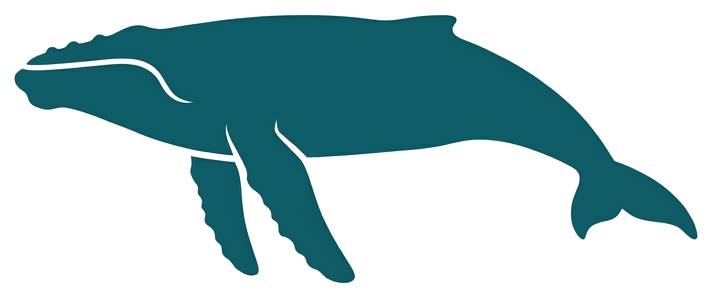
Barely seen from Victoria a generation ago, humpbacks are now a regular part of the summer lineup, feeding on schooling fish through the strait before continuing their migration. A 50-foot adult surfacing close to a Zodiac is one of the trip's biggest moments, its back rolling slowly through several breaths before the tail lifts clear of the water on a deep dive. Whale and Dolphin Conservation credits the species with some of the loudest breaches and longest songs of any whale, and Victoria guides now count on seeing at least one on a strong majority of peak-season trips.
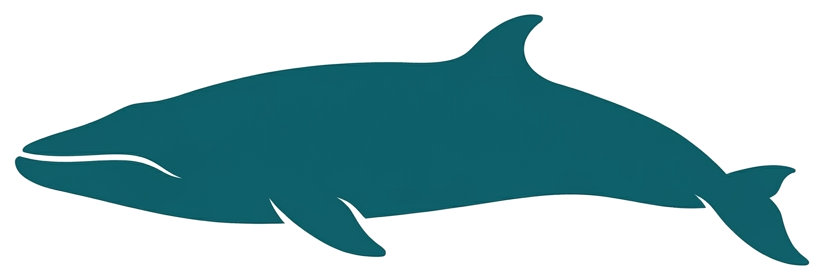
The one most passengers miss without a guide pointing it out. Minkes travel alone through these waters, rolling low and quick at the surface with a small, curved fin and none of the splash that gives away an orca or a humpback. They show up steadily all season, so a sharp set of eyes on board matters more here than picking the right week to visit.
A northbound traveler rather than a local. A handful of gray whales pass within reach of Victoria boats each spring as they push toward Alaska on one of the longest migrations any mammal makes, occasionally pausing to feed in the shallows near shore. April is the month to plan around if this is the species you are hoping for, since by peak summer the gray whales have already moved on.
Every whale watching boat in Victoria loads passengers at the Inner Harbour, the same waterfront where seaplanes taxi past cruise passengers and the legislature building anchors the skyline. There is no drive to a marina and no need for a car at all; cruise passengers step off the ship and onto a whale boat within a few blocks, and anyone staying downtown can walk to the dock. From there the route runs south past Race Rocks and out into the Juan de Fuca Strait, reaching the edge of prime orca territory faster than a boat departing the BC mainland ever could. Many visitors build a full day around the harbor itself: a whale watching trip in the morning, then an afternoon at Butchart Gardens a short drive north in Brentwood Bay, or a wander through the floating shops of Fisherman's Wharf back at the water's edge. Travelers based on the mainland instead, without a ferry crossing on their itinerary, have their own option in whale watching in Vancouver, a longer boat ride but no water crossing to reach the dock.
A twenty-minute run past a seal colony, then open water thick with orcas: on a Victoria boat the wildlife starts well before the whales do.
Every trip starts the same way: a short safety briefing at the Inner Harbour dock, then a run south past Race Rocks before the boat turns toward wherever the day's pods have last been reported. Guides use the crossing to explain what separates a Bigg's hunting pass from a Southern Resident family group, so by the time whales appear most passengers already know roughly what they are looking at. The boat you pick shapes the ride more than anything else does.
About 3 hours, from around $148. Passengers suit up in insulated flotation gear before boarding a rigid-hull inflatable that sits low and moves fast, closing distance quickly once whales are spotted. Spray and chop come with the territory, and the low seat puts you nearly eye-level with the water when a pod surfaces alongside.
About 3 hours, from around $156. A cabin with heating, washrooms and open-deck access whenever something surfaces nearby. Better suited to a cool morning, a shaky stomach, or younger kids who need somewhere warm to retreat between sightings.
The two options land close together, $148 for the Zodiac against $156 for the covered boat, both running roughly three hours dock to dock. With such a narrow gap, comfort decides it: choose the Zodiac for speed and proximity, or the covered boat for a drier, steadier ride.
See both Victoria departures side by side, with times, boat type and live availability.
See the toursBecause every boat leaves from the same dock and reaches the same waters, the choice out of Victoria comes down to comfort, timing and how you want to spend the rest of your day in the city.
The Inner Harbour can feel calm while Haro Strait runs cold and windy an hour later. Pack a windproof shell, gloves and a hat that ties down, especially for the Zodiac, where boat speed adds a sharp chill on top of the sea breeze.
Passengers eager to reach the orcas sometimes rush past the seal and sea lion haul-outs mentally before the boat has even slowed down. Keep a camera ready on the way out; the colony at Race Rocks is close, reliable and part of what makes Victoria's crossing worth the ticket on its own.
The open boats bounce more than they look like they will from the dock, and there is less to hold onto than on a covered vessel. Anyone prone to seasickness, traveling with small children or unsteady on a moving deck should default to the covered option instead.
Few whale watching ports double as a walkable city center the way Victoria does. Stack the tour against Butchart Gardens, a stroll past the legislature, or an afternoon on the water taxis that shuttle around the harbor, and the whole trip needs no car at all.
Canadian rules for southern British Columbia keep vessels at least 400 meters from killer whales; authorized whale watching boats may close to 200 meters of Bigg's killer whales but never to the endangered Southern Residents, and crews slow to a crawl once whales are close. A crew that lets the pod set the pace is a good sign of an operator worth booking again.
Come in the summer stretch if your dates allow it, pick the Zodiac for thrills or the covered boat for comfort, and treat the run past Race Rocks as part of the show. Few harbors get you to orca water this fast, and that head start is what sets a Victoria trip apart from the rest of whale watching in Canada.
July is the best single month, at the heart of a peak that runs May to September when Victoria sighting rates hold around 96%. Those months bring the longest days and the steadiest whale traffic through Haro Strait. April and October are dependable shoulder months. The month-by-month calendar above breaks it down.
Yes. Victoria sits on the southern tip of Vancouver Island where the Juan de Fuca Strait meets Haro Strait, so boats reach orca and humpback grounds in under an hour, with peak-season sighting rates around 96%. Transient killer whales are the most reliable sighting, and the endangered Southern Residents still use Haro Strait.
It depends on your trip. Victoria sits closest to the San Juan and Gulf Islands and Haro Strait, so its crossings reach the prime orca waters in under an hour, the shortest run in the region. Vancouver trips are longer out through the Strait of Georgia but let you sail from a downtown dock. Both hold strong summer sightings.
Victoria tours start from about $148 per person, with the two options only $8 apart: about $148 for the open-air Zodiac and $156 for the covered boat, both roughly 3 hours. The covered boat is steadier and drier for cool days or young kids, while the Zodiac sits you low and close to the water.
Bookings are processed through Headout, which partners with vetted local operators. Whale Watching is an independent affiliate site. We may earn a small commission if you book through a link here, at no extra cost to you.
Compare tours in Victoria and book in minutes. Most offer free cancellation.
See tours in Victoria