 BestsellerBestseller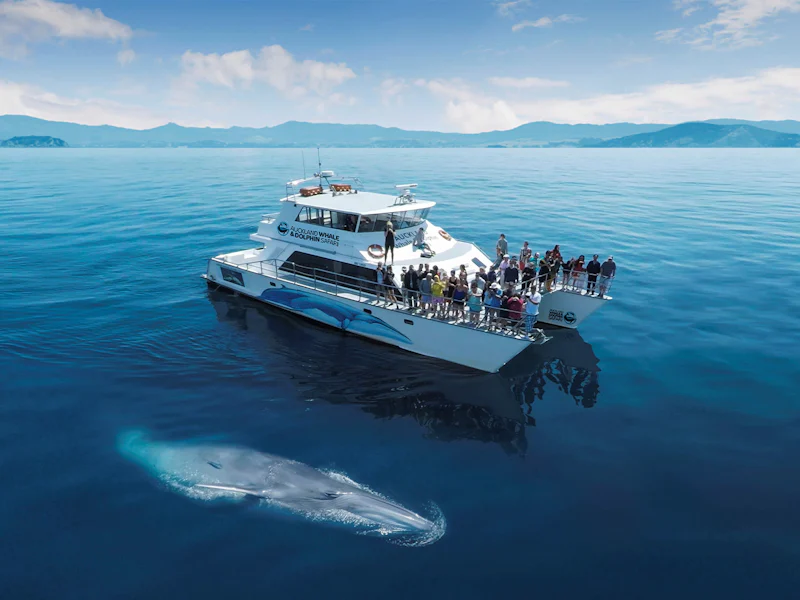
Auckland
From Auckland Half Day Whale Dolphin Safari Cruise
Free cancellation4.5 hrs
from $129
Check availability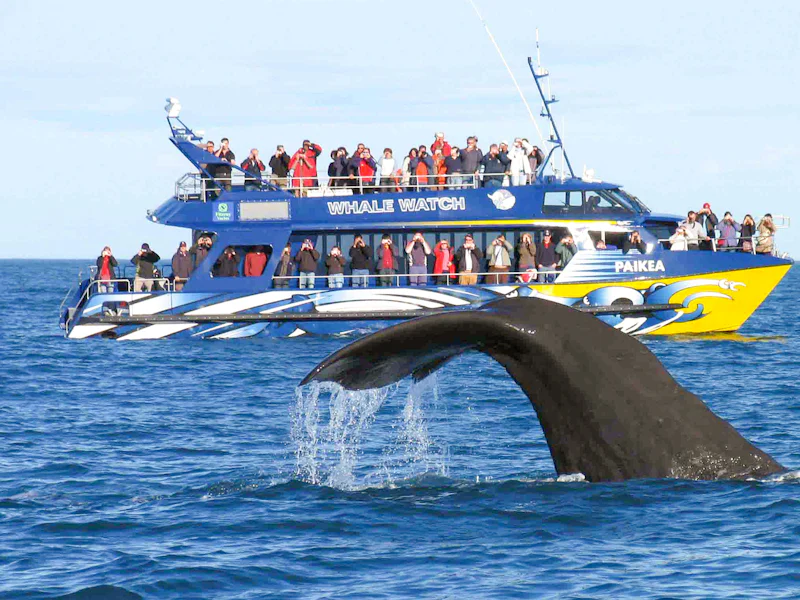
Kaikoura
Christchurch To Kaikoura Whale Watch Day Trip With Round Trip Transfers
Free cancellation10 hrs
from $217
Check availability
Kaikoura
30 Minute Classic Whale Watch Flight From Kaikoura
Free cancellation1 hrs
from $247
Check availability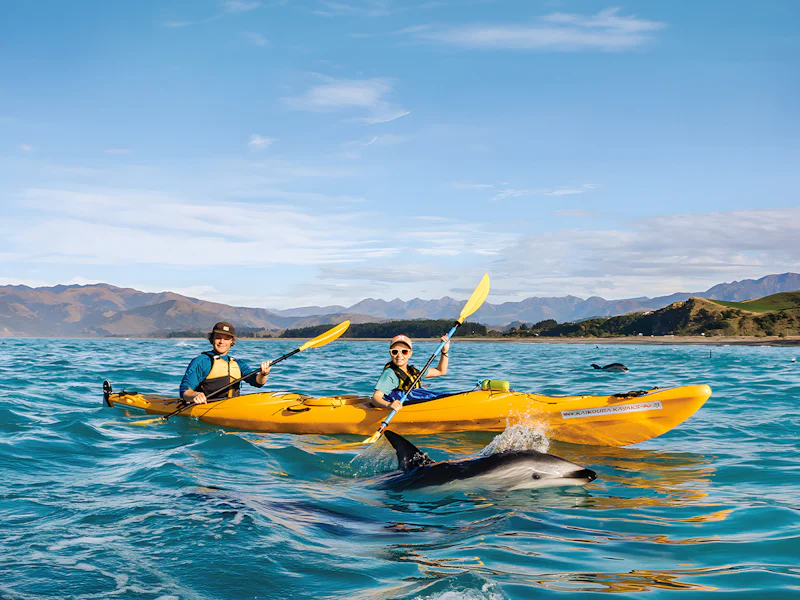
Kaikoura
Tickets To Guided Wildlife Kayaking Experience In Kaikoura
Free cancellation3 hrs
from $97
Check availability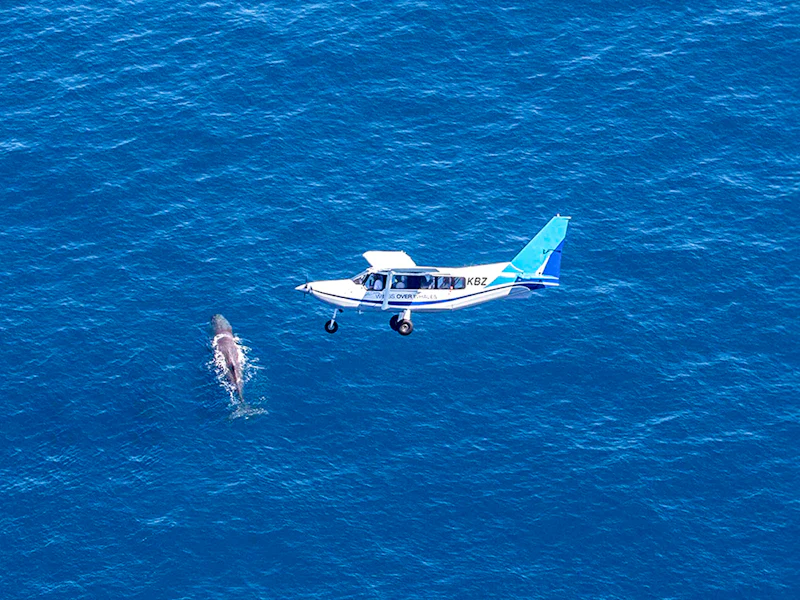
Kaikoura
Kaikoura Whale Watching Seaplane Flight Experience
Free cancellation0.8 hr
from $147
Check availability New
NewAuckland
From Auckland Tikapa Moana Whales Dolphins Islands Cruise
Free cancellation6.8 hrs
from $100
Check availabilityPlan your trip
When to go & what you'll see in New Zealand
Best time to go
When whales are around, month by month.
J
F
M
A
M
J
J
A
S
O
N
D
Peak seasonGoodOff-season
Sighting probability
Based on operators' peak-season sighting records.
Chance of seeing whales or dolphins in New Zealand in peak season
Chance of seeing both whales and dolphins
Real sightings by month
Based on 2,215 verified sightings logged in New Zealand: real records, not estimates.
Source: GBIF.org, which aggregates marine mammal observations from OBIS-SEAMAP, Happywhale & iNaturalist. Retrieved October 2026.
What you'll see
The whales and dolphins you can realistically spot here, ranked by how often they are recorded.
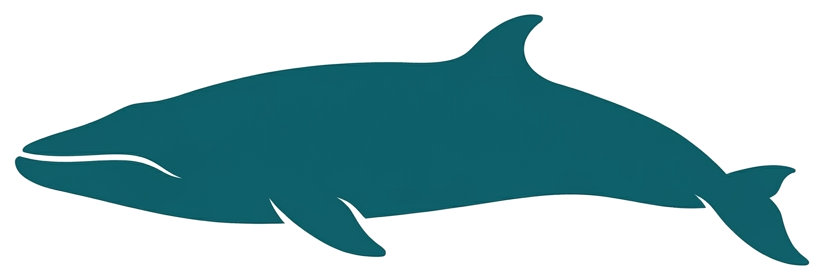
Sperm whaleResident off Kaikoura all year.873 sightings
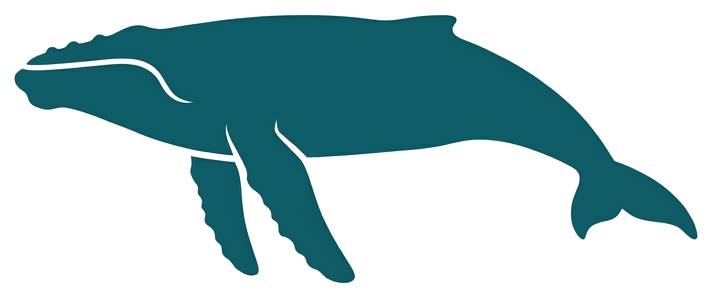
Humpback whalePasses through June and July.710 sightings
OrcaSeen year-round hunting rays and dolphins.420 sightings

Dusky dolphinHuge, acrobatic pods, close to guaranteed on any trip.212 sightings
By location
Whale watching cities in New Zealand


New Zealand whale watching: sperm whales off a canyon, whales in a city's backyard
New Zealand whale watching covers two very different kinds of encounter, and both are unusually reliable. Off the South Island town of Kaikoura, a submarine canyon plunges to around 1,000 meters barely offshore, holding a resident population of giant sperm whales that dive for squid within a half-hour boat ride of the harbor, every month of the year. On the North Island, Auckland's Hauraki Gulf holds its own resident baleen whales, a small non-migratory population of Bryde's whales feeding on krill-like plankton and bait fish within sight of the city skyline, alongside common dolphin pods that can run into the hundreds. Picture a hydrophone lowered over the side off Kaikoura, the clicking of a sperm whale far below, and minutes later a huge gray back breaking the surface a few boat-lengths away. Then picture, a day's drive north, a whale surfacing between the Hauraki Gulf's islands with Auckland's skyscrapers still visible behind it.
For the whole country, you will find the year-round best time to go, the four headline species, the two very different departure points and what each offers, what a typical tour costs and feels like, and how to choose between a boat, a plane and a kayak. The prices quoted come from listings we compare, most bookable through Headout with free cancellation, so a date held now can be dropped later without a fee.
~95%year-round sighting rate
12/12months rated peak season
2departure hubs, two islands
$97+tours compared
Best time for whale watching in New Zealand
New Zealand whale watching has no off season to speak of, which is rare. Kaikoura's sperm whales live there year-round, so sightings run at around 95% in every month, and our data rates all twelve months as peak season. Auckland's Bryde's whales are non-migratory too, staying in the Hauraki Gulf all year, which makes it one of the few places on Earth where you can count on a baleen whale in any week of the year.
What changes through the year is the supporting cast. Around Kaikoura, dusky dolphins are present year-round but form their largest pods, sometimes numbering in the thousands, in the New Zealand autumn of April and May. Humpback whales pass along the same coast on migration in June and July, adding a second large whale to the sightings sheet for a few weeks. In the Hauraki Gulf, common dolphin pods are seen throughout the year, and orca move through unpredictably to hunt stingrays in the shallows. Southern hemisphere summer, December through February, brings the calmest seas and the busiest boats on both islands, while winter trips run colder and choppier, though the resident whales stay put. For a side-by-side comparison against destinations with a narrower window, see our guide to the best time for whale watching.
Two residents, one country. Almost everywhere else on Earth, whale watching means timing a migration. New Zealand has two resident populations: sperm whales anchored to the Kaikoura Canyon by a year-round squid supply, and Bryde's whales anchored to the Hauraki Gulf by its rich, sheltered feeding grounds. That is why both hubs can fit into the same trip.
What whales you'll see in New Zealand
Four cetaceans anchor a typical New Zealand whale watching trip out of Kaikoura, the country's flagship whale watching town, and between them they cover the range of marine wildlife on offer nationally, from a deep-diving giant to fast, social dolphins.
Sperm whale
Resident off Kaikoura all year, diving for 35 to 45 minutes at a time to depths that can exceed 1,000 meters in search of squid, then resting at the surface for several minutes between dives. According to NOAA Fisheries, adult males can reach 52 feet and 45 tons, and the species remains listed as endangered worldwide after a century of commercial whaling, even as Kaikoura's population has stayed stable enough to support decades of permit-controlled tourism.
Dusky dolphin
Huge, acrobatic pods that make dusky dolphins close to a guarantee on a Kaikoura trip. Groups of a few hundred are typical, growing into the thousands off the Kaikoura coast in autumn, with April and May the standout months. They ride the bow wave, leap and somersault, and are usually the liveliest few minutes of any tour, whale sighting or not.
Humpback whale
A seasonal bonus that passes through in June and July as part of a much longer migration between polar feeding grounds and warmer breeding waters. According to Whale and Dolphin Conservation, humpbacks can reach 17 meters and eat up to 1,360 kilograms of krill and small fish a day while feeding, and the breaches and tail slaps of a passing pod make those few weeks stand out on the sightings sheet.
Orca
Seen year-round but never on a schedule, hunting rays, sharks and the occasional dolphin. New Zealand orca are unusual among the world's populations for specializing in stingrays, cruising shallow harbors and gulfs to flip rays onto their backs before feeding. A pod passing close to a boat, off Kaikoura or in the Hauraki Gulf, is one of the more talked-about sightings either coast can report.
Where to go: New Zealand's whale watching departure points
Two towns, on two different islands, cover almost every New Zealand whale watching trip, and they suit very different itineraries.
Kaikoura, South Island
- Best for: Sperm whales
- From $97
- Canyon-edge, year-round
Kaikoura is built around a geological fluke: a submarine canyon reaches almost to the coast, so the deep, cold water its resident sperm whales need for hunting squid sits a short boat ride from a small South Island fishing town. This is the reliable, headline encounter of New Zealand whale watching, with dusky dolphins, New Zealand fur seals and seabirds filling the gaps between whale surfacings, plus a humpback passage in June and July and orca sightings year-round. Boats, scenic flights and guided kayaking all leave from in or near the town. Read the full guide to whale watching in Kaikoura for tours, prices and how to choose between them.
Auckland and the Hauraki Gulf, North Island
- Best for: Bryde's whales
- From $100
- City-doorstep gulf
Auckland trades the deep canyon for a different kind of reliability: a small, non-migratory population of Bryde's whales that stays in the sheltered Hauraki Gulf all year, making it one of the only places in the world to find a baleen whale on the doorstep of a major city. Large common dolphin pods, sometimes running into the hundreds, are a regular sight on the same trips, and orca move through the gulf to hunt stingrays in the shallows. It is a far shorter, calmer outing than a canyon-edge crossing, and it fits into a city visit without a dedicated trip south. See our page on whale watching in Auckland for the full lineup of gulf cruises.
New Zealand is one of the few countries where you can watch a resident whale population from a South Island fishing harbor and a North Island city skyline, on the same trip.
What a New Zealand whale watching tour is like
Most tours follow a similar rhythm regardless of island: a safety briefing at the dock, a cruise out to the whale grounds, an hour or more of searching and watching while the guide narrates what is surfacing where, and a run back to port. Off Kaikoura, crews listen on hydrophones to pinpoint a sperm whale's dive location before the boat holds position and waits for it to resurface. In the Hauraki Gulf, the search is more visual, scanning open water between islands for a blow or a dorsal fin. A handful of formats cover most of what is on offer nationally:
Kaikoura boat cruise
3.3 hours, from about $103, rated 4.7 from 138 reviews on the classic option. A stable catamaran, hydrophone-guided searching, and a good shot at a close sperm whale encounter plus dolphins and seabirds along the way.
Auckland gulf cruise
4.5 to 6.8 hours from Auckland, from about $100, with the half-day option rated 4.4 from 20 reviews. A calmer, longer cruise through the Hauraki Gulf's islands for Bryde's whales, common dolphins and orca, easy to combine with a day in the city.
Scenic flight and seaplane
30 to 48 minutes in the air over Kaikoura, from about $147, up to $247 for the fixed-wing flight rated 5 from 5 reviews. An aerial view of a sperm whale's full silhouette beneath the surface, unaffected by swell and the fastest option door to door.
Guided kayaking
3 hours off Kaikoura, from about $97, rated 4.6 from 5 reviews. A slower, quieter morning among fur seals and dolphins at close range in sheltered water, the gentlest and cheapest way onto the water, though not the way to see a sperm whale.
Day trip with transfers
About 10 hours from Christchurch, from about $217, rated 3.9 from 18 reviews. Folds the roughly two and a half hour drive down the Kaikoura coast and back into one booking, useful if you are based in Christchurch without a car.
As a rule of thumb, the core New Zealand whale watching experiences sit in a band from about $97 to $147, with the Christchurch day trip and the scenic flight the pricier options at $217 and up to $247. Whichever island you start from, most listings carry free cancellation, so booking early costs nothing if your plans shift.
Compare every New Zealand tour side by side: price, boat, duration and free cancellation.
See the toursHow to choose the right New Zealand whale watching tour
Sightings run high on both islands year-round, so timing matters less than which coast fits your trip and which format suits you.
- Pick the island that fits your route.Touring the South Island or building a trip around Kaikoura specifically? Book there for the resident sperm whales. Based in or passing through Auckland? The Hauraki Gulf's Bryde's whales are a far shorter detour.
- Boat, plane or kayak.Want the classic close encounter off Kaikoura and don't mind open water? Book the boat cruise. Prone to seasickness or short on time? A scenic flight or seaplane covers the same canyon from the air. Want a quieter, cheaper morning with seals and dolphins? Choose the kayak.
- Book ahead in summer.December through February is New Zealand's busiest domestic and international travel season, and the small Kaikoura fleet and limited flight seats fill fast. Most listings allow free cancellation, so there is little downside to locking in a date early.
- Look at how many reviews sit behind each rating.The Kaikoura boat cruise carries a 4.7 rating across 138 reviews, a far larger sample than some of the newer flight, kayak and gulf-cruise listings, which is worth weighing alongside price.
- Aim for a calm forecast if you can.The open Kaikoura coast is less sheltered than the Hauraki Gulf, so a flatter sea day means a smoother ride and, often, easier spotting from a boat deck on either coast.
Tips for whale watching in New Zealand
Dress for the coast you're on
The open Kaikoura coast is exposed, and the wind and spray on a boat deck are stronger than the forecast on land suggests, so bring a windproof layer and something warm underneath even in summer. The Hauraki Gulf is more sheltered, but the open upper deck of a gulf cruise still gets cold once the boat is moving. Sunglasses and sunscreen matter on both.
Take seasickness seriously
The open swell off Kaikoura catches out more first-timers than the calmer Hauraki Gulf would. Take a remedy well before boarding, eat something light beforehand, and stay on deck with your eyes on the horizon. If you know you struggle with motion, a scenic flight over Kaikoura or a gulf cruise from Auckland both sidestep the roughest water.
Bring binoculars and a fast lens
A whale's blow is often the first thing anyone spots, a low, forward-angled puff on the horizon before the animal itself is visible. Binoculars turn that into a clear view, and a fast shutter speed helps freeze the moment a fluke or a dolphin clears the water.
Choose a permitted operator
Every New Zealand whale watching, dolphin swim and seal encounter business needs a marine mammal viewing permit from the Department of Conservation, which enforces the Marine Mammals Protection Regulations 1992. DOC requires boats to keep at least 50 meters from whales and drop to idle or no-wake speed within 300 meters of any marine mammal, with no more than three vessels within that range at once. Booking a permitted operator on either coast keeps the pressure on the whales as light as regulation allows.
Two towns shaped by their whales
Kaikoura's whale watching industry traces back to 1987, when Ngati Kuri, a hapu of the South Island iwi Ngai Tahu, formed the company that still runs the boats, and operators still feed sighting data back to researchers studying the resident sperm whale population. In Auckland, the Hauraki Gulf's small Bryde's whale population led the Port of Auckland to introduce a voluntary vessel speed reduction program after a run of fatal ship strikes, a rare case of a working harbor slowing down for its resident whales.
The simple recipe
Pick the coast that suits your route, choose the format that matches your stomach and your schedule, and book early in the New Zealand summer if you want the calmest seas. There is no wrong month to go here, which sets the country apart from most other places to go whale watching.
Good to know
New Zealand whale watching FAQ
Kaikoura on the South Island is the flagship, where a submarine canyon reaching almost to shore holds resident sperm whales year-round. The Hauraki Gulf off Auckland on the North Island is the other hub, with non-migratory Bryde's whales feeding within sight of the city.
Any time of year. Kaikoura's sperm whales and the Hauraki Gulf's Bryde's whales are both resident rather than migratory, so all twelve months rate as peak season with sightings around 95%. Dusky dolphin pods peak in April and May, humpbacks pass in June and July, and December to February brings the calmest seas.
The four headline species are the sperm whale, resident off Kaikoura all year; the dusky dolphin, in huge acrobatic pods; the humpback whale, passing in June and July; and the orca, seen year-round hunting rays, sharks and the occasional dolphin. The Hauraki Gulf near Auckland also holds resident Bryde's whales.
New Zealand tours start from about $97 per person, with most falling between $100 and $217 depending on the boat, the trip length and extras. Core boat, kayak and flight trips sit around $97 to $147, while a Christchurch day trip runs to $217. Larger catamarans are steadier, so choose on comfort and departure over price alone.
Bookings are processed through Headout, which partners with vetted New Zealand operators. Whale Watching is an independent affiliate site. We may earn a small commission if you book through a link here, at no extra cost to you.
Ready to find your whale in New Zealand?
Compare tours in New Zealand and book in minutes. Most offer free cancellation.
See tours in New Zealand