Auckland
From Auckland Half Day Whale Dolphin Safari Cruise
Free cancellation4.5 hrs
from $129
Check availability New
NewMore in New Zealand: Kaikoura All of New Zealand
When whales are around, month by month.
Based on operators' peak-season sighting records.
Chance of seeing whales or dolphins in Auckland in peak season
Chance of seeing both whales and dolphins
Based on 2,215 verified sightings logged in the wider New Zealand region: real records, not estimates.
Source: GBIF.org, which aggregates marine mammal observations from OBIS-SEAMAP, Happywhale & iNaturalist. Retrieved October 2026.
The whales and dolphins you can realistically spot here, ranked by how often they are recorded.

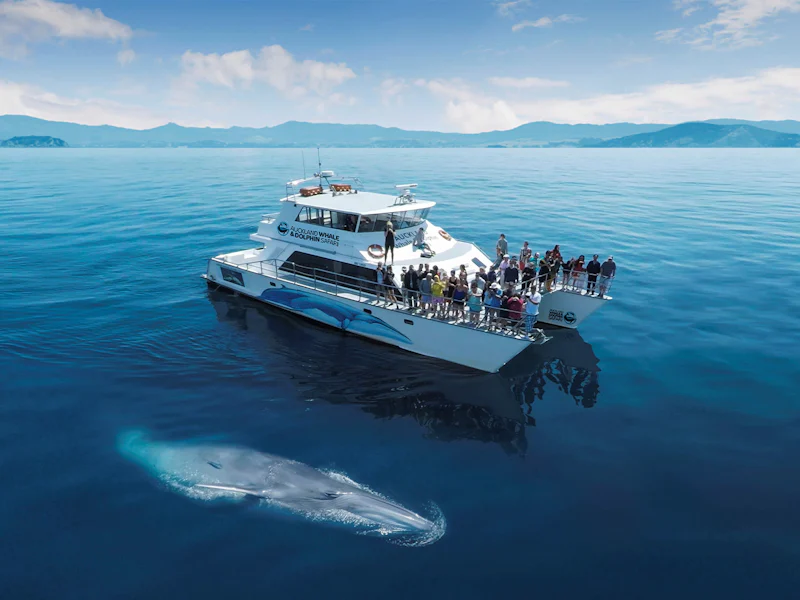
Auckland whale watching starts closer to a working city than almost anywhere else on earth: cruise a few miles past the Harbour Bridge and the volcanic cone of Rangitoto, and you are already in the feeding grounds of the Hauraki Gulf, home to one of the very few Bryde's whale populations anywhere that never leaves. Picture the skyline still visible off the stern while a Bryde's whale surfaces flat and glassy thirty feet from the bow, its blow catching the wind before it slides back under, gulls wheeling in to pick off the baitfish it just pushed to the surface. Afternoons like that are routine on the Gulf.
Here is what is specific to Auckland: the best time to go (short answer: any time), the species that turn up in the Gulf as opposed to elsewhere in the country, where the boats leave from, what a trip costs and feels like, and how to choose between the two tours we compare. Most listings are bookable through Headout with free cancellation, so holding a date now costs nothing if your trip changes.
Auckland whale watching has no closed season. Bryde's whales here feed on krill-like crustaceans, copepods and shoaling fish that the Gulf supplies in every season, so instead of making the long trip between polar feeding grounds and tropical breeding waters that most great whales undertake, a resident group stays in the Hauraki Gulf all year. Add to that a large, semi-resident population of common dolphins and orca that patrol the Gulf hunting stingrays, sharks and the occasional dolphin on no particular schedule, and you get a destination where sightings run at around 95%, whale or dolphin, in every month.
Winter, from June through August, adds a seasonal bonus on top of that baseline. Humpback whales pass along New Zealand's east coast, mostly in June and July, on their migration between Antarctic feeding grounds and warmer breeding waters further north, and a few detour into the Gulf itself, with minke whales and, more rarely, southern right whales turning up on the same current. None of the three is a given the way the Bryde's whales and common dolphins are, but they are worth knowing about if you are visiting in the cooler months and want the fullest possible species list. If you are weighing Auckland against a narrower-season destination elsewhere in the country, our guide to the best time to go whale watching lines up every region side by side.
The whale that never left. Most of the world's great whales are open-ocean travelers, but Bryde's whales are unusual: some populations migrate short distances with the seasons, and others stay resident wherever the fish are. The Hauraki Gulf's roughly 50 Bryde's whales belong to that second group, a small, non-migratory population living within sight of a city of more than a million and a half people, which is why Auckland whale watching works in every month of the year.
Three cetaceans anchor a typical Auckland whale watching trip, plus a short list of winter passers-by, and together they cover a very different slice of New Zealand's marine wildlife from the resident sperm whales found further south.
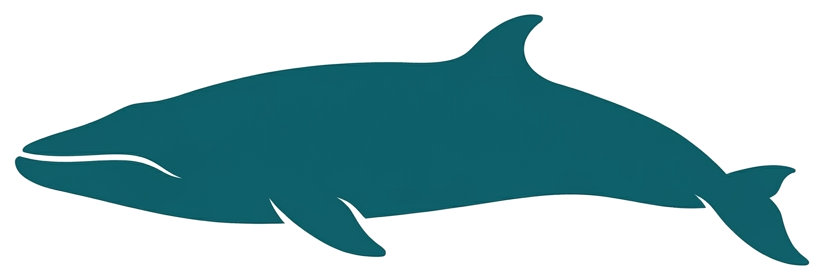
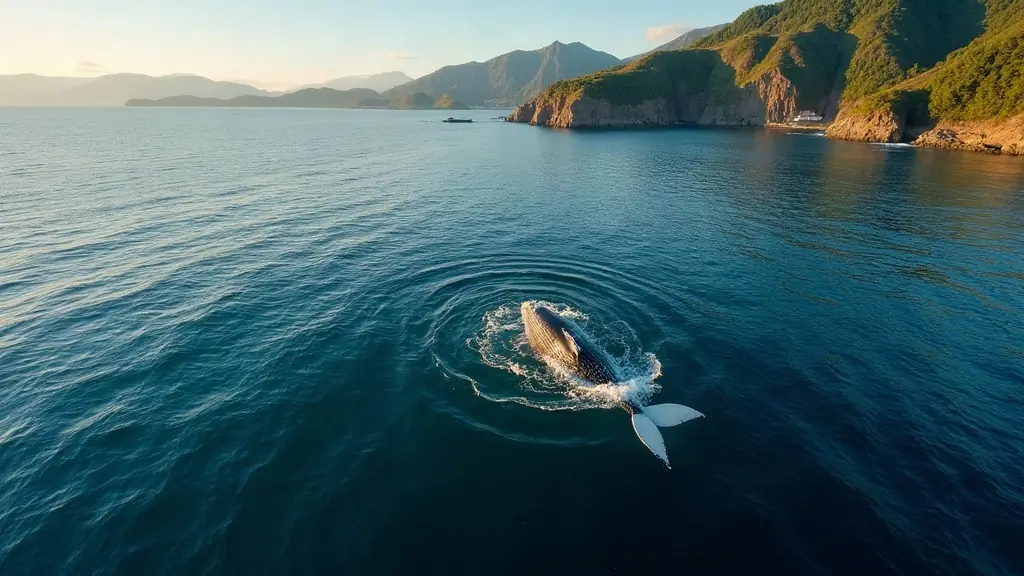
The whale Auckland whale watching is built around. Around 50 live in the Hauraki Gulf year-round, part of a wider population of roughly 140 off New Zealand's northeastern coast, and in New Zealand the species carries a Nationally Critical conservation ranking because of how few there are. According to NOAA Fisheries, Bryde's whales reach 40 to 55 feet, feed on schooling fish, krill and crustaceans, and are unusual among baleen whales in that some populations do not migrate at all. In the Gulf they usually turn up alone or in loose pairs, lunge-feeding at the surface, often trailed by shearwaters cashing in on the same baitfish.
Large, loud and nearly impossible to miss. Short-beaked common dolphins move through the Gulf in pods that regularly run into the hundreds, and per NOAA Fisheries, mega-pods of up to several thousand animals have been recorded elsewhere in the species' range. They ride the bow wave, leap clear of the water and often mix with feeding Bryde's whales and seabirds over the same patch of fish, which can make a single stop feel like several species at once.
New Zealand's orca specialize in rays and sharks, taking a dolphin now and then, and small pods of five to fifteen animals cruise the Hauraki Gulf year-round hunting in the shallows around its islands and harbors, flipping stingrays off the seabed in a way no other orca population is known to rely on. Whale & Dolphin Conservation notes that orca live in tight family pods that can span four generations, led by an older female who decides when and where the group feeds. Sightings here are unpredictable, so a pod is never something to count on and all the more memorable when one appears.
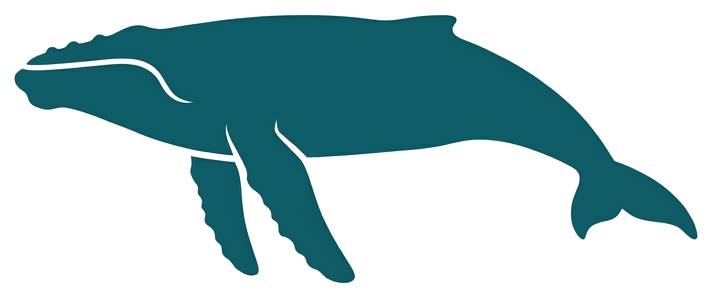
A cooler-season bonus. Humpback whales pass along New Zealand's east coast in June and July on their migration between Antarctic waters and tropical breeding grounds, and some detour into the Hauraki Gulf itself. Minke whales, the smallest of the great whales, and the occasional southern right whale turn up on the same winter current, both far less common here than off the country's southern coasts. None of the three should be the reason you pick a specific date, but they round out an already good species list if you happen to be in Auckland in winter.
Auckland whale watching runs from one stretch of downtown waterfront, so the only choice to make is the tour.
Both Auckland whale watching cruises leave from the Viaduct Harbour waterfront, a short walk from the Ferry Building and the New Zealand Maritime Museum, so there is no transfer and no early start out of town. Boats motor out past the Harbour Bridge, Devonport and the volcanic cone of Rangitoto Island before opening onto the wider Hauraki Gulf, typically under an hour from the dock to open-water searching. From there the fleet has the whole Gulf to work with, including the sheltered water inside Hauraki Gulf Marine Park and the deeper channels between its islands, where Bryde's whales and dolphin pods concentrate.
Auckland is one entry point into a much bigger country. The South Island's Kaikoura coast runs on a different rhythm, built around a resident sperm whale population; see our guide to whale watching in Kaikoura for that side of New Zealand. For every region compared side by side, our hub on whale watching in New Zealand is the place to start.
Auckland whale watching puts a city of a million and a half people on one side of the boat and a resident population of one of the world's least-seen great whales on the other.
Both tours we compare follow the same basic shape: a safety briefing at the Viaduct, a run out past the harbor landmarks, then an open stretch of the Gulf where the crew works radio reports and its own spotting to find whales, dolphins or orca, with commentary on what is likely feeding where. The main difference between the two is how long you stay out and what else the trip includes.
4.5 hours, from about $129, rated 4.4 from 20 reviews. A dedicated wildlife search on a purpose-built catamaran, aimed at finding Bryde's whales, common dolphins and orca with no other stops. The shorter, more focused option if whale watching is the whole point of your day.
6.8 hours, from about $100. A longer loop through the Gulf that pairs the wildlife search with a stop ashore on Rotoroa Island or Waiheke Island, so a beach or vineyard break is built into the same day. The cheaper of the two tours despite the extra hours, though it is a newer listing without an established review record yet.
As a rule of thumb, the two Auckland whale watching tours we track sit either side of $100 to $130, with the full-day cruise the better value on paper and the half-day safari the more concentrated wildlife trip. Neither is a luxury RIB or private charter, which keeps prices lower than some of the specialty boats you find in destinations like Iceland or Norway.
Compare every Auckland tour side by side: price, boat, duration and free cancellation.
See the toursWith only two listings and a Gulf that fishes well every month of the year, the decision comes down to how much of your day you want to give up.
Auckland itself can be mild and still, but wind picks up fast once you clear the Harbour Bridge and reach open Gulf water. Bring a windproof layer over whatever you are wearing downtown, plus sunglasses and sunscreen. It is easy to underdress when the trip starts from a city dock rather than a fishing harbor.
Sheltered by the Coromandel Peninsula and its own islands, the Hauraki Gulf is calmer water than an exposed coastline like Kaikoura's, so seasickness is a smaller concern here. If you are especially prone to it, a light meal beforehand and a spot on deck watching the horizon still helps.
A Bryde's whale's blow is often the first sign of a sighting, a low puff against the city or island backdrop long before the animal itself is obvious. Binoculars turn that into a clear view, and because sightings can happen close to the boat, it is worth keeping your camera down for a few minutes too, so you watch it directly instead of on a screen.
New Zealand's Marine Mammals Protection Regulations require boats to stay at least 50 meters from whales, more from a mother and calf, and to slow to idle speed near any marine mammal. The Department of Conservation enforces those limits, and a good Auckland whale watching operator will already be working within them.
Ship strike used to kill roughly two of the Gulf's Bryde's whales a year, a serious toll on a population this small. Since a voluntary 10-knot speed protocol for commercial ships transiting the Gulf took effect in 2013, strikes have dropped sharply.
Pick the half-day safari if whale watching is the whole plan, or the full-day Tikapa Moana cruise if you want an island stop built in, book either with free cancellation, and go whenever suits your trip. Auckland's Bryde's whales are here all year, so you are free of the seasonal calendars that govern most whale watching elsewhere.
Any time of year. The Hauraki Gulf's Bryde's whales and common dolphins stay year-round rather than migrating, and orca pass through at any time of year, so sightings run around 95% in every month. Humpbacks pass through in June and July, adding a winter bonus, while December to February brings the busiest boats and calmest seas.
Yes, especially if you want a whale sighting without leaving the city. The Hauraki Gulf holds one of the world's few resident Bryde's whale populations, roughly 50 animals, feeding within sight of the skyline, and combined whale-or-dolphin sightings run around 95% year-round. Trips are also short and calm compared with an open-coast crossing.
The Hauraki Gulf's headline animals are the resident Bryde's whale, roughly 50 of them feeding year-round; large common dolphin pods that often run into the hundreds; and orca that patrol the Gulf hunting rays. In winter, passing humpbacks and the occasional minke or southern right whale round out the list.
Auckland tours start from about $100 per person, with the two options we compare sitting between $100 and $130 depending on length and what is included. The 6.8-hour Tikapa Moana cruise with an island stop is the better value on paper, while the 4.5-hour safari is the more focused wildlife trip, so choose on how much of the day you want on the water.
Bookings are processed through Headout, which partners with vetted Auckland operators. Whale Watching is an independent affiliate site. We may earn a small commission if you book through a link here, at no extra cost to you.
Compare tours in Auckland and book in minutes. Most offer free cancellation.
See tours in Auckland