Los Angeles
Los Angeles Whale Watching Dolphin Tour
Free cancellation2.5 hrs
from $45
Check availability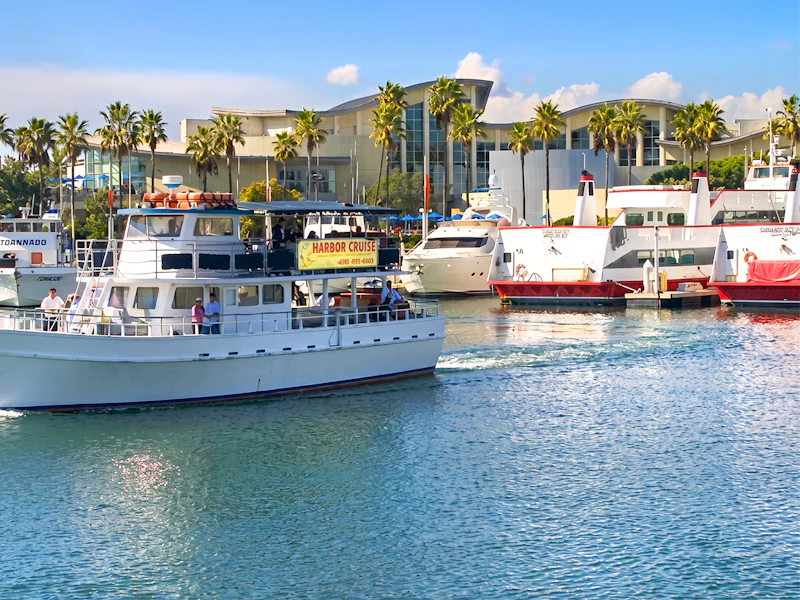
More in California: San Diego San Francisco All of California
When whales are around, month by month.
Based on operators' peak-season sighting records.
Chance of seeing whales or dolphins in Los Angeles in peak season
Based on 2,814 verified sightings logged in Los Angeles: real records, not estimates.
Source: GBIF.org, which aggregates marine mammal observations from OBIS-SEAMAP, Happywhale & iNaturalist. Retrieved October 2026.
The whales and dolphins you can realistically spot here, ranked by how often they are recorded.

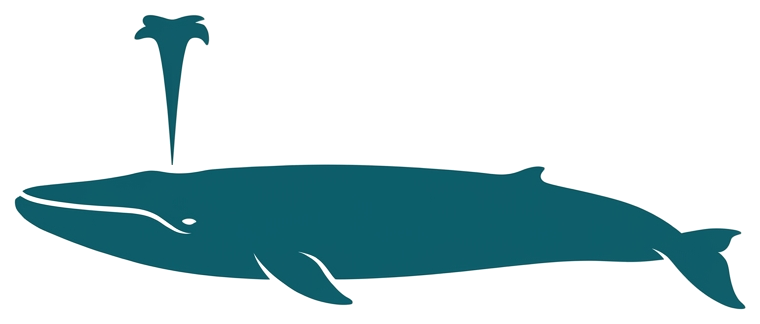
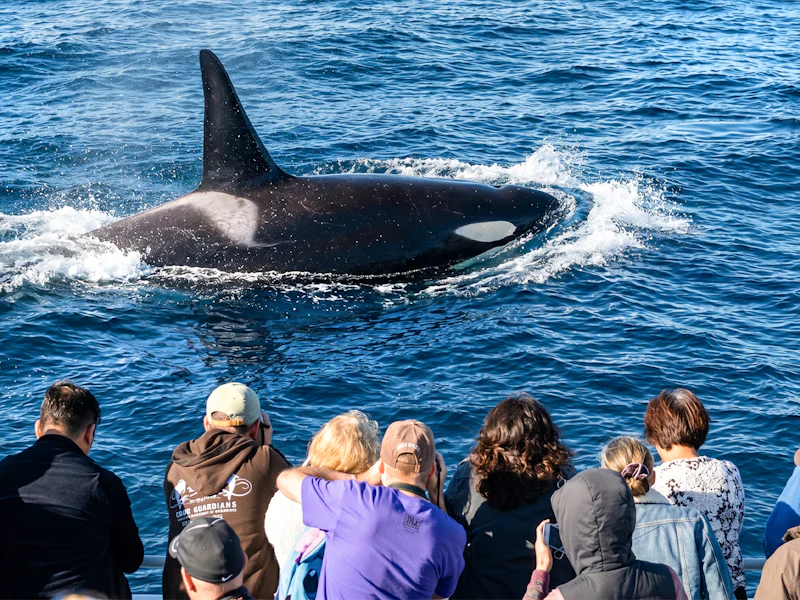
Los Angeles whale watching puts you within a couple of miles of some of the richest marine wildlife water on the West Coast, a short boat ride from the harbor. Head out from Long Beach or San Pedro on a summer morning and the first sign is often a dolphin fin, then another, then dozens more, until the boat is surrounded by a common dolphin super-pod stretching to the horizon. Minutes later a blow rises off the bow, a column of mist close to thirty feet tall, and the guide calls it before you have even placed the sound: blue whale.
Below: the two seasons that make Los Angeles whale watching worth doing nearly year-round, the four species you are most likely to meet, the two harbors boats leave from, what a typical trip costs and includes, and how to pick one. Peak-season sightings run close to 95%, and the tours we compare run from about $15 to $45, among the most affordable whale watching in the country. Most can be booked with free cancellation, so you can hold a date and change your mind later.
Los Angeles whale watching has two seasons, and the one you book into decides what you should expect to see. From December through April, gray whales pass within sight of the coast on one of the longest migrations of any mammal on Earth, swimming south to Baja California lagoons to calve and then back north with young calves in tow. Boats out of Long Beach and San Pedro watch for the blow and the mottled gray back rolling at the surface, often well within a mile or two of shore, which keeps trips short and sightings dependable through the winter and early spring.
Then, roughly from June through November, the whole character of the trip changes. Santa Monica Bay and the San Pedro Channel become one of the more reliable places anywhere to find blue whales, the largest animal that has ever lived, feeding on dense krill swarms pulled up by cold water welling out of the submarine canyons offshore. Humpback whales join them through late summer and into fall, often much more active at the surface with breaches and tail slaps, and common dolphins move through in pods that can run into the thousands. April, May, October and November sit between the two peaks and can turn up a mix of species as one season hands off to the other, though sightings are a touch less predictable than at the height of either run.
For a broader look at how these two Los Angeles seasons compare with other whale watching destinations, our guide to the best time to go whale watching lines up the calendar month by month.
The blue whale season is the big draw. Southern California, and specifically the water off Los Angeles and Long Beach, hosts one of the most consistent summer and fall blue whale feeding aggregations on the planet. These are animals that can top 90 feet and weigh well over a hundred tons, larger than any dinosaur, and in a good July or August week a Los Angeles boat can find one within an hour of leaving the harbor.
Four cetaceans make up the vast majority of encounters on a Los Angeles whale watching trip, and which ones you meet depends almost entirely on the month. Between the winter migration and the summer feeding season, this stretch of coast covers an unusually wide range of marine wildlife for a single city.
The winter and spring headline act, migrating past the Los Angeles coast from December to April on one of the longest journeys of any mammal, from Alaska's Bering and Chukchi seas to calving lagoons in Baja California and back. Adults reach about 45 feet and are easy to pick out by a mottled gray back, no dorsal fin, and a heart-shaped blow. Northbound migrants in spring sometimes travel with young calves close alongside, hugging the coast in shallow water, part of a recovery NOAA Fisheries has tracked since the species came off the endangered list in 1994.
The largest animal on Earth, and the reason Los Angeles whale watching is known well beyond California. Blue whales gather off the coast through summer and fall to feed on dense swarms of krill pulled up by cold-water upwelling near the submarine canyons of Santa Monica Bay and the San Pedro Channel. An adult can stretch past 90 feet, and the blow alone, a towering column visible well before the back appears, is often the first sign one is near. The IUCN Red List classifies the blue whale as Endangered, with the population improving but still a small fraction of its pre-whaling size.
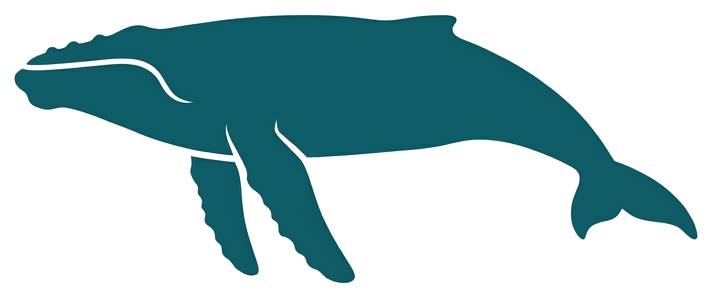
The most active whale on this coast, feeding close to shore from summer into autumn and known for breaching clear of the water, slapping a long pectoral fin, and lifting its tail fluke before a deep dive. Adults reach roughly 60 feet, and a feeding humpback can put on a longer surface show than any other whale in these waters, which makes it a favorite even among guides who see them every week. Whale & Dolphin Conservation notes that humpbacks can eat up to 1,360kg of krill and small fish a day, which keeps them working the surface off Los Angeles for so long. Sightings build through July and August and often stay strong into October.
Common dolphins are close to a sure thing here. Short-beaked common dolphins move through Los Angeles waters year-round in pods that regularly number in the hundreds and sometimes the low thousands, riding the bow wave and leaping in every direction at once. They are drawn to the same upwelling and baitfish that pull in the whales, so a super-pod crossing the boat's path is often the first sign a bigger animal is close behind.
Almost every Los Angeles whale watching tour leaves from one of two adjoining harbors, and the short run out to open water is part of what makes this city such an easy place to fit in a trip.
Long Beach's harbor sits right at the edge of the San Pedro Channel, the deep water between the mainland and Santa Catalina Island where blue whales and humpbacks feed through summer and fall, and where gray whales pass close by in winter. It is the more casual of the two harbors, with a mix of dedicated whale watching cruises and shorter sightseeing boats that combine harbor views with a chance at dolphins and whales along the way, which suits a family afternoon as easily as a focused whale trip.
San Pedro, the working port town at the mouth of Los Angeles Harbor, has the deeper whale watching heritage of the two, home to the world's first whale conservation group and generations of local naturalists who grew up watching gray whales pass the breakwater. Boats leave straight from the harbor for open water off the Palos Verdes Peninsula, where an underwater canyon drives the same upwelling that feeds Santa Monica Bay a little further north. If your trip is built entirely around whales, San Pedro is the more purpose-built departure point. Whale watching further south along the coast is covered in our guide to whale watching in San Diego, and the full spread of California ports, seasons and species sits on our California whale watching hub page.
Los Angeles is one of the few cities on Earth where you can watch the planet's largest animal feed less than an hour from a major harbor.
Most Los Angeles whale watching trips follow a similar shape: a short safety briefing at the dock, a run out through the harbor and breakwater, then open water where the crew and an onboard naturalist scan for blows, dorsal fins and dolphin activity while narrating what is likely swimming nearby that week. Boats stay out anywhere from under an hour to about two and a half, with narrower harbor cruises trading search time for a shorter, cheaper trip and dedicated whale boats spending more of the day looking. Two broad formats cover almost every option out of Long Beach and San Pedro:
Around 2.5 hours, from about $45. A boat built around finding whales and dolphins rather than sightseeing, with a naturalist on board, more time spent searching open water, and the best odds of a blue whale, gray whale or humpback encounter depending on the season.
Under an hour, from about $15. A shorter, budget-friendly run through the harbor and along the nearer coastline, built primarily for sightseeing but it can still turn up dolphins and, in the right season, a distant whale. An easy add-on if your schedule or budget will not stretch to a full whale watching trip.
As a rule of thumb, Los Angeles whale watching is some of the most affordable on the West Coast, with tours running from about $15 for a short harbor cruise up to about $45 for a full dedicated whale watching trip. That $15 entry point is unusually cheap for anything with a realistic shot at whales and dolphins, and it makes Los Angeles an easy city to fit a marine wildlife trip into even on a tight budget or a short layover.
Line up every Los Angeles tour by price, boat, duration and free cancellation.
See the toursThe decision here is simpler than in most whale watching destinations, mostly because the choice comes down to season, budget and how much of the day you want to give up.
Downtown Los Angeles can be warm and still while the San Pedro Channel is windy and several degrees cooler. Bring a windbreaker or light jacket even on a sunny summer day, along with sunglasses and sunscreen, since there is little shade once the boat is underway.
The channel between the mainland and Catalina can carry a noticeable Pacific swell even on a calm-looking day. If you are prone to seasickness, take a remedy before boarding, eat something light beforehand, and stay outside watching the horizon rather than below deck.
A blue whale's blow can be visible from well over a mile away, long before the animal itself. Binoculars turn a distant puff of mist into your first real sighting, and a camera with a fast shutter beats a tripod on a moving deck for catching a breaching humpback or a leaping dolphin.
Los Angeles boats share busy shipping lanes and a working harbor with the whales they are watching, so approach distance matters. NOAA Fisheries' West Coast office publishes marine life viewing guidelines built to keep boats a safe distance from whales and dolphins, and a good operator will hang back and let the animals set the pace.
San Pedro is home to the American Cetacean Society, founded in 1967 as the world's first whale conservation group and headquartered in San Pedro, born out of local naturalists who started taking children out to watch the gray whale migration. Winter and summer trips out of these harbors still carry on that habit of watching, and looking out for, the whales more than half a century later.
Pick your season first, gray whales in winter or blue whales and humpbacks in summer, choose Long Beach for an easy outing or San Pedro for a dedicated trip, dress for the wind, and book early with free cancellation as your safety net, good practice no matter which whale watching destination you pick next.
Los Angeles runs on two seasons. December through April is the gray whale migration, when the whales pass within a mile or two of shore, and June through November brings blue whales, humpbacks and common dolphins feeding offshore. Peak-season sightings run close to 95%, so there is rarely a bad month.
Boats leave from two harbors, Long Beach and San Pedro. Long Beach sits right at the edge of the San Pedro Channel, where blue whales and humpbacks feed in summer, and is the more casual, family-friendly option. San Pedro has the deeper whale watching heritage and is the more purpose-built choice if whales are the whole point.
For most visitors, yes. Los Angeles has peak-season sightings close to 95%, two distinct seasons, and some of the cheapest tours in the country, from about $15. Summer brings blue whales, the largest animal that has ever lived, feeding within an hour of the harbor, while winter delivers a dependable gray whale migration close to shore.
Los Angeles is among the cheapest places to whale watch in the country. Short harbor and sightseeing cruises start from about $15, while a dedicated 2.5-hour whale watching and dolphin tour with a naturalist runs from about $45. The dedicated boats spend more time searching open water, so pick one of those if whales are your priority.
Bookings are processed through Headout, which partners with vetted local operators. Whale Watching is an independent affiliate site. We may earn a small commission if you book through a link here, at no extra cost to you.
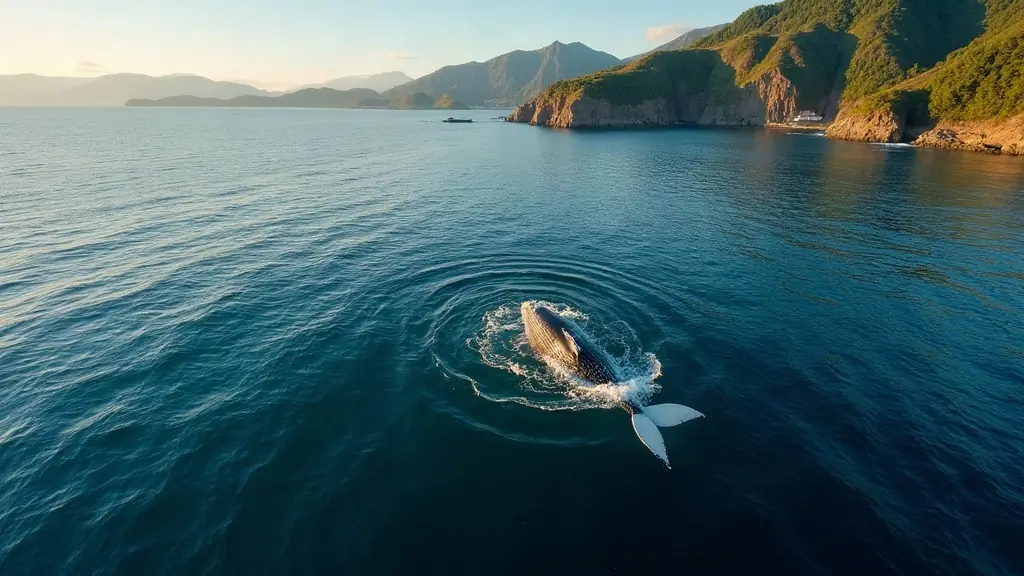
Compare tours in Los Angeles and book in minutes. Most offer free cancellation.
See tours in Los Angeles